
Context:
On January 3, 2026, under "Operation Absolute Resolve," U.S. military and special forces conducted a coordinated air and ground operation near Caracas. In this operation, Venezuelan President Nicolas Maduro and his wife were arrested and taken to New York to stand trial on charges related to drug trafficking and narco-terrorism. The action is considered the most direct US military intervention in Latin America since the 1989 US invasion of Panama.
Recent Military Escalation:
Tensions escalated sharply in late 2025 through a series of actions:
· Operation Southern Spear (September 2025): A U.S. maritime “anti-narcotics” campaign in the Caribbean and Pacific, involving lethal interdictions of vessels alleged to be engaged in drug trafficking.
· Airspace Closure (29 November 2025): The U.S. declared Venezuelan airspace closed to all civilian traffic.
· Naval Blockade (December 2025): A “total naval blockade” on Venezuelan oil tankers, justified by Washington as a measure against what it described as a “narco-terrorist regime.”
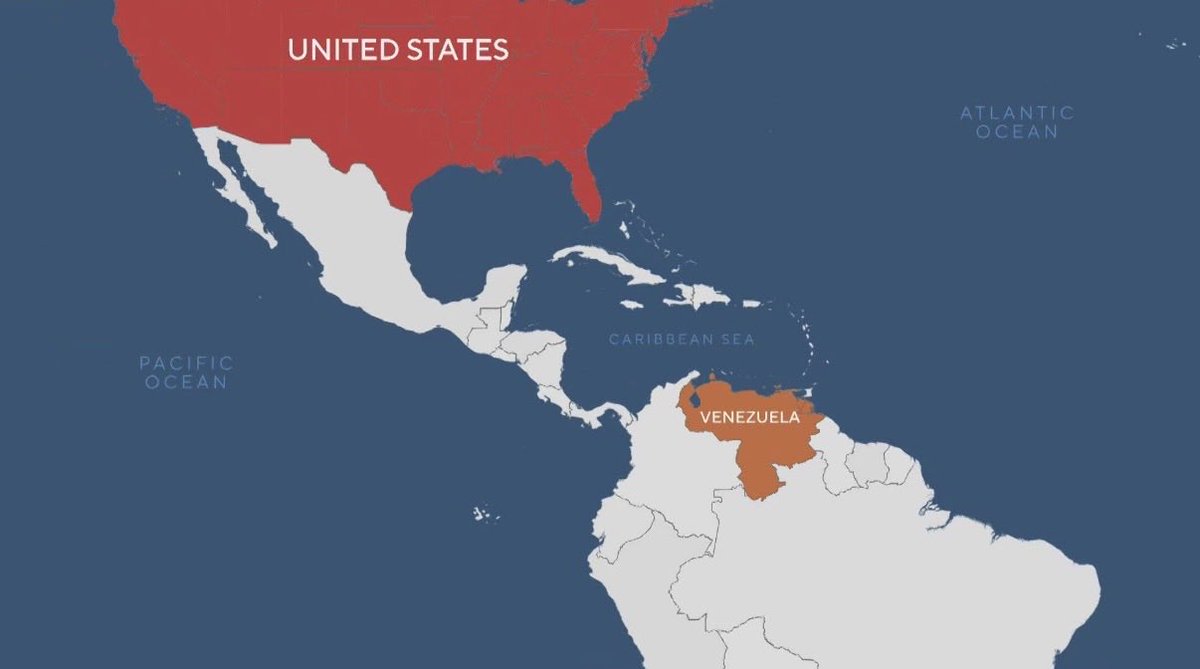
Development of relations and Background of the dispute:
-
- U.S.–Venezuela relations were largely cooperative during the second half of the twentieth century, driven by oil trade and Cold War alignments. This relationship deteriorated sharply after Hugo Chávez assumed office in 1999, declared Venezuela a socialist state, and adopted an openly “anti-imperialist” foreign policy.
- Tensions deepened after Venezuela accused the United States of backing the failed 2002 coup attempt against Chávez—allegations that were later partially retracted. Diplomatic strains continued with the expulsion of ambassadors in 2008 and again in 2014, when Caracas accused U.S. diplomats of promoting internal unrest.
- Although relations briefly improved following President Barack Obama’s outreach in 2009, they soon deteriorated once again. A major rupture occurred during the 2019 presidential crisis, when the United States recognised opposition leader Juan Guaidó as Venezuela’s interim president, prompting the Maduro government to sever diplomatic ties.
- U.S.–Venezuela relations have remained tense since the rise of socialist leadership in Caracas. Washington has accused the Maduro regime of authoritarian governance, electoral manipulation, systemic corruption, and links to international drug-trafficking networks. In response, the United States imposed extensive individual, financial, and sectoral sanctions, particularly targeting the state-owned oil company PDVSA. These measures severely weakened Venezuela’s economy and pushed the country closer to strategic partners such as China and Russia.
- U.S.–Venezuela relations were largely cooperative during the second half of the twentieth century, driven by oil trade and Cold War alignments. This relationship deteriorated sharply after Hugo Chávez assumed office in 1999, declared Venezuela a socialist state, and adopted an openly “anti-imperialist” foreign policy.
International Law and Legal Concerns Surrounding U.S. Military Intervention:
From the perspective of international law, the U.S. actions raise serious concerns:
-
- Violation of UN Charter Article 2(4): The use of force against the territorial integrity and political independence of a sovereign state is prohibited.
- Sovereignty and Non-Intervention: The capture of a sitting head of state without UN Security Council authorisation challenges established norms of state sovereignty.
- Absence of Self-Defence Justification: The United States did not face an imminent armed attack, weakening any claim under Article 51 (self-defence).
- Extraterritorial Law Enforcement: Maduro’s removal raises significant questions under international human rights law and established extradition norms.
- Violation of UN Charter Article 2(4): The use of force against the territorial integrity and political independence of a sovereign state is prohibited.
Conclusion:
The U.S.–Venezuela confrontation of January 2026 underscores critical debates in contemporary international relations, including the limits of military intervention, respect for state sovereignty, and the geopolitics of energy security. As Venezuela navigates internal political uncertainty amid intense external pressure, this episode is likely to have lasting implications for diplomatic norms and power dynamics in the Western Hemisphere.



