
Context:
Recently, the United Sangtam Likhum Pumji (USLP), the apex tribal body of the Sangtam Naga community in Nagaland, imposed a complete ban on hunting pangolins within its jurisdiction. This community-led conservation initiative aims to curb illegal wildlife trade and protect these critically threatened species in the Indo-Myanmar biodiversity hotspot.
About Pangolins:
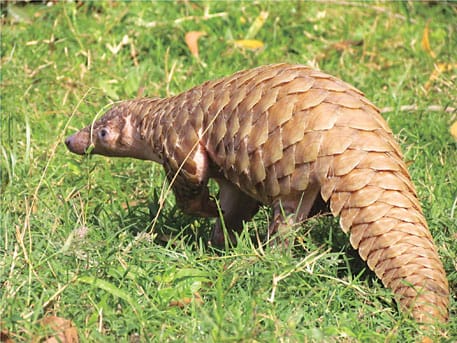
Pangolins are the world's most trafficked non-human mammals, protected under Schedule I of India’s Wildlife (Protection) Act, 1972, and listed by the IUCN as Endangered (Indian Pangolin) or Critically Endangered (Chinese Pangolin). They are nocturnal, insectivorous mammals known for feeding on ants and termites and defending themselves by rolling into a ball (volvation). Their keratin scales are highly sought after in traditional medicine and for meat, especially in Asian markets.
Species and Habitat in India:
-
-
-
- Indian Pangolin (Manis crassicaudata): Widely distributed across India, except in arid regions, the high Himalayas, and the Northeast. It is also the largest among the eight pangolin species globally.
- Chinese Pangolin (Manis pentadactyla): Restricted to the Himalayan foothills and Northeast India.
- Indian Pangolin (Manis crassicaudata): Widely distributed across India, except in arid regions, the high Himalayas, and the Northeast. It is also the largest among the eight pangolin species globally.
-
-
Protection Status:
-
-
-
- IUCN Red List: Indian Pangolin – Endangered; Chinese Pangolin – Critically Endangered.
- Wildlife (Protection) Act, 1972: Schedule I
- CITES: Appendix I (prohibiting international commercial trade)
- IUCN Red List: Indian Pangolin – Endangered; Chinese Pangolin – Critically Endangered.
-
-
Characteristics and Behaviour:
-
-
-
- Nocturnal and burrowing
- The only mammals covered in scales
- Feed primarily on ants and termites
- Non-migratory
- Defend themselves through volvation (rolling into a ball)
- Nocturnal and burrowing
-
-
Significance of the USLP Ban:
-
-
-
- Demonstrates community-driven conservation in a tribal region with constitutional autonomy under Article 371(A).
- Strengthens the fight against illegal wildlife trade along the Indo-Myanmar corridor.
- Complements statutory laws such as the Wildlife Protection Act, CITES commitments, and global pangolin conservation strategies.
- Demonstrates community-driven conservation in a tribal region with constitutional autonomy under Article 371(A).
-
-
Challenges Ahead:
-
-
-
- Enforcement and monitoring of bans in remote, forested areas.
- Providing sustainable livelihood alternatives for communities traditionally reliant on forest resources.
- Combating cross-border trafficking networks involving China and Vietnam.
- Enforcement and monitoring of bans in remote, forested areas.
-
-
Conclusion:
The USLP’s ban on pangolin hunting is a milestone in grassroots conservation. By combining traditional authority with legal frameworks, it sets a precedent for community-led wildlife protection, enhancing biodiversity conservation while curbing illegal trade in one of India’s ecologically sensitive regions.



