
Context:
Recently, the Tamil Nadu Forest Department informed the Madras High Court that it has initiated the process of establishing Vulture Safe Zones (VSZs) in the State. The initiative aims to create a secure environment for vultures, free from major threats—particularly toxic veterinary non-steroidal anti-inflammatory drugs (NSAIDs) such as diclofenac, which have been responsible for mass vulture mortality.
Background:
-
-
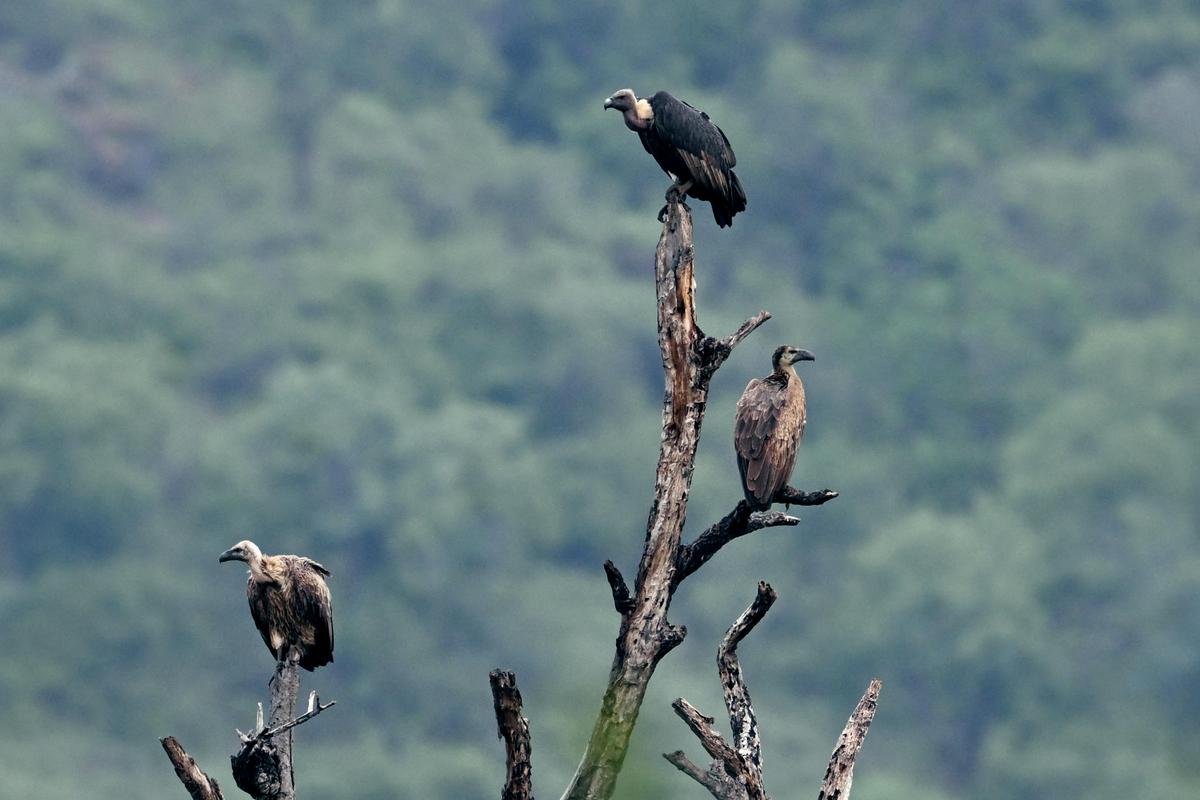
- Vultures are carrion-feeding birds that perform a vital ecological function by rapidly consuming carcasses, thereby preventing the spread of diseases and aiding nutrient recycling. India hosts 9 of the world’s 23 vulture species, several of which are facing severe conservation threats:
- Critically Endangered: White-rumped, Slender-billed, Long-billed, and Red-headed vultures
- Endangered: Egyptian Vulture
- Near Threatened: Himalayan Griffon, Cinereous Vulture, Bearded Vulture
- Critically Endangered: White-rumped, Slender-billed, Long-billed, and Red-headed vultures
- Major threats to vulture populations include diclofenac poisoning, lead contamination, electrocution from power lines, habitat loss, and deliberate poisoning. The drastic decline of vultures has led to serious ecological and socio-economic consequences, including increased risks of zoonotic disease transmission.
- Vultures are carrion-feeding birds that perform a vital ecological function by rapidly consuming carcasses, thereby preventing the spread of diseases and aiding nutrient recycling. India hosts 9 of the world’s 23 vulture species, several of which are facing severe conservation threats:
-
Key Features of Tamil Nadu’s Initiative:
-
-
- First Vulture Safe Zone
- The Moyar River Valley in the Nilgiris Biosphere Reserve has been identified as the first VSZ.
- The initiative is being implemented under the Vision Document for Vulture Conservation (VDVC) 2025–2030.
- The Moyar River Valley in the Nilgiris Biosphere Reserve has been identified as the first VSZ.
- Monitoring and Implementation Committee
- The committee will be chaired by the Field Director of the Mudumalai Tiger Reserve.
- Members include District Forest Officers from Nilgiris, Gudalur, Coimbatore, and Erode; Deputy Directors from Mudumalai, Anamalai, and Sathyamangalam Tiger Reserves; and a representative from the Advanced Institute for Wildlife Conservation (AIWC), Vandalur.
- The committee will be chaired by the Field Director of the Mudumalai Tiger Reserve.
- Scientific and Legal Measures
- Mapping of vulture nesting sites and carcass disposal hotspots.
- Sampling of 800 carcasses over a two-year monitoring period to detect traces of banned NSAIDs.
- Joint inspections with the Drugs Control Department to prevent the sale and use of prohibited veterinary drugs.
- Collaboration with neighbouring States, particularly Karnataka and Kerala, to ensure coordinated regional conservation efforts.
- Mapping of vulture nesting sites and carcass disposal hotspots.
- First Vulture Safe Zone
-
Significance:
-
-
- Ecological: Safeguards scavenger species that are crucial for disease control and ecosystem stability.
- Conservation: Supports the recovery of critically endangered vulture species protected under national wildlife laws and international conventions.
- Scientific: Generates robust field data to inform conservation policy and habitat management strategies.
- Inter-State Cooperation: Promotes coordinated conservation across South India, recognising the wide ranging nature of vulture populations.
- Ecological: Safeguards scavenger species that are crucial for disease control and ecosystem stability.
-
Conclusion:
The establishment of Vulture Safe Zones in Tamil Nadu represents a science-driven and policy-backed conservation initiative to arrest the decline of vultures caused by NSAID poisoning and other anthropogenic pressures. By integrating field monitoring, legal enforcement, and inter-state collaboration, the programme seeks to stabilise and revive vulture populations, thereby preserving ecological balance and strengthening biodiversity conservation in the region.



