
Context:
Recently, The Tamil Nadu Government has withdrawn its Government Order (dated 21 September 2026, which had exempted the Public (Law and Order) Department from the purview of the Right to Information (RTI) Act, 2005. The withdrawal came after criticism from political parties, civil society groups and transparency activists.
What was the Government Order?
-
-
- The earlier notification was issued under Section 24(4) of the RTI Act. It classified the Public (Law and Order) Department as an “Intelligence and Security Organisation” established by the State Government and sought to exempt it from the RTI Act.
- The department handles sensitive matters such as:
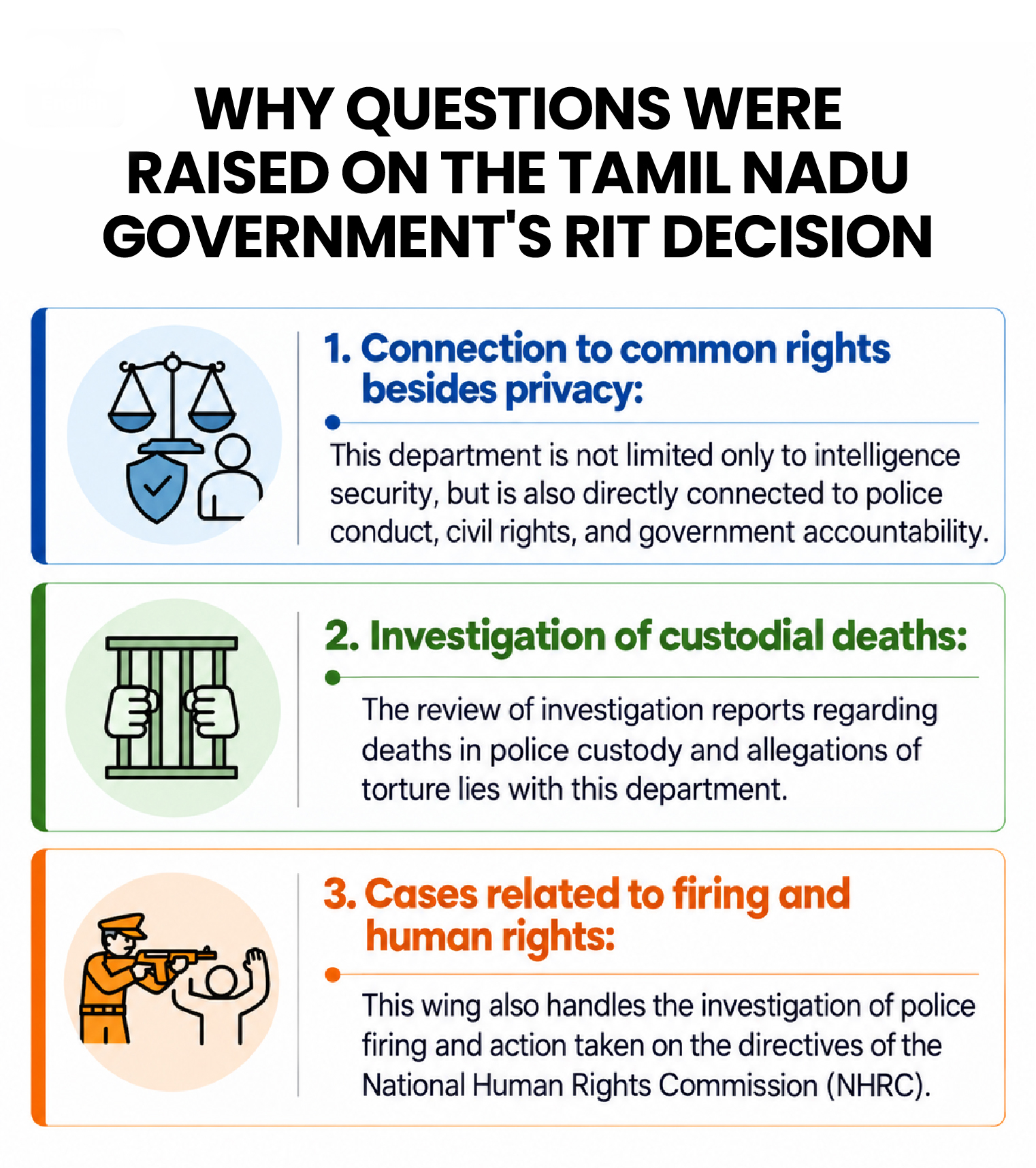
- Police firing and custodial deaths
- Allegations of police torture
- Communal and caste clashes
- Preventive detention
- Political and student agitations
- Law-and-order reports
- Human-rights-related references and inquiries.
- Police firing and custodial deaths
- The exemption raised concerns because access to information concerning policing, custodial deaths and human-rights issues could have been restricted.
- The earlier notification was issued under Section 24(4) of the RTI Act. It classified the Public (Law and Order) Department as an “Intelligence and Security Organisation” established by the State Government and sought to exempt it from the RTI Act.
-
What is the RTI Act, 2005?
-
-
- The Right to Information Act, 2005 provides citizens with a legal mechanism to obtain information held by public authorities. Its objective is to promote transparency and accountability, strengthen democracy and help contain corruption. The Act establishes the Central Information Commission and State Information Commissions.
- The RTI Act is based on the principle that an informed citizenry is essential for democratic governance.
- The Right to Information Act, 2005 provides citizens with a legal mechanism to obtain information held by public authorities. Its objective is to promote transparency and accountability, strengthen democracy and help contain corruption. The Act establishes the Central Information Commission and State Information Commissions.
-
Important Provisions of RTI Act:
-
-
- Section 3: Provides the right to information to citizens.
- Section 4: Places an obligation on public authorities to make proactive disclosures of important information.
- Section 6: Provides the procedure for making an RTI application.
- Section 7: Deals with disposal of RTI requests and generally prescribes a 30-day time limit.
- Section 8: Provides exemptions from disclosure, including matters concerning national security, investigation, privacy and certain confidential information.
- Section 19: Provides a mechanism for first and second appeals.
- Section 20: Provides for penalties against Public Information Officers for specified violations.
- Section 24: Exempts certain intelligence and security organisations, subject to statutory safeguards.
- Section 3: Provides the right to information to citizens.
-
About Section 24 and the Present Issue:
-
-
- Under Section 24(4), a State Government can notify an intelligence or security organisation established by it as exempt from the RTI Act.
- However, the exemption is not absolute. Information relating to allegations of corruption and human-rights violations remains outside the exemption. In human-rights cases, approval of the concerned Information Commission is required, and the information is to be provided within 45 days.
- Thus, the provision attempts to balance national/security interests with transparency and accountability.
- Under Section 24(4), a State Government can notify an intelligence or security organisation established by it as exempt from the RTI Act.
-
Conclusion:
The RTI Act is an important instrument of participatory democracy and accountable governance. At the same time, legitimate security and confidentiality concerns cannot be ignored. The Tamil Nadu episode highlights the need to maintain a careful balance between transparency and security, ensuring that exemptions remain legally justified and do not unnecessarily weaken citizens' right to know.



