
Discovery of Rare Marine Amphipod Stenothoe lowryi
Context:
Recently, marine researchers from Berhampur University (Odisha) discovered a rare marine amphipod species named Stenothoe lowryi in Indian waters for the first time. The species was found at Arjyapalli Beach in Ganjam district of Odisha during a coastal biodiversity survey. This discovery is significant because the species had previously been recorded only in Malaysia, and its distribution elsewhere was unknown.
About Stenothoe lowryi:
-
-
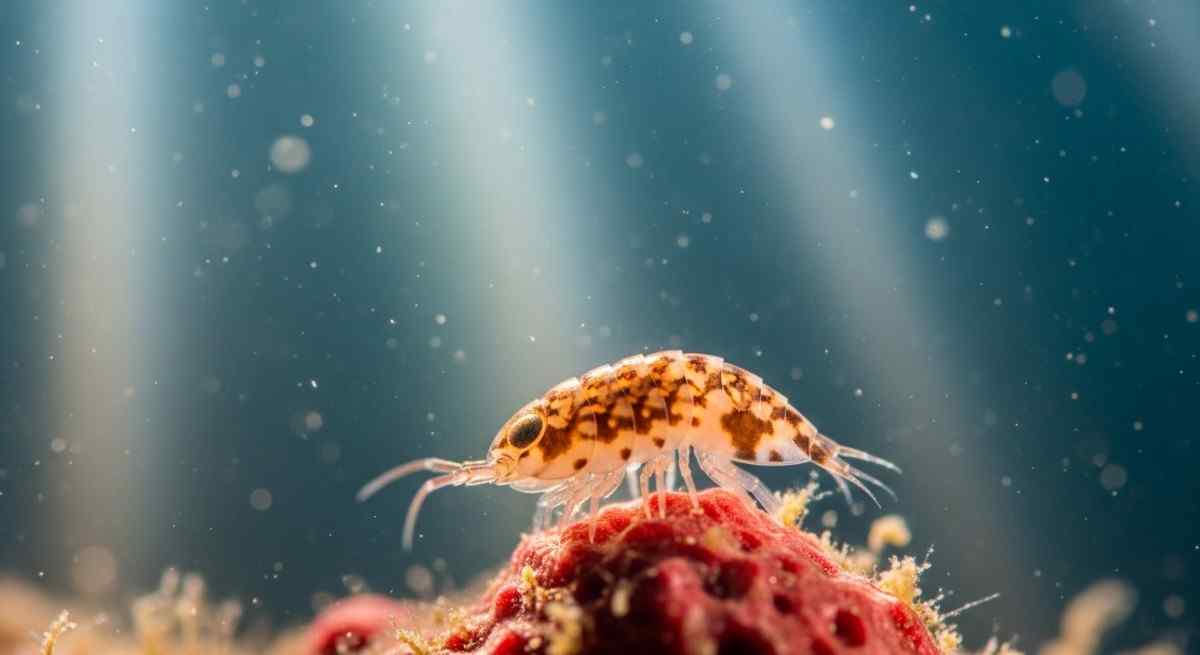
- Stenothoe lowryi is a rare marine amphipod, a shrimp-like crustacean belonging to the family Stenothoidae under the order Amphipoda. Amphipods are small invertebrates related to crabs, lobsters, and shrimps.
- Key features of the species include:
- Size: Approximately 5.5 mm in length
- Habitat: Rocky intertidal coastal environments
- Distinct feature: Large claws (gnathopods) used for gripping surfaces and feeding
- Distribution: Previously known only from Malaysian waters before being found in India
- Size: Approximately 5.5 mm in length
- Amphipods are widely distributed across oceans, freshwater systems, beaches, caves, and moist habitats around the world.
- Stenothoe lowryi is a rare marine amphipod, a shrimp-like crustacean belonging to the family Stenothoidae under the order Amphipoda. Amphipods are small invertebrates related to crabs, lobsters, and shrimps.
-
Ecological Importance:
-
-
- Although the exact ecological role of Stenothoe lowryi is still under study, amphipods generally play an important role in marine ecosystems. They often act as detritivores and scavengers, feeding on organic matter and helping recycle nutrients in marine environments.
- They also serve as an important link in the marine food web, providing food for larger organisms such as fish and other marine invertebrates.
- Although the exact ecological role of Stenothoe lowryi is still under study, amphipods generally play an important role in marine ecosystems. They often act as detritivores and scavengers, feeding on organic matter and helping recycle nutrients in marine environments.
-
Other Amphipod Discoveries in Odisha:
-
-
-
- The same research team has earlier discovered several new amphipod species from Odisha’s coastal ecosystems. These include:
- Grandidierella geetanjalae discovered from Chilika Lagoon near Rambha.
- Parhyale odian discovered in Chilika Lake at Barkul in 2022.
- These discoveries demonstrate the rich marine biodiversity of Odisha’s coastline and the importance of scientific exploration in documenting new species.
- The same research team has earlier discovered several new amphipod species from Odisha’s coastal ecosystems. These include:
-
-
Significance for Biodiversity Conservation:
-
-
- The discovery of Stenothoe lowryi has several implications:
- Expands the known geographical distribution of the species.
- Enhances understanding of marine biodiversity in the Bay of Bengal.
- Highlights the importance of coastal ecosystem research and conservation.
- Shows that many marine organisms along India’s coastline remain scientifically unexplored.
- Expands the known geographical distribution of the species.
- The discovery of Stenothoe lowryi has several implications:
-
Conclusion:
The identification of Stenothoe lowryi in Indian waters marks an important milestone in marine biodiversity research. It demonstrates the ecological richness of India’s coastal regions and underscores the need for continued scientific studies and conservation of marine ecosystems. Such discoveries contribute to a deeper understanding of marine life, ecological balance, and biodiversity conservation in the Indian Ocean region.



