
Sri Lankan Supreme Court Judge Moves the Karnataka High Court Against Google
Context:
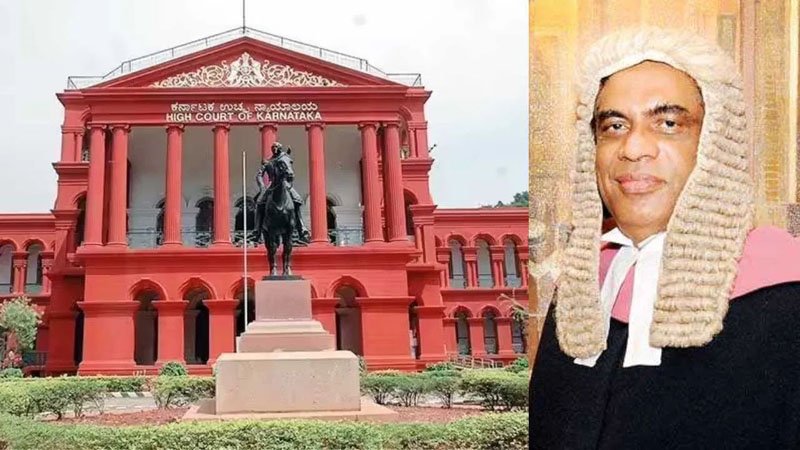
Recently, a sitting judge of the Supreme Court of Sri Lanka, Justice A. H. M. Dilip Nawaz, approached the Karnataka High Court seeking the removal of allegedly defamatory articles appearing in Google search results under the “Right to be Forgotten” provision. The case is significant because the petitioner is not an Indian citizen, yet he invoked constitutional protections under Indian law. It highlights emerging legal challenges in the era of the borderless internet.
Background of the Case:
-
-
- Justice Nawaz filed a petition requesting the removal of certain online articles published by Sri Lankan news portals in 2015 and 2020, which accused him of corruption and misconduct. Although the related criminal case was later quashed by the Supreme Court of Sri Lanka, the reports continue to appear in search results and allegedly damage his reputation internationally.
- The Karnataka High Court issued notices to the Ministry of Electronics and Information Technology (MeitY), Google India, and the concerned news portals to respond to the allegations.
- Justice Nawaz argues that the continued circulation of these articles subjects him to a “perpetual media trial” and violates his right to dignity and privacy.
- Justice Nawaz filed a petition requesting the removal of certain online articles published by Sri Lankan news portals in 2015 and 2020, which accused him of corruption and misconduct. Although the related criminal case was later quashed by the Supreme Court of Sri Lanka, the reports continue to appear in search results and allegedly damage his reputation internationally.
-
About “Right to be Forgotten”:
-
-
- The petition relies on the concept of the Right to be Forgotten, which allows individuals to request the removal of outdated, irrelevant, or false personal information from search engines.
- The principle originated in European data protection laws and aims to ensure that individuals are not permanently judged by past events, especially when allegations have been disproved.
- In India, this right is not explicitly mentioned in the Constitution, but courts have increasingly recognised it as part of the Right to Privacy under Article 21.
- The petition relies on the concept of the Right to be Forgotten, which allows individuals to request the removal of outdated, irrelevant, or false personal information from search engines.
-
Why Approach the Karnataka High Court?
-
-
- Application of Article 21: Article 21 of the Indian Constitution guarantees the right to life and personal liberty, which courts have interpreted to include privacy and reputation. Importantly, these protections apply to all persons, including foreigners, enabling Justice Nawaz to seek legal relief in India.
- Territorial Jurisdiction: Google’s Indian headquarters is located in Bengaluru. Because the search engine displaying the disputed links operates from there, the petitioner argues that the Karnataka High Court has territorial jurisdiction over the matter.
- Ethical Constraints in Sri Lanka: As a sitting Supreme Court judge in Sri Lanka, filing a defamation case in his own country could violate the principle of natural justice-“nemo judex in causa sua” (no one should be a judge in their own cause).
- Application of Article 21: Article 21 of the Indian Constitution guarantees the right to life and personal liberty, which courts have interpreted to include privacy and reputation. Importantly, these protections apply to all persons, including foreigners, enabling Justice Nawaz to seek legal relief in India.
-
Conclusion:
The case involving Justice Nawaz before the Karnataka High Court represents a significant intersection of constitutional law, digital privacy, and international jurisdiction. It highlights the challenges courts face in regulating borderless digital platforms while balancing privacy, reputation, and free speech. The outcome could influence India’s evolving jurisprudence on online defamation and the Right to be Forgotten, with broader implications for global digital governance.



