
Context:
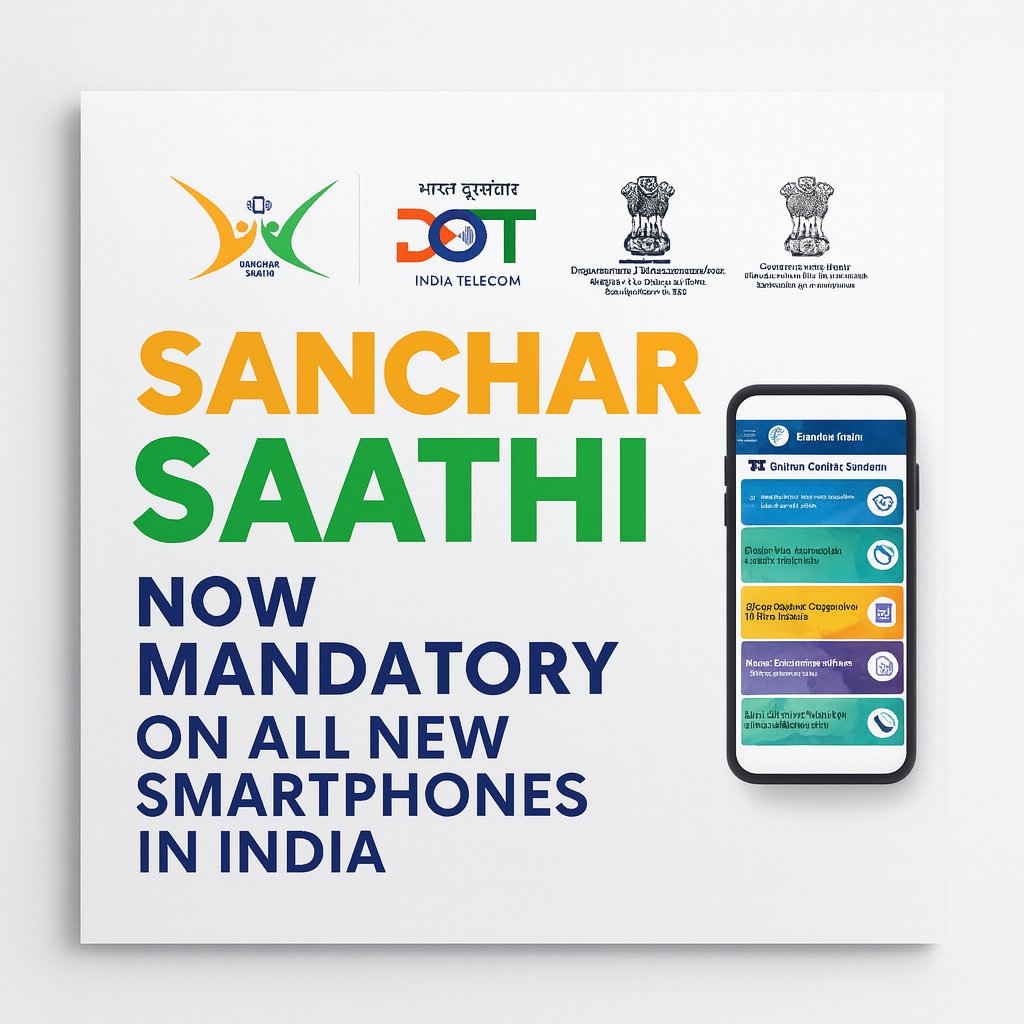
Recently, the Department of Telecommunications (DoT) ordered smartphone manufacturers to pre-install the Sanchar Saathi app on all new phones sold in India, effective March 2026. The mandate has sparked significant controversy, with digital rights advocates raising concerns about privacy and personal freedom, while the Opposition has accused the government of attempting to expand surveillance over citizens.
About Sanchar Saathi App:
-
- Sanchar Saathi was launched in 2023 as a portal for reporting suspicious phone calls. Over time, its features expanded to include viewing all phone numbers linked to a user and blocking a stolen device using its unique International Mobile Equipment Identity (IMEI).
- Once a device is reported stolen, telecom operators receive an order to bar it from their networks, rendering the phone unusable.
- The app thus serves as a tool for both consumer protection and law enforcement in combating telecom fraud, device theft, and misuse of mobile connections.
- Sanchar Saathi was launched in 2023 as a portal for reporting suspicious phone calls. Over time, its features expanded to include viewing all phone numbers linked to a user and blocking a stolen device using its unique International Mobile Equipment Identity (IMEI).
Objectives of the mandate:
-
- The government argues that the pre-installation mandate is necessary to curb rising telecom fraud, IMEI tampering, resale of stolen phones, and misuse of SIM cards.
- Sanchar Saathi helps users verify device authenticity, block illicit devices, and detect unauthorized SIM connections registered in their name.
- By providing a citizen-centric platform for telecom safety, the DoT aims to enhance transparency, strengthen telecom security infrastructure, and ensure accountability in mobile phone use across India’s vast user base.
- The government argues that the pre-installation mandate is necessary to curb rising telecom fraud, IMEI tampering, resale of stolen phones, and misuse of SIM cards.
Legality and Issues:
-
- The Telecommunications Act, 2023 provides a broad definition of “telecommunications,” and recent amendments to the Telecom Cyber Security Rules, 2024, expanded the scope to include entities using phone numbers for identification.
- The pre-installation mandate draws on this expanded definition. Experts caution that the requirement may face constitutional scrutiny under the right to privacy, as recognised in the Puttaswamy judgment.
- The Telecommunications Act, 2023 provides a broad definition of “telecommunications,” and recent amendments to the Telecom Cyber Security Rules, 2024, expanded the scope to include entities using phone numbers for identification.
Concerns:
-
- Critics argue that mandatory pre-installation may infringe on privacy and personal freedom.
- There is ambiguity over whether users can fully uninstall or disable the app, with conflicting statements from the government.
- Digital-rights organisations view the mandate as potentially disproportionate and an overreach into personal devices, raising the need for stringent safeguards and clear user consent mechanisms.
- Critics argue that mandatory pre-installation may infringe on privacy and personal freedom.
Conclusion:
Sanchar Saathi represents a significant step toward securing India’s telecom ecosystem and protecting mobile users against fraud and theft. However, its long-term success depends on balancing national security with individual rights, ensuring transparency, robust privacy protections, and voluntary participation where possible. Striking this balance is essential to build public trust and ensure the app serves as a genuine tool for citizen safety rather than an instrument of unwarranted surveillance.



