
Context:
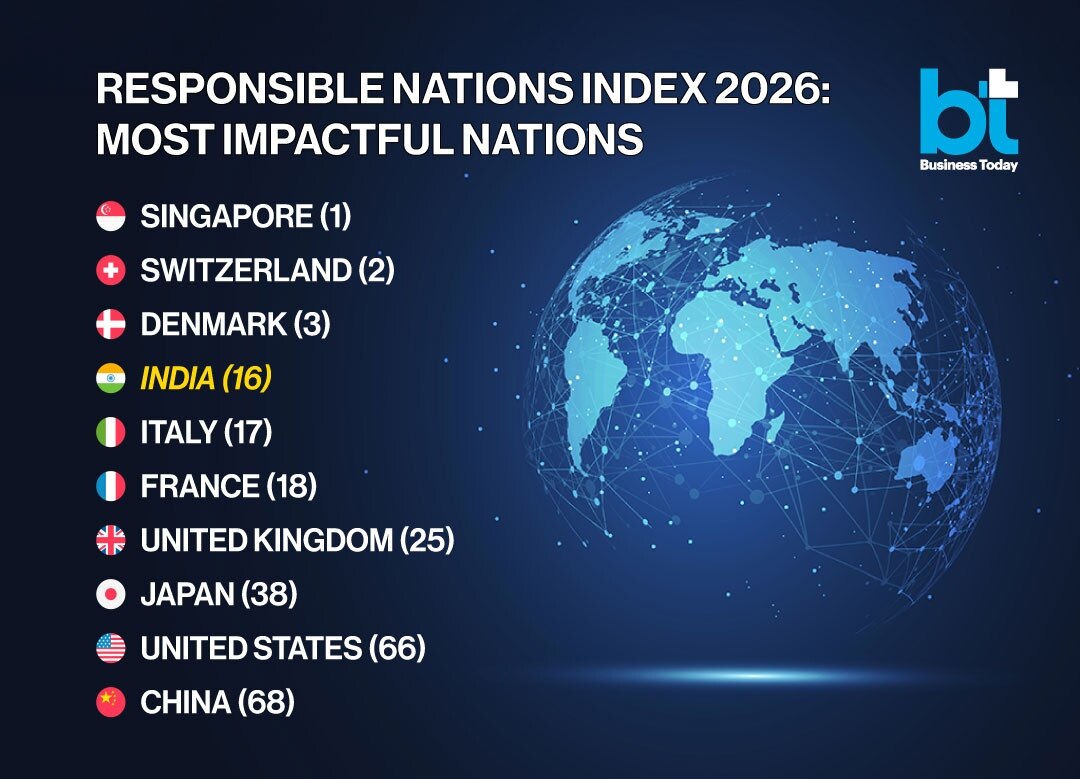
Recently, India has been ranked 16th among 154 countries in the Responsible Nations Index (RNI) 2026. The RNI is a new global framework that evaluates how responsibly nations exercise power toward their citizens, the environment, and the international community.
About the Responsible Nations Index (RNI):
-
-
- The RNI has been developed by the World Intellectual Foundation (WIF) in collaboration with Jawaharlal Nehru University (JNU), IIM Mumbai, and the Dr. Ambedkar International Centre. It is India’s first globally anchored, ethics-based, and sustainability-focused ranking framework.
- Covering 154 countries, the index evaluates national behaviour using internationally sourced and transparent data, focusing on how countries treat their citizens, manage the environment, and contribute to global peace and stability. Its underlying premise is that prosperity without responsibility is unsustainable, making the index a critical analytical tool in contemporary international relations.
- The RNI has been developed by the World Intellectual Foundation (WIF) in collaboration with Jawaharlal Nehru University (JNU), IIM Mumbai, and the Dr. Ambedkar International Centre. It is India’s first globally anchored, ethics-based, and sustainability-focused ranking framework.
-
Structure and Methodology:
The index is built on three core pillars:
-
- Internal Responsibility: Assesses a nation’s obligations toward the dignity, well-being, and empowerment of its citizens.
- Environmental Responsibility: Examines ecological protection and sustainable development efforts.
- External Responsibility: Evaluates a country’s conduct and contributions within the international system.
- Internal Responsibility: Assesses a nation’s obligations toward the dignity, well-being, and empowerment of its citizens.
These pillars are assessed across seven dimensions: quality of life, governance, social justice, economic performance, environmental protection, peacekeeping, and international economic relations.
Key Insights from the 2026 Rankings:
-
- Top performers: Singapore tops the inaugural index, followed by Switzerland and Denmark.
- India’s position: India ranks 16th, ahead of major economies such as the United States (66th), China (68th), France, and Japan (38th).
- Economic power vs responsibility: The report highlights that wealth and economic strength do not automatically translate into responsible conduct. Several developing nations outperform richer countries in areas such as social welfare and environmental stewardship.
- Other major economies: Japan (38), the United Kingdom (25), Brazil (81), South Africa (88), and Mexico (70). North Korea is ranked 146th.
- Top performers: Singapore tops the inaugural index, followed by Switzerland and Denmark.
Significance:
-
- Redefining leadership: The index shifts global discourse from a power-centric to a responsibility-centric understanding of leadership.
- Encouraging accountability: By highlighting gaps in governance and sustainability, the RNI urges nations to reform social systems, strengthen environmental policies, and promote peaceful diplomacy.
- Promoting ethical governance: Aligned with the philosophy of Vasudhaiva Kutumbakam (“the world is one family”), the index reflects values of global solidarity, justice, and environmental stewardship.
- Redefining leadership: The index shifts global discourse from a power-centric to a responsibility-centric understanding of leadership.
Conclusion:
By redefining national success in terms of responsibility rather than dominance, the Responsible Nations Index encourages governments worldwide to prioritise ethical governance, social equity, and sustainable development, principles that align closely with India’s long-term policy vision.



