
Context:
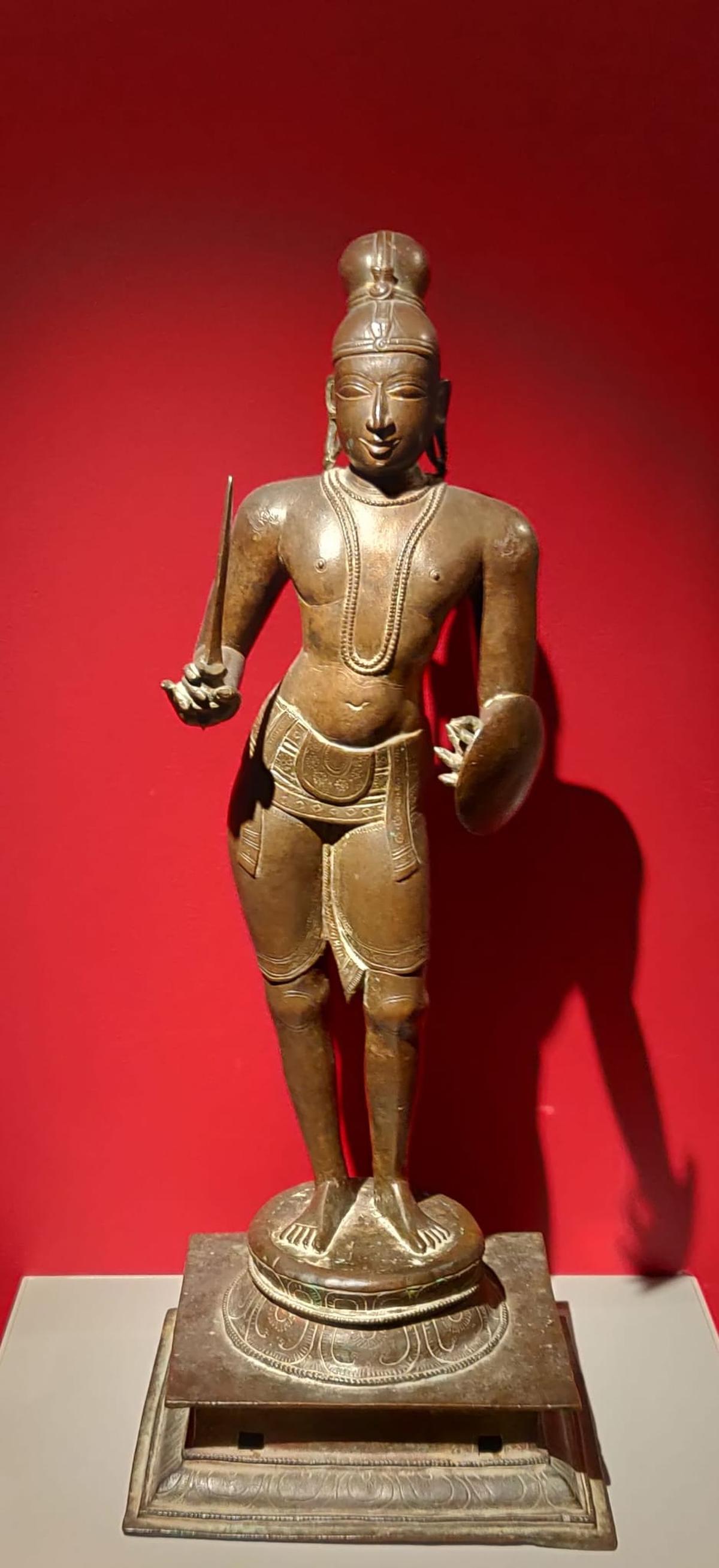
Recently, The University of Oxford’s Ashmolean Museum has returned a 16th century bronze idol of Saint Thirumankai Alvar to India for its journey back to Shri Soundararaja Perumal temple in Thadikombu in Tamil Nadu, where it originally belongs. The bronze idol was acquired by the museum in a Sotheby’s auction in 1967.
About Saint Tirumankai Alvar:
Saint Tirumankai Alvar was one of the twelve Alvar saints of South India associated with the Vaishnavite Bhakti tradition. He is considered the last and most prolific among the Alvars and was known for his intense devotion to Lord Vishnu and his contributions to devotional literature.
- He lived around the 8th century CE.
- Initially a military commander named Kaliyan, he later transformed into a saint devoted to Vishnu.
- He composed several hymns that form part of the Divya Prabandham, a Tamil anthology of about 4,000 devotional hymns.
- Tirumankai Alvar is also credited with contributing to the development of the Srirangam Temple.
About the Bronze Statue:
The returned artefact is a 16th-century bronze idol of Saint Tirumankai Alvar that originally belonged to the Sri Soundararaja Perumal Temple in Thadikombu, Tamil Nadu.
Key features of the statue include:
- Height of about 57–60 cm.
- Crafted using traditional South Indian bronze-casting techniques.
- Used in temple rituals and religious processions.
Process of Repatriation:
The Ashmolean Museum conducted scientific metal analysis of the bronze at the request of the Archaeological Survey of India (ASI) to verify its authenticity and origin.
After the investigation established the idol’s provenance, the museum agreed to return it to India. The handover ceremony took place at the High Commission of India in London, marking the official repatriation of the artefact.
Significance of the Repatriation:
1. Restoration of Cultural Heritage
The return of the idol represents the restoration of a religious and cultural symbol to its original temple.
2. Global Movement for Artefact Repatriation
Many countries are now working to return artefacts removed during colonial or illicit circumstances.
3. Strengthening Cultural Diplomacy
The repatriation reflects cooperation between museums, scholars, and governments in preserving cultural heritage.
4. Protection of Temple Antiquities
The case also highlights the role of institutions such as the Archaeological Survey of India and Tamil Nadu Idol Wing CID in tracing stolen artefacts.
Conclusion:
The return of the Tirumankai Alvar bronze statue is more than the restoration of an artwork; it represents the reunification of an object of faith with its original place of worship. The episode underscores the importance of ethical museum practices and international collaboration in protecting cultural heritage.



