
Context:
Recently, Pakistan-occupied Kashmir (PoK) has witnessed widespread protests, particularly in Rawalakot, Muzaffarabad, and Kotli, against the ongoing three-phase Assembly elections, alleged electoral manipulation, rising inflation, and the lack of political representation.
Why are protests taking place in PoK?
-
-
- The protests began as a movement against inflation, rising electricity tariffs, and poor governance after the COVID-19 pandemic but have gradually evolved into a broader political movement demanding greater democratic rights and local representation. Protesters allege that the ongoing three-phase elections (July 27–August 11, 2026) are being manipulated by Pakistan's establishment and fail to reflect the aspirations of the local population.
- A major grievance relates to the composition of the 53-member PoK Legislative Assembly, where 45 members are elected and 8 are nominated. Of the 45 elected seats, 12 are reserved for refugees from the erstwhile Indian Union Territory of Jammu & Kashmir who migrated after 1947. Since these refugee voters reside outside PoK, local groups argue that the arrangement dilutes the political representation of residents and enables Islamabad to exercise greater control over the region's political affairs.
- The protests began as a movement against inflation, rising electricity tariffs, and poor governance after the COVID-19 pandemic but have gradually evolved into a broader political movement demanding greater democratic rights and local representation. Protesters allege that the ongoing three-phase elections (July 27–August 11, 2026) are being manipulated by Pakistan's establishment and fail to reflect the aspirations of the local population.
-
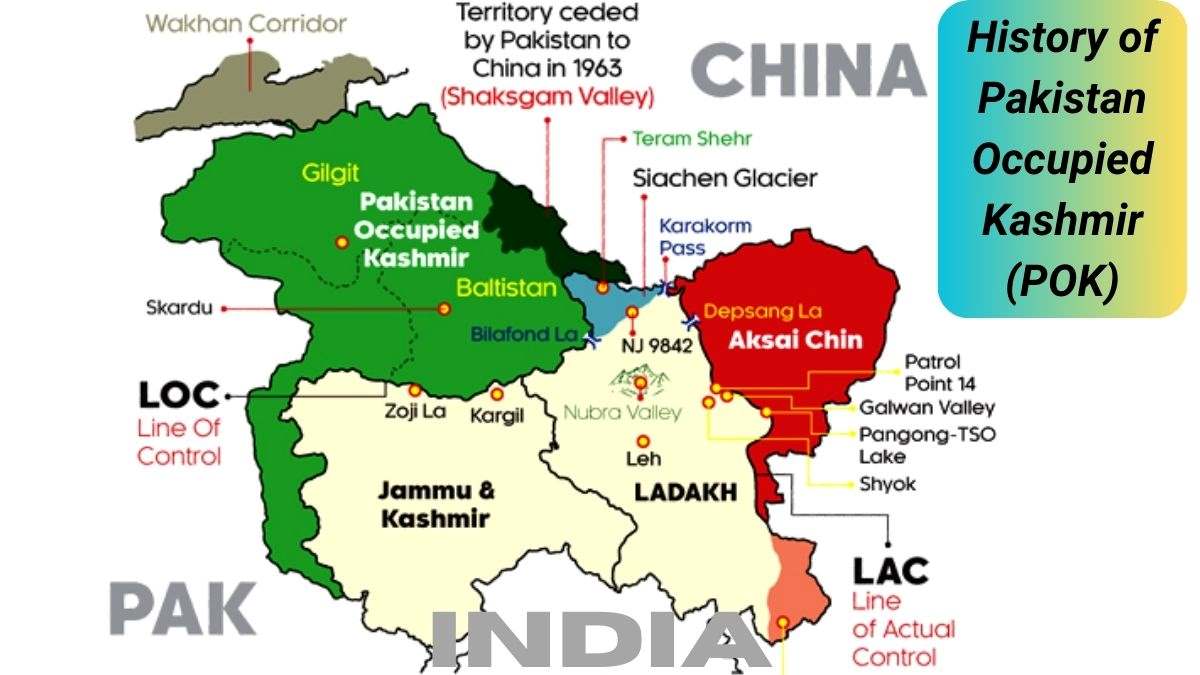
India's Position on PoJK:
-
-
- India has consistently maintained that the entire Union Territory of Jammu & Kashmir, including Pakistan-occupied Jammu & Kashmir (PoJK), is an integral and inalienable part of India. This position has been reaffirmed through parliamentary resolutions and official statements of the Government of India.
- The Ministry of External Affairs (MEA) has condemned Pakistan's use of excessive force against peaceful protesters and criticised the continued denial of democratic rights and civil liberties in PoJK. India has also highlighted that Pakistan's actions expose its disregard for the welfare and aspirations of the people living in the illegally occupied territory.
- India has consistently maintained that the entire Union Territory of Jammu & Kashmir, including Pakistan-occupied Jammu & Kashmir (PoJK), is an integral and inalienable part of India. This position has been reaffirmed through parliamentary resolutions and official statements of the Government of India.
-
Strategic Importance for India:
-
-
- PoJK holds immense strategic significance for India.
- It shares the Line of Control (LoC) with the Union Territory of Jammu & Kashmir.
- The region provides Pakistan with strategic access to Gilgit-Baltistan, where the China-Pakistan Economic Corridor (CPEC) passes through territory claimed by India.
- Areas such as Muzaffarabad, Kotli and Rawalakot have historically served as launch pads for cross-border terrorism and infiltration into India.
- The continued instability in PoJK directly impacts India's national security and border management.
- Therefore, developments in PoJK remain closely linked to India's security, diplomatic, and geopolitical interests.
- PoJK holds immense strategic significance for India.
-
Concerns for India:
From India's perspective, the situation raises several concerns:
-
-
- Human Rights Violations: Reports of excessive force, arbitrary arrests, and restrictions on media and communication highlight the deteriorating human rights situation in PoJK.
- Cross-border Terrorism: Political instability could either weaken terrorist infrastructure or prompt Pakistan-based groups to divert attention through increased infiltration attempts across the LoC.
- Chinese Presence: Pakistan's deepening strategic partnership with China, particularly through CPEC, increases the geopolitical importance of PoJK.
- Regional Stability: Continued unrest in PoJK has implications
- Human Rights Violations: Reports of excessive force, arbitrary arrests, and restrictions on media and communication highlight the deteriorating human rights situation in PoJK.
-
Conclusion:
The ongoing protests in Pakistan-occupied Jammu & Kashmir (PoJK) highlight governance failures and democratic deficits under Pakistan's administration. From India's perspective, they reinforce its consistent position that PoJK is an integral part of India and underscore the importance of protecting the rights and aspirations of its people.



