
Context:
The Public Accounts Committee (PAC) of Parliament has criticised the government for the “lackadaisical” implementation of the ₹4,455-crore SANKALP (Skill Acquisition and Knowledge Awareness for Livelihood Promotion) scheme, flagging delays, underutilisation of funds and weak monitoring mechanisms.
Key Findings of the CAG:
-
-
- Only 44% of the total budget provision was disbursed between 2017-18 and 2023-24 (as of October 2023).
- Against the first tranche of the World Bank loan ($250 million), ₹1,606.15 crore (86%) was disbursed, but only ₹850.71 crore was utilised (as of December 2023).
- Weak adherence to implementation guidelines and sluggish execution.
- “Non-preparedness” within the Ministry prior to commencement of the loan period.
- PAC members also questioned the absence of a central monitoring mechanism and lack of a clear roadmap for integrating skilling into school education from primary to higher secondary levels.
- Only 44% of the total budget provision was disbursed between 2017-18 and 2023-24 (as of October 2023).
-
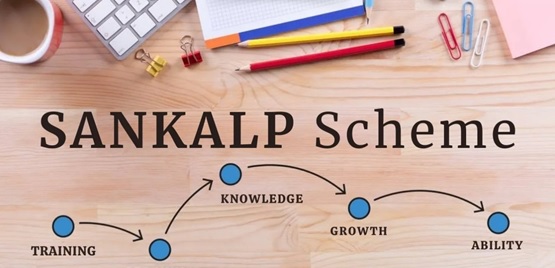
About the SANKALP Scheme:
Approved in October 2017 by the Cabinet Committee on Economic Affairs and launched in January 2018, SANKALP is a flagship scheme of the Ministry of Skill Development and Entrepreneurship.
Objectives:
-
-
- Strengthen short-term skill training.
- Improve institutional frameworks.
- Enhance industry linkages.
- Promote inclusion of marginalised communities.
- Strengthen short-term skill training.
-
Funding Pattern:
-
-
- World Bank loan: ₹3,300 crore
- State leverage: ₹660 crore
- Industry leverage: ₹495 crore
- Initially scheduled to conclude in March 2023, the scheme was extended to March 2024.
- World Bank loan: ₹3,300 crore
-
About Public Accounts Committee (PAC):
The Public Accounts Committee is a key financial oversight committee of Parliament.
Structure:
-
-
- 22 members (15 Lok Sabha, 7 Rajya Sabha)
- Elected annually via proportional representation
- Ministers cannot be members
- Chairman appointed by Lok Sabha Speaker (by convention from Opposition since 1967)
- 22 members (15 Lok Sabha, 7 Rajya Sabha)
-
Functions:
-
-
- Examines CAG reports on Appropriation and Finance Accounts
- Ensures legality, efficiency and economy in public expenditure
- Detects waste, corruption and extravagance
- Recommendations are advisory (not binding)
- Examines CAG reports on Appropriation and Finance Accounts
-
History:
Established in 1921 under the Montagu-Chelmsford Reforms.
Broader Governance Concerns:
-
-
- The PAC’s observations raise questions about:
- Outcome-based budgeting
- Centre-State coordination in skill development
- Integration of vocational education in school curricula (NEP 2020 linkage)
- Efficient utilisation of externally aided projects
- Outcome-based budgeting
- With India’s demographic dividend dependent on effective skilling, weak execution of flagship programmes like SANKALP may undermine long-term employability and economic growth.
- The PAC’s observations raise questions about:
-
Conclusion:
The PAC’s scrutiny underscores the importance of parliamentary oversight in ensuring fiscal accountability. The SANKALP case highlights how ambitious policy design must be matched by institutional preparedness, monitoring mechanisms and timely fund utilisation to translate financial outlays into tangible skill outcomes.



