
PCOS Renamed as PMOS
Context:
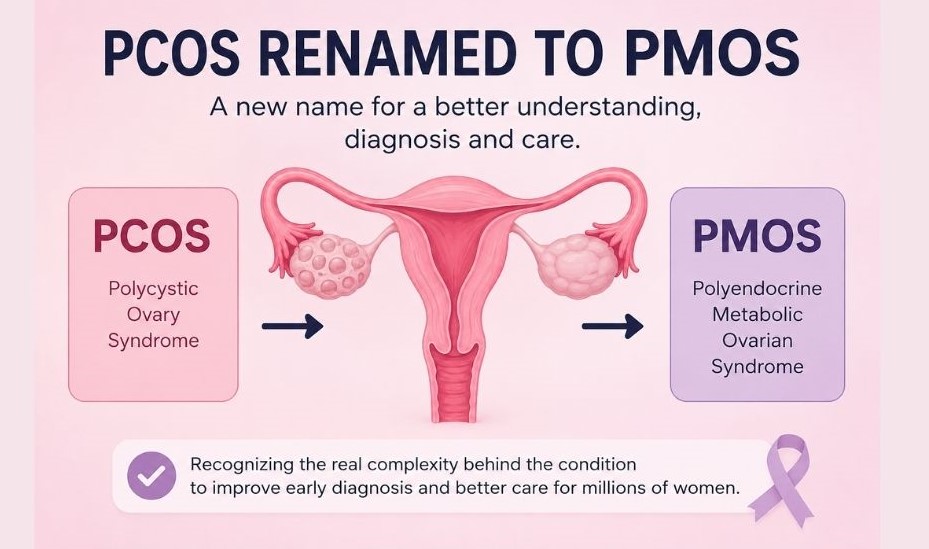
Recently, Global experts have renamed Polycystic Ovary Syndrome (PCOS) as Polyendocrine Metabolic Ovarian Syndrome (PMOS) after 14 years of collaboration led by Monash University. Published in The Lancet, the change reflects updated understanding that the condition is a multisystem disorder affecting endocrine, metabolic, and reproductive health, not just the ovaries.
About PMOS (Previously PCOS):
-
-
- PMOS is one of the most common hormonal disorders in women, affecting nearly one in eight globally- over 170 million women. It is associated with a wide range of symptoms, including irregular or absent menstrual cycles, infertility, pregnancy complications, acne, excessive hair growth, weight gain, insulin resistance, anxiety, depression, diabetes, and cardiovascular risks.
- The earlier term PCOS was based on ultrasound findings of multiple small ovarian follicles, mistakenly referred to as “cysts.” However, research shows these are not true cysts but arrested follicles that fail to mature and release eggs. In a normal cycle, one follicle becomes dominant and ovulates, while others regress. In PMOS, this process is disrupted, leading to multiple immature follicles that appear cyst-like but reflect hormonal imbalance rather than ovarian disease.
- PMOS is one of the most common hormonal disorders in women, affecting nearly one in eight globally- over 170 million women. It is associated with a wide range of symptoms, including irregular or absent menstrual cycles, infertility, pregnancy complications, acne, excessive hair growth, weight gain, insulin resistance, anxiety, depression, diabetes, and cardiovascular risks.
-
Key Features of PMOS:
PMOS reflects a multisystem disorder affecting:
-
-
- Endocrine system dysfunction involving hypothalamus, pituitary, and ovaries
- Metabolic issues such as insulin resistance and diabetes risk
- Reproductive challenges including irregular ovulation and infertility
- Dermatological symptoms like acne and excess hair growth
- Mental health impacts including anxiety and depression
- Long-term cardiovascular risks due to systemic inflammation
- Endocrine system dysfunction involving hypothalamus, pituitary, and ovaries
-
Why the Renaming Was Needed:
-
-
- Experts say the name PCOS oversimplified a complex endocrine disorder by focusing only on the ovaries. This misunderstanding contributed to delayed diagnosis and inadequate treatment for decades. The new name corrects this by recognising the condition as a disorder involving multiple systems rather than a single organ.
- PMOS highlights dysfunction across endocrine regulation, metabolic pathways, and reproductive hormones. It also acknowledges neuroendocrine and metabolic factors, making the condition more accurately defined in clinical practice and research.
- Experts say the name PCOS oversimplified a complex endocrine disorder by focusing only on the ovaries. This misunderstanding contributed to delayed diagnosis and inadequate treatment for decades. The new name corrects this by recognising the condition as a disorder involving multiple systems rather than a single organ.
-
India’s Role and Relevance:
-
-
- India played an active role in the global consensus process, contributing to large-scale consultations involving over 22,000 responses from patients, clinicians, and professional bodies across 56 organisations worldwide. Indian experts emphasised the importance of the change given the country’s high prevalence of 16–18%.
- The inclusion of “metabolic” is particularly relevant in India due to rising insulin resistance, obesity, and Type 2 diabetes, even among adolescents.
- India played an active role in the global consensus process, contributing to large-scale consultations involving over 22,000 responses from patients, clinicians, and professional bodies across 56 organisations worldwide. Indian experts emphasised the importance of the change given the country’s high prevalence of 16–18%.
-
Conclusion:
The transition from PCOS to PMOS represents a major advancement in women’s health research. By aligning terminology with scientific evidence, it improves clinical clarity and patient awareness. For India and the world, it offers a more accurate framework for managing a condition that affects millions and requires integrated, long-term care.



