
Context:
Recently, A U.S.‑backed peace plan to end the Gaza war has entered its second phase even as unresolved political and security disputes persist between Israel and Hamas over key issues such as disarmament and post‑war governance. The plan aims to shift from immediate conflict cessation to longer-term governance, reconstruction, and stabilization of Gaza.
Background:
-
-
- The Gaza conflict is part of the long-standing Israeli-Palestinian dispute originating in 1948, following the establishment of Israel and the displacement of Palestinians. Gaza became a flashpoint after Hamas took control in 2007, leading to an Israeli and Egyptian blockade. The recent escalation began on 7 October 2023, when Hamas launched large-scale attacks on Israel, killing over 1,200 people and taking hostages. Israel responded with Operation Iron Swords, causing widespread casualties and destruction in Gaza.
- The Gaza conflict is part of the long-standing Israeli-Palestinian dispute originating in 1948, following the establishment of Israel and the displacement of Palestinians. Gaza became a flashpoint after Hamas took control in 2007, leading to an Israeli and Egyptian blockade. The recent escalation began on 7 October 2023, when Hamas launched large-scale attacks on Israel, killing over 1,200 people and taking hostages. Israel responded with Operation Iron Swords, causing widespread casualties and destruction in Gaza.
-
About Phase One:
Phase One, launched in October 2025, aimed to:
-
- Establish a fragile ceasefire
- Allow humanitarian aid into Gaza
- Secure the release of hostages
- Establish a fragile ceasefire
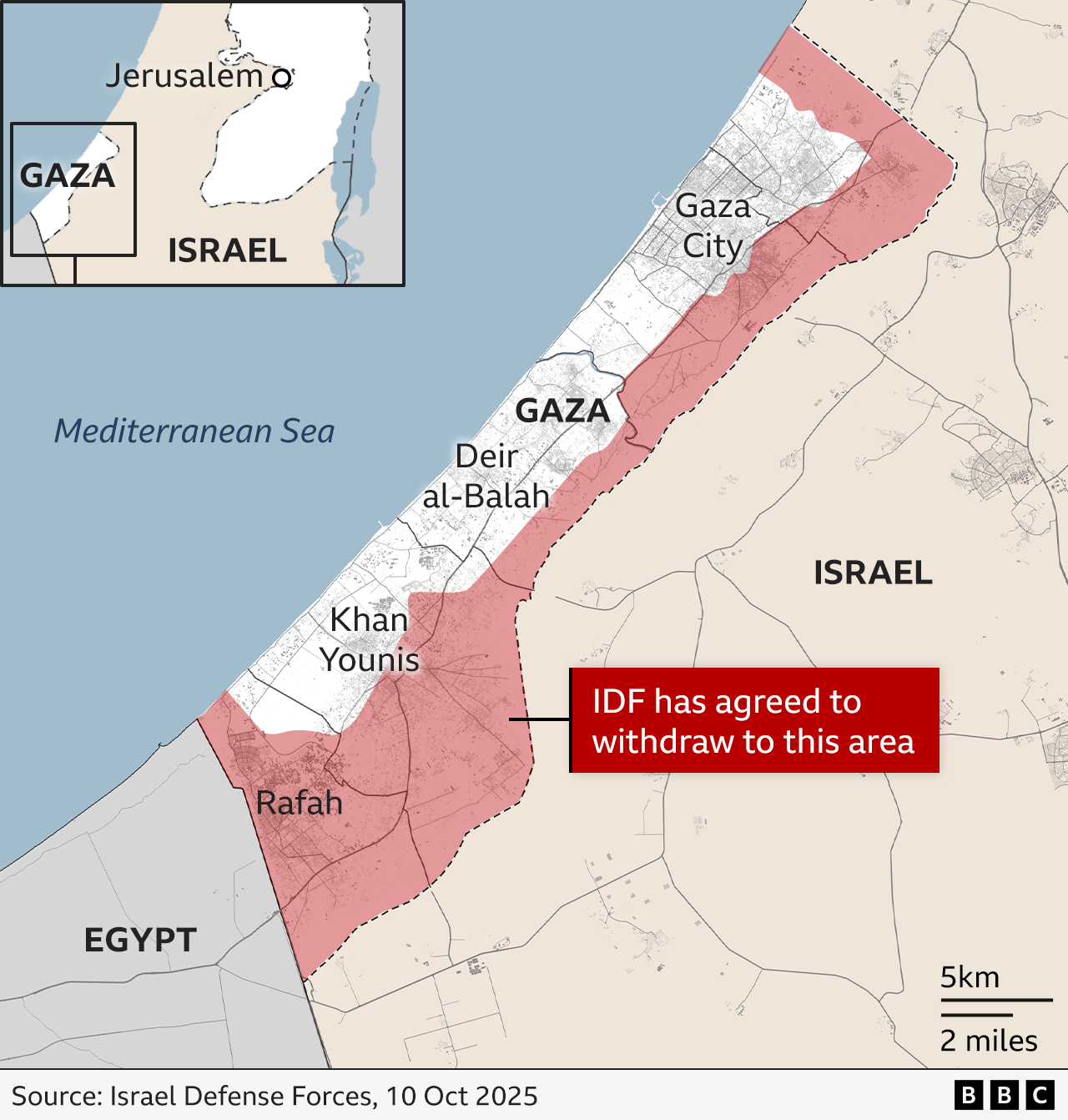
Most hostages were returned, except the remains of Ran Gvili, creating tension over the timing of Phase Two. Ceasefire violations persisted, with reports of casualties on both sides. Humanitarian access remained limited, and shortages of food, medicine, and fuel worsened the humanitarian crisis.
About Phase Two:
Phase Two introduces a 15-member Palestinian technocratic committee to govern Gaza, led by Ali Sha’ath, focusing on day-to-day administration, reconstruction, and civilian services. Oversight is provided by a “Board of Peace”, chaired by U.S. President Donald Trump, with international figures guiding the process. An International Stabilisation Force is also proposed to train Palestinian police and secure the territory.
Challenges:
Key challenges remain:
-
- Disarmament: Hamas refuses full demilitarization, Israel’s core demand.
- Withdrawal: Israel has not provided a timeline for complete troop withdrawal.
- Humanitarian crisis: Over 2 million Palestinians lack food, clean water, and medical care; 90% remain displaced.
- Political mistrust: Deep-rooted grievances hinder reconciliation and governance.
- Disarmament: Hamas refuses full demilitarization, Israel’s core demand.
Conclusion:
Phase Two represents a critical shift from short-term ceasefire to long-term governance and stabilization. However, its success depends on sustained international mediation, mutual trust, and addressing security and political disputes. Without these, reconstruction and peace in Gaza may remain fragile, underscoring the complexities of resolving protracted conflicts.



