
Context:
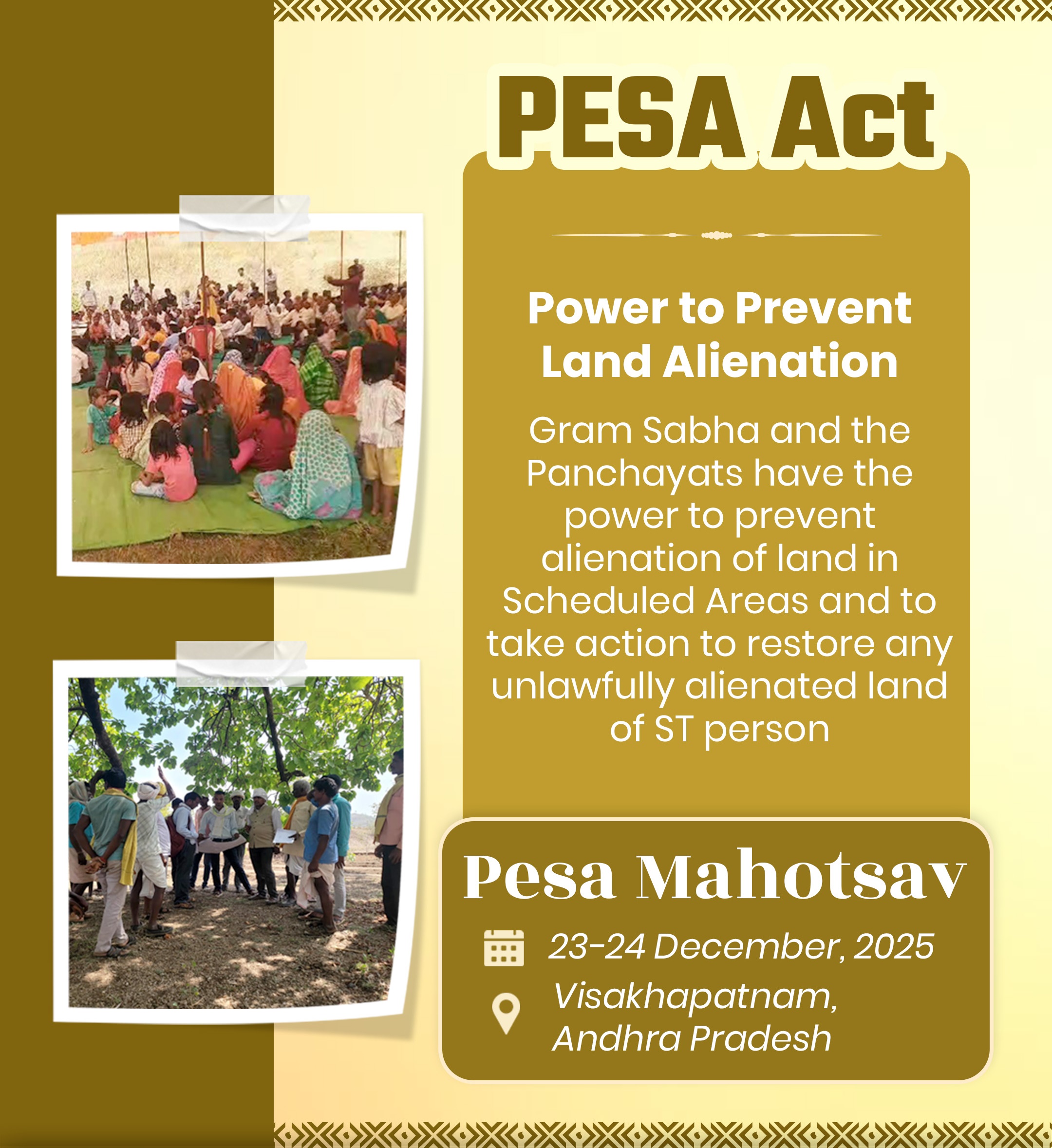
Recently, the two-day PESA Mahotsav (23–24 December 2025) was observed at Visakhapatnam. Celebrated annually on 24 December as PESA Day, the event commemorates the enactment of the Panchayats (Extension to Scheduled Areas) Act, 1996 (PESA), which empowers tribal communities in Fifth Schedule Areas by placing the Gram Sabha at the centre of governance.
Highlights of PESA Mahotsav 2025:
-
- Participation from tribal communities across all ten PESA States: Andhra Pradesh, Chhattisgarh, Gujarat, Himachal Pradesh, Jharkhand, Madhya Pradesh, Maharashtra, Odisha, Rajasthan and Telangana.
- Showcasing of tribal sports, crafts, food, art, dance and traditions, creating a national platform for indigenous heritage.
- Sports events such as Kabaddi, Archery, PESA Run and tribal demonstration games encouraged youth participation and leadership.
- The PESA Mahotsav Baton was ceremonially handed over to Chhattisgarh, the next host State.
- Jharkhand approved its draft PESA Rules, becoming the ninth of the ten PESA States to move towards formal notification.
- Participation from tribal communities across all ten PESA States: Andhra Pradesh, Chhattisgarh, Gujarat, Himachal Pradesh, Jharkhand, Madhya Pradesh, Maharashtra, Odisha, Rajasthan and Telangana.
Cultural Performances Featured:
The Mahotsav witnessed vibrant performances reflecting India’s tribal diversity, including:
-
- Kuchipudi (Andhra Pradesh)
- Gussadi (Telangana)
- Gavari (Rajasthan)
- Dhemsa (Odisha)
- Folk dances from Maharashtra, Madhya Pradesh, Jharkhand, Gujarat, Chhattisgarh and Himachal Pradesh
- Kuchipudi (Andhra Pradesh)
PESA Act, 1996: Background and Constitutional Basis:
-
- Enactment: 24 December 1996
- Based on: Recommendations of the Bhuria Committee (1995)
- Constitutional Basis: Operationalises Article 243M by extending Part IX (Panchayats) of the Constitution to Fifth Schedule Areas, with suitable modifications.
- Enactment: 24 December 1996
Objectives of PESA:
-
- To ensure self-rule (self-governance) for tribal communities.
- To preserve tribal customs, culture, traditions and identity.
- To protect rights over land, water, forests and natural resources.
- To promote participatory democracy, with the Gram Sabha as the nucleus of decision-making.
- To ensure self-rule (self-governance) for tribal communities.
Empowered Institution: Gram Sabha:
Under PESA, the Gram Sabha is not merely consultative but decisive, enjoying substantial statutory authority.
Key Powers of the Gram Sabha:
1. Resource Management
-
-
- Ownership and control over Minor Forest Produce (MFP)
- Management of village markets, water bodies, minor minerals and land resources
- Ownership and control over Minor Forest Produce (MFP)
-
2. Land Protection
-
-
- Prevention of land alienation
- Restoration of unlawfully alienated land
- Mandatory consultation or consent for land acquisition and development projects
- Prevention of land alienation
-
3. Developmental Authority
-
-
- Approval of development plans and projects
- Control over institutions and personnel implementing government schemes
- Approval of development plans and projects
-
4. Social Regulation
-
-
- Authority to regulate or prohibit the sale and consumption of intoxicants
- Authority to regulate or prohibit the sale and consumption of intoxicants
-
5. Cultural Autonomy
-
-
- Recognition of traditional customs, dispute resolution systems and indigenous governance practices
- Recognition of traditional customs, dispute resolution systems and indigenous governance practices
-
Challenges in PESA Implementation:
Despite its progressive framework, the implementation of PESA faces several challenges:
-
- Partial or delayed implementation by States
- Ambiguity in the devolution of powers to Gram Sabhas
- Inadequate financial and administrative support
- Low awareness among tribal communities regarding their statutory rights
- Partial or delayed implementation by States
Conclusion:
The PESA Mahotsav 2025 reaffirmed that true development in Scheduled Areas lies in empowered Gram Sabhas, cultural respect, and community-led decision-making. By integrating governance reforms with cultural celebration, PESA embodies India’s constitutional commitment to inclusive, participatory and grassroots democracy. Effective and sincere implementation of the Act remains essential for achieving social justice, tribal autonomy and sustainable development, especially as India advances towards Viksit Bharat 2047.



