
Context:
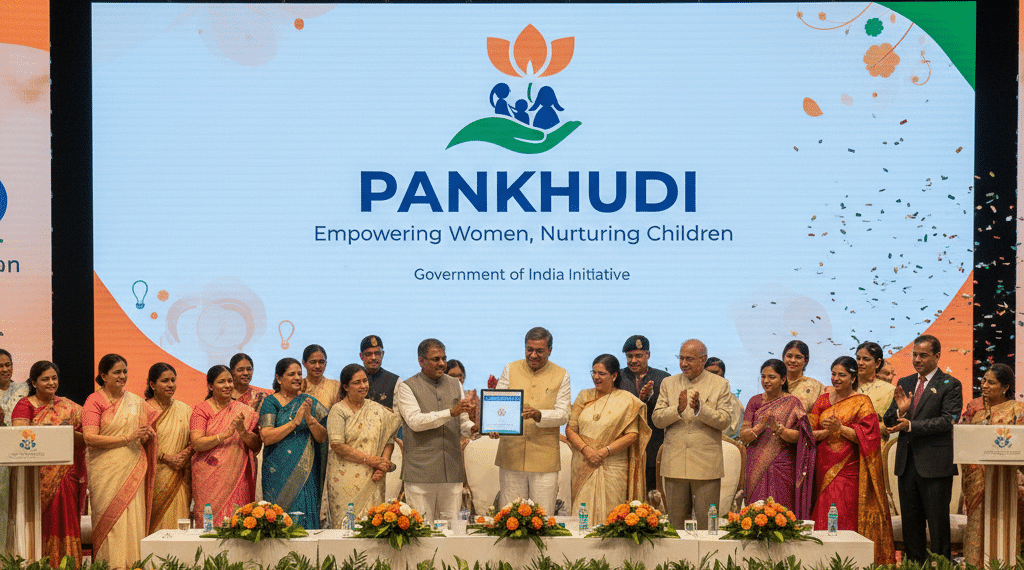
On January 8, 2026, the Ministry of Women and Child Development (MWCD) launched PANKHUDI, an integrated digital portal aimed at streamlining Corporate Social Responsibility (CSR) and private partnerships for the welfare of women and children.
About the PANKHUDI Portal:
PANKHUDI is a single-window digital platform designed to facilitate non-monetary, transparent, and outcome-oriented contributions to government initiatives for women and child welfare.
The portal enables individuals, NRIs, NGOs, corporate entities, CSR contributors, and government agencies to directly engage with welfare programmes without procedural complexity. It also allows contributors to monitor progress and outcomes, thereby enhancing trust, accountability, and efficiency.
Key Features:
• Single-Window Interface: Integrates voluntary, institutional, and CSR contributions on a common digital platform.
• End-to-End Digital Workflow: Enables registration, identification of initiatives, proposal submission, approvals, and tracking of implementation.
• Non-Cash Contributions Only: Ensures financial transparency, auditability, and prevents misuse.
• Real-Time Monitoring: Facilitates outcome tracking through defined approval and reporting mechanisms.
Thematic Focus Areas:
The portal supports initiatives across key social development sectors:
• Nutrition and Health
• Early Childhood Care and Education (ECCE)
• Child Welfare, Protection, and Rehabilitation
• Women’s Safety, Empowerment, and Livelihood Support
These focus areas are vital for improving human development indicators and promoting social equity.
Support to Flagship Missions:
PANKHUDI strengthens the implementation of MWCD’s flagship schemes:
• Mission Saksham Anganwadi & Poshan 2.0
• Mission Vatsalya
• Mission Shakti
It enhances convergence among central and state governments, implementing agencies, civil society, and the private sector.
Significance for Governance and Social Development:
• Strengthens digital governance through transparent, technology-driven welfare delivery.
• Enhances public-private collaboration by facilitating CSR and NGO participation.
• Improves accountability through real-time, outcome-based monitoring.
• Boosts social infrastructure by supporting over 14 lakh Anganwadi centres, child-care institutions, and women support facilities.
Conclusion:
The PANKHUDI portal marks a significant step towards inclusive, collaborative, and accountable welfare governance. By leveraging digital tools and stakeholder partnerships, it improves service delivery and contributes to the holistic development of women and children, reinforcing India’s commitment to participatory and transparent governance.



