
Maternal Mortality Rate in India
Context:
Recently, a study published in The Lancet Obstetrics, Gynaecology & Women’s Health has expressed serious concern regarding India’s health sector. According to the study, achieving the Sustainable Development Goal (SDG 3.1) of reducing the Maternal Mortality Rate (MMR) to below 70 per 100,000 live births by 2030 is becoming increasingly challenging for India.
Key Findings of the Study:
-
-
-
Current Status:
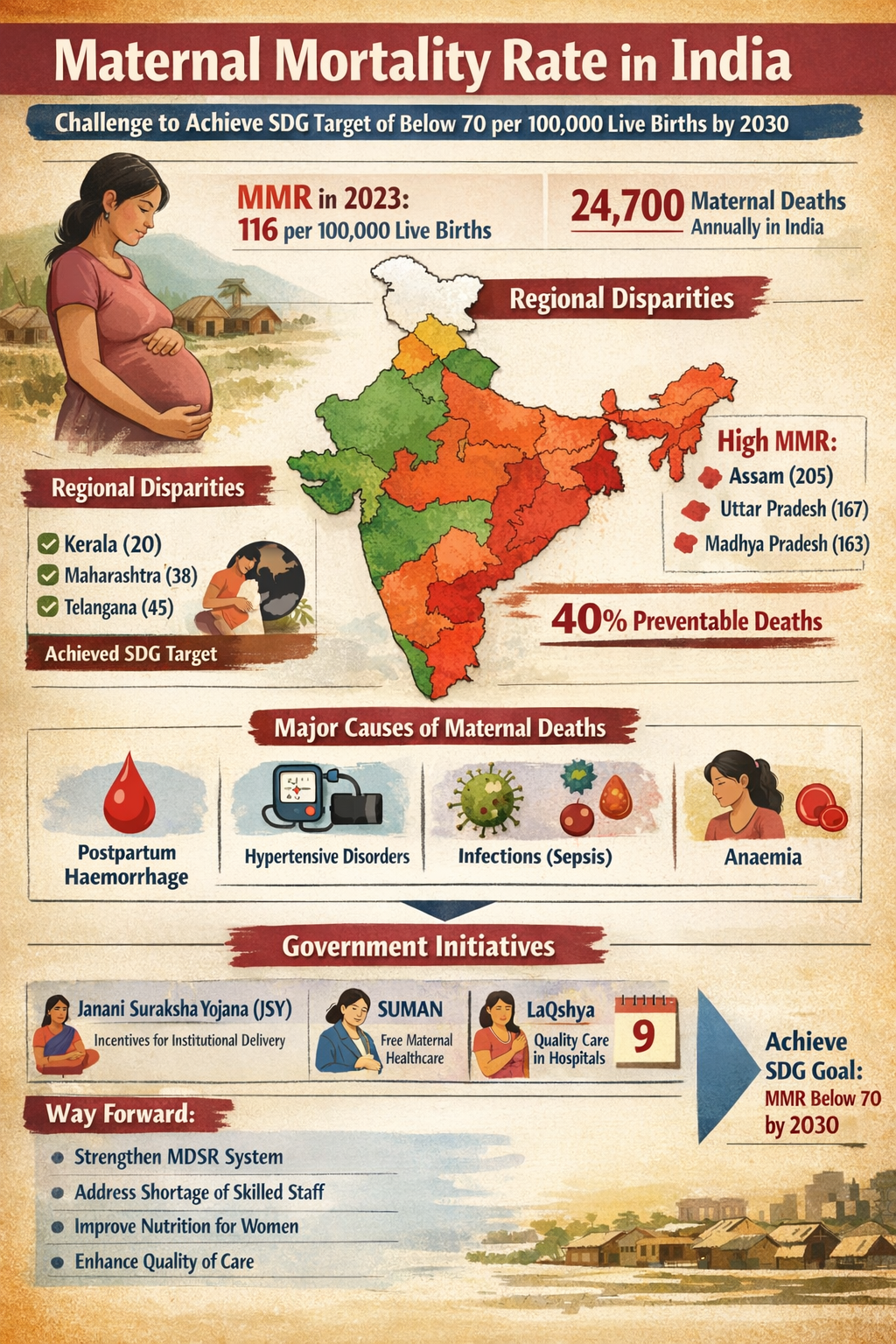
- According to the study, India’s MMR was approximately 116 in 2023. Although India has achieved a remarkable decline of nearly 80% compared to the 1990 level of 508, the pace of reduction has significantly slowed since 2015.
- At present, around 10% of the total maternal deaths worldwide (approximately 24,700 deaths) occur in India.
- According to the study, India’s MMR was approximately 116 in 2023. Although India has achieved a remarkable decline of nearly 80% compared to the 1990 level of 508, the pace of reduction has significantly slowed since 2015.
-
Regional Disparities:
- Leading States: Kerala (20), Maharashtra (38), and Telangana (45), along with 8 states, have already achieved the SDG target (below 70).
- Lagging States: States such as Assam (205), Uttar Pradesh (167), and Madhya Pradesh (163) continue to face serious challenges. In these states, inadequate health infrastructure and socio-economic factors keep mortality rates high.
- Leading States: Kerala (20), Maharashtra (38), and Telangana (45), along with 8 states, have already achieved the SDG target (below 70).
-
-
Major Causes of Death:
According to the study, more than 40% of maternal deaths are preventable. The major causes include:
-
-
- Postpartum Haemorrhage: Excessive bleeding after childbirth.
- Hypertensive Disorders: Pre-eclampsia and eclampsia.
- Infections (Sepsis): Infections caused by unhygienic delivery conditions.
- Anaemia: Malnutrition remains a chronic issue among Indian women.
- Postpartum Haemorrhage: Excessive bleeding after childbirth.
-
Government Initiatives:
The Government of India has implemented several important schemes under the National Health Mission (NHM):
-
-
- Janani Suraksha Yojana (JSY): Cash incentives to promote institutional deliveries.
- SUMAN (Surakshit Matritva Aashwasan): Ensures free and quality maternal healthcare services.
- LaQshya: Aims to improve the quality of care in labour rooms and operation theatres.
- Pradhan Mantri Surakshit Matritva Abhiyan (PMSMA): Provides free antenatal check-ups to pregnant women on the 9th of every month.
- Janani Suraksha Yojana (JSY): Cash incentives to promote institutional deliveries.
-
Way Forward:
-
-
- Monitoring Mechanism: Strengthen the Maternal Death Surveillance and Response (MDSR) system in high MMR districts to ensure scientific analysis of each death.
- Human Resources: Address the shortage of skilled birth attendants and anaesthetists in rural areas.
- Focus on Nutrition: Investment must increase not only in maternal care but also in the nutrition of adolescent girls and pregnant women (e.g., Anaemia Mukt Bharat).
- Quality of Care: With the rise in institutional deliveries, the focus must now shift to improving the quality of care so that no woman dies after reaching a healthcare facility.
- Monitoring Mechanism: Strengthen the Maternal Death Surveillance and Response (MDSR) system in high MMR districts to ensure scientific analysis of each death.
-
Conclusion:
India has made commendable progress in maternal health; however, the Lancet report serves as a serious warning. To achieve the target of 70 by 2030, policy efforts must focus particularly on lagging states and on ensuring healthcare access for women at the last mile.



