
Lyriothemis keralensis
Context
A new dragonfly species, Lyriothemis keralensis, has been discovered in Kerala, highlighting the State’s rich biodiversity. Although it was first recorded in 2013 near Varapetty in Ernakulam district, it was misidentified for over a decade as Lyriothemis acigastra.
This species belongs to the odonate group, which comprises predatory, amphibious insects characterized by aquatic larval stages and winged adults. Its distinct identity was confirmed through detailed morphological studies, further underscoring Kerala’s remarkable insect diversity. 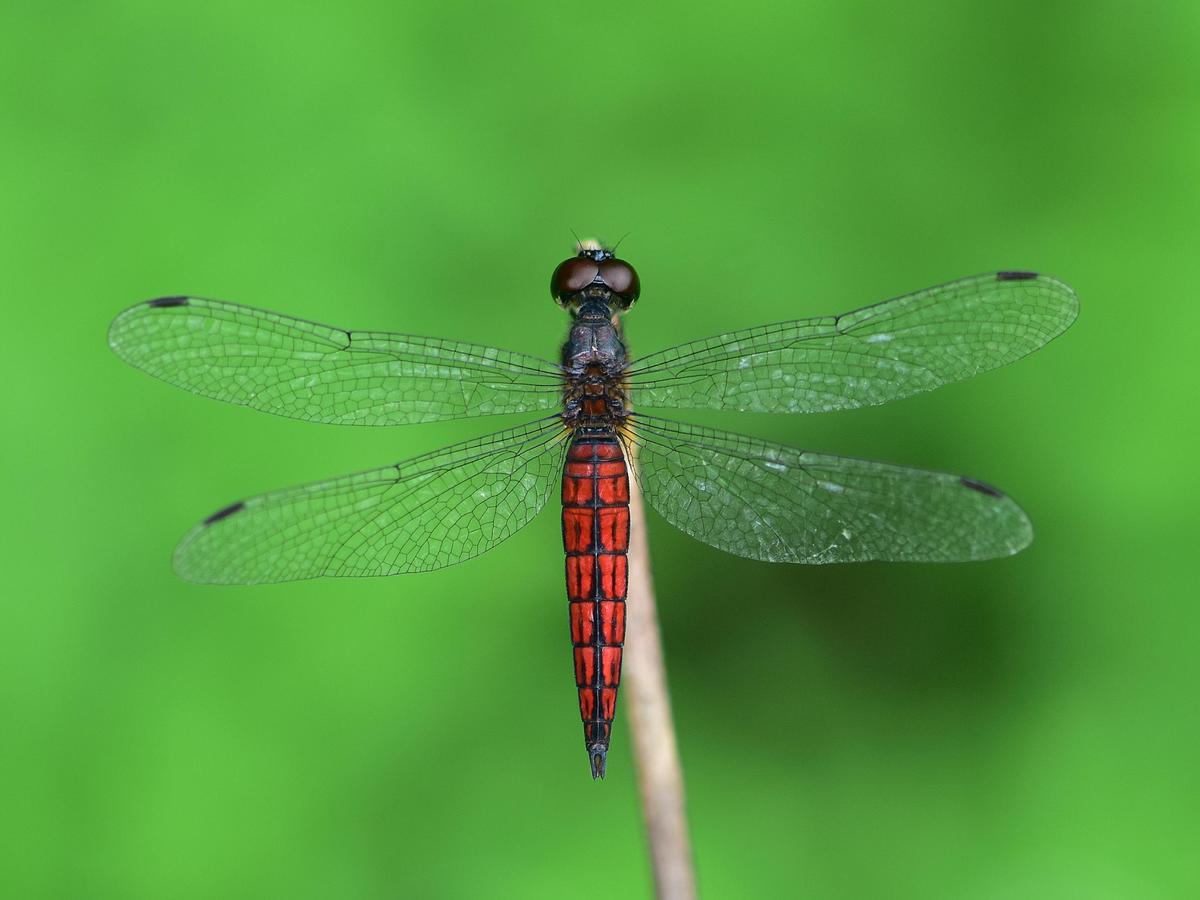
Habitat and Characteristics
Lyriothemis keralensis inhabits vegetated pools and irrigation canals located within shaded pineapple and rubber plantations in Kerala’s low-lying coastal plains.
The species is relatively small, measuring about 3 cm in length, and exhibits clear sexual dimorphism. Males are bright blood-red with black markings and possess slender abdomens, while females are bulkier and yellow with black markings.
It is seasonally visible during the Southwest monsoon (late May to August). For the remainder of the year, it persists in its aquatic larval stage. As a predatory insect, it feeds on mosquitoes, flies, midges, moths, and butterflies.
Conservation and Ecological Significance
Most populations of Lyriothemis keralensis occur outside protected areas, making them particularly vulnerable to land-use changes in plantation-dominated landscapes.
Odonates are widely regarded as bioindicators of healthy wetland ecosystems. Therefore, the discovery of Lyriothemis keralensis emphasizes the ecological importance of conserving microhabitats, especially in human-modified environments.
Adopting sustainable land-use practices will be essential to ensure the survival of this endemic species and to maintain Kerala’s high level of insect biodiversity.



