
Context:
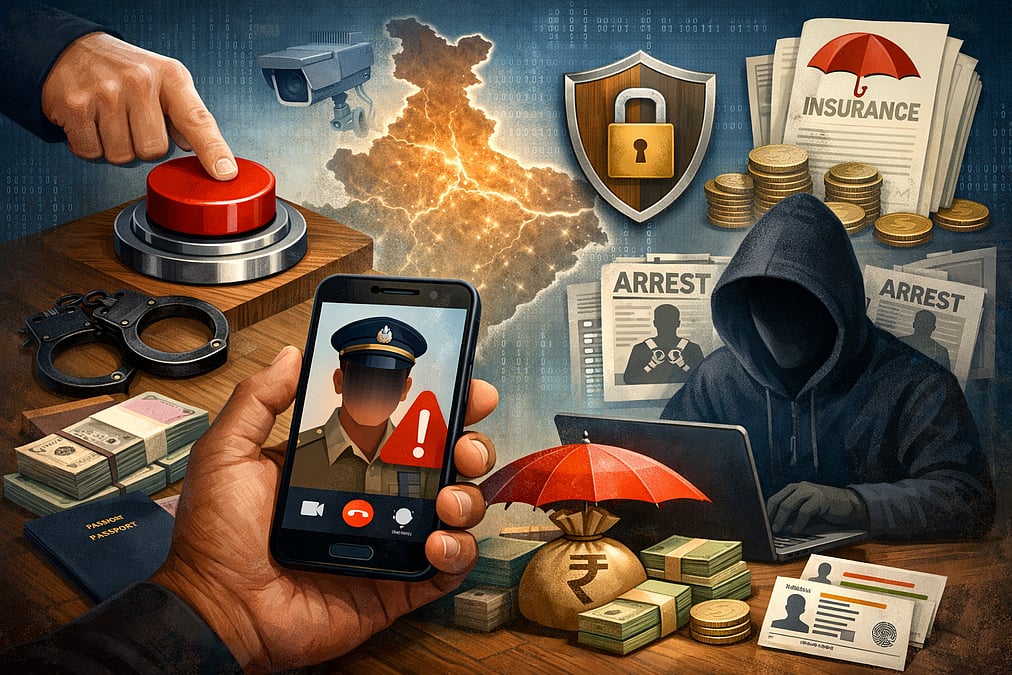
Digital arrest scams are a growing cyber threat in India’s rapidly digitising economy. Fraudsters impersonate law enforcement officials via video calls, coercing victims into transferring money under the threat of arrest or asset seizure. To combat this, a high-level inter-departmental committee (IDC) under the Ministry of Home Affairs (MHA) is exploring technological tools like a kill switch and insurance mechanisms to safeguard customers and banks.
About Digital Arrest:
A digital arrest is an online extortion method where fraudsters:
-
- Impersonate officials from CBI, ED, or Police.
- Accuse victims of criminal or financial wrongdoing.
- Conduct fake interrogations via video calls.
- Threaten imprisonment or asset seizure unless victims transfer money.
- Impersonate officials from CBI, ED, or Police.
Fraudsters often disappear after collecting funds through cryptocurrency, wire transfers, or digital wallets.
Reasons for Rising Digital Arrests:
1. Explosion of digital transactions.
2. Low cyber awareness among users.
3. Technological sophistication, including AI-generated voices and deepfakes.
4. Weak global enforcement exploiting jurisdictional gaps.
5. Psychological manipulation leveraging fear of authority.
About Kill Switch:
The proposed kill switch is an emergency feature integrated into UPI or bank apps. If a user suspects fraud, pressing it instantly freezes all transactions, preventing funds from being moved to mule accounts. It represents a real-time, proactive safeguard against coercive scams.
Insurance against Fraud:
An insurance mechanism is also being considered. A fraud insurance pool, supported by banks and insurers and regulated by IRDAI, could spread systemic risk, similar to terrorism insurance models, making coverage affordable and effective.
Government & Institutional Response for digital arrest:
|
Initiative |
Description |
|
Indian Cyber Crime Coordination Centre (I4C) |
Coordinates with banks, telecoms, and fintech firms to track cybercrime patterns. |
|
Blocking Spoofed Calls |
Telecom service providers (TSPs) block fake international numbers used in scams. |
|
National Cyber Crime Reporting Portal |
Citizens can report scams online at cybercrime.gov.in. |
|
CERT-In Guidelines |
Advises public to verify calls, avoid sharing personal data, and not install suspicious apps. |
|
Inter-Ministerial Committee (May 2024) |
Tackles transnational cybercrime networks operating from Southeast Asia. |
Conclusion:
Digital arrest scams expose vulnerabilities in India’s digital economy. Kill switches, insurance pools, and coordinated institutional measures can mitigate both individual and systemic risk. Proactive, multi-stakeholder strategies are essential to safeguard citizens, strengthen financial resilience, and combat the evolving cyber threat landscape.



