
Keytruda: Counterfeit Drug Crisis and Cancer Treatment Challenges in India
Context:
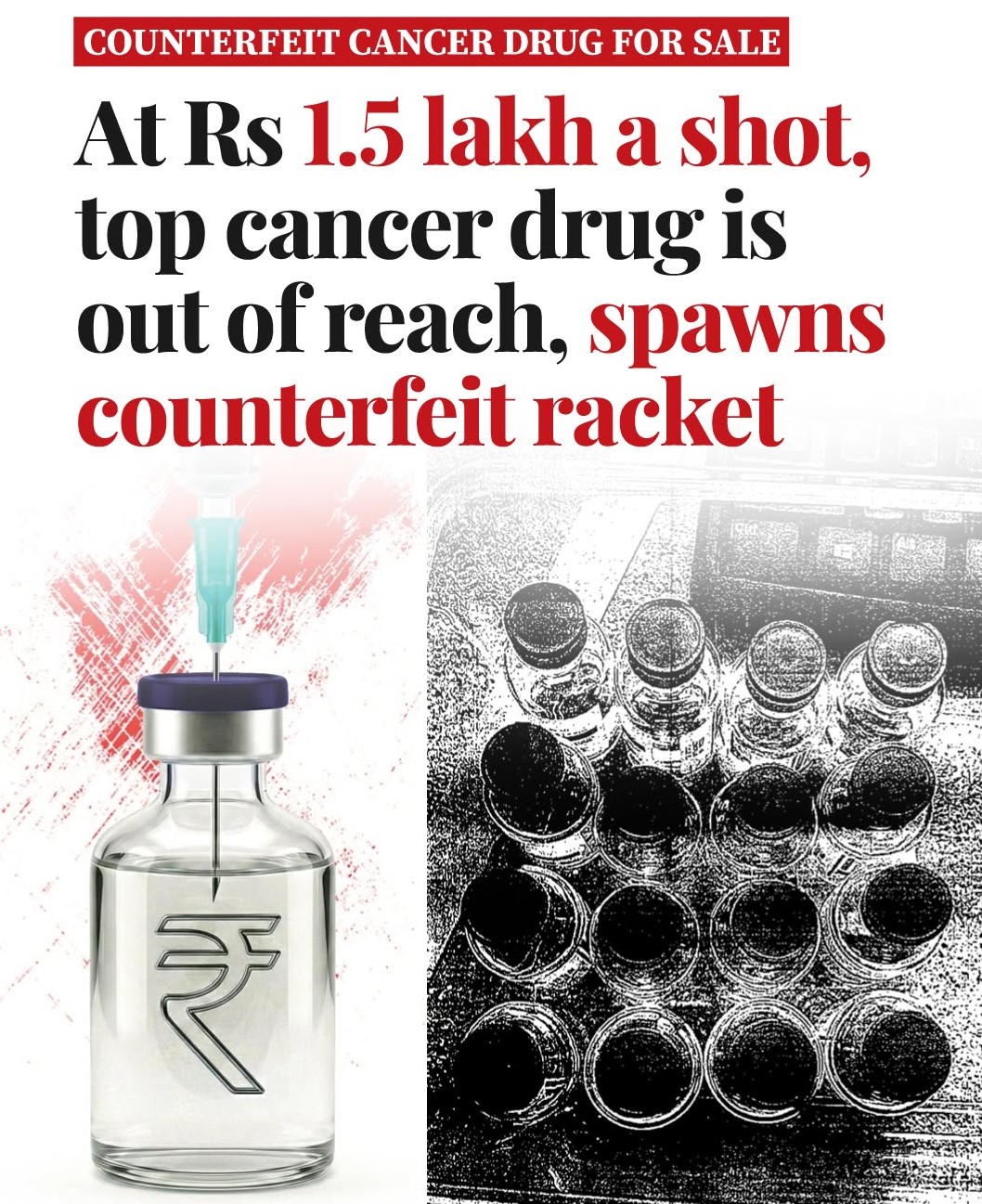
Recently, in India, an illegal market of counterfeit versions of Keytruda (Keytruda), an effective drug for cancer, has been exposed. Due to hospital-level security lapses, high prices, and weak supply chains, this life-saving drug is increasingly reaching patients in fake form. This issue raises questions on drug safety, health regulation, and the effectiveness of the public health system in India.
About Keytruda:
-
-
-
- Keytruda (Pembrolizumab) is an advanced immunotherapy drug, used in the treatment of various types of cancer.
- It is a checkpoint inhibitor (PD-1 inhibitor)
- Developed by Merck & Co.
- Purpose: To activate the body’s immune system against cancer cells
- It is a checkpoint inhibitor (PD-1 inhibitor)
- Keytruda (Pembrolizumab) is an advanced immunotherapy drug, used in the treatment of various types of cancer.
-
-
Mechanism:
-
-
-
- Blocks the PD-1 protein present on T-cells
- Prevents cancer cells from escaping immune attack through PD-L1 mechanism
- Enables the immune system to recognize and destroy cancer cells
- It is a more targeted and immune-based therapy compared to traditional chemotherapy.
- Blocks the PD-1 protein present on T-cells
-
-
Key Features:
-
-
-
- First approved in 2014 (for melanoma cancer)
- Now used in cancers like lung, kidney, cervical, etc.
- Fewer side effects and more targeted action
- High cost limits accessibility
- First approved in 2014 (for melanoma cancer)
-
-
About Cancer:
Cancer is a group of diseases involving uncontrolled cell growth, where abnormal cells form tumors and may spread to other parts of the body (metastasis). It can occur in more than 100 types. Early detection (screening) and treatment, such as surgery, chemotherapy and radiotherapy, can make it manageable or curable.
Major Challenges of Cancer in India:
-
-
-
- Rising Cancer Burden:
- India is projected to see about 74% increases in cancer cases by 2045, increasing demand for advanced drugs.
- India is projected to see about 74% increases in cancer cases by 2045, increasing demand for advanced drugs.
- Risk of Fake Drugs:
- Weak supply chains and hospital-level lapses
- Despite laws against “spurious drugs,” enforcement remains weak
- Direct threat to patient lives
- Weak supply chains and hospital-level lapses
- Price and Access Inequality:
- Extremely high cost of treatment
- Limited insurance and government coverage
- Extremely high cost of treatment
- Rising Cancer Burden:
-
-
Regulatory Framework in India:
Several laws are in force in India to safeguard against counterfeit drugs and ensure the safety of cancer medications:
-
-
-
- Drugs and Cosmetics Act, 1940:
- Regulates manufacture, sale, and distribution of drugs
- Section 17A & 17B define spurious and adulterated drugs as crimes
- Strict punishment and imprisonment for offenders
- Regulates manufacture, sale, and distribution of drugs
- Drugs and Cosmetics Rules, 1945:
- Defines licensing, storage, and distribution conditions
- Framework for quality control and inspection
- Defines licensing, storage, and distribution conditions
- New Drugs and Clinical Trials Rules, 2019:
- Approval system for new and advanced drugs (like immunotherapy)
- Mandatory safety and efficacy testing
- Approval system for new and advanced drugs (like immunotherapy)
- Drugs (Prices Control) Order, 2013:
- Controls prices of essential medicines
- Monitored by National Pharmaceutical Pricing Authority (NPPA)
- Controls prices of essential medicines
- Drugs and Cosmetics Act, 1940:
-
-
Conclusion:
Drugs like Keytruda represent a revolution in cancer treatment through immunotherapy. However, despite laws like the Drugs and Cosmetics Act, 1940, the problem of counterfeit medicines remains serious in India. There is a need to strengthen the system through digital supply chain tracking, strict inspection mechanisms, and effective price regulation, so that life-saving treatment can reach every patient safely and affordably.



