
Context:
Recently, A four-day wildlife survey conducted from October 8 to 11, 2026, by the Kerala Forest and Wildlife Department in collaboration with the Travancore Nature History Society (TNHS) documented 36 new wildlife records across three sanctuaries in Kerala. The survey recorded 395 species of birds, butterflies and odonates, including 24 species endemic to the Western Ghats.
Key Findings of the Survey:
-
-
- The survey covered ten base camps across:
- Chimmony Wildlife Sanctuary
- Peechi–Vazhani Wildlife Sanctuary
- Chulannur Peafowl Sanctuary
- Chimmony Wildlife Sanctuary
- The major findings were:
- Birds: 165 species, including eight checklist additions.
- Butterflies: 174 species, including 22 checklist additions.
- Odonates: 56 species, including six checklist additions.
- Birds: 165 species, including eight checklist additions.
- The survey covered ten base camps across:
-
The survey also recorded 52 moth species, 22 ant species, five cicada species and around 30 spider species. Tigers, leopards, Asian elephants and gaur were also reported in the landscape.
Important Species Recorded:
-
-
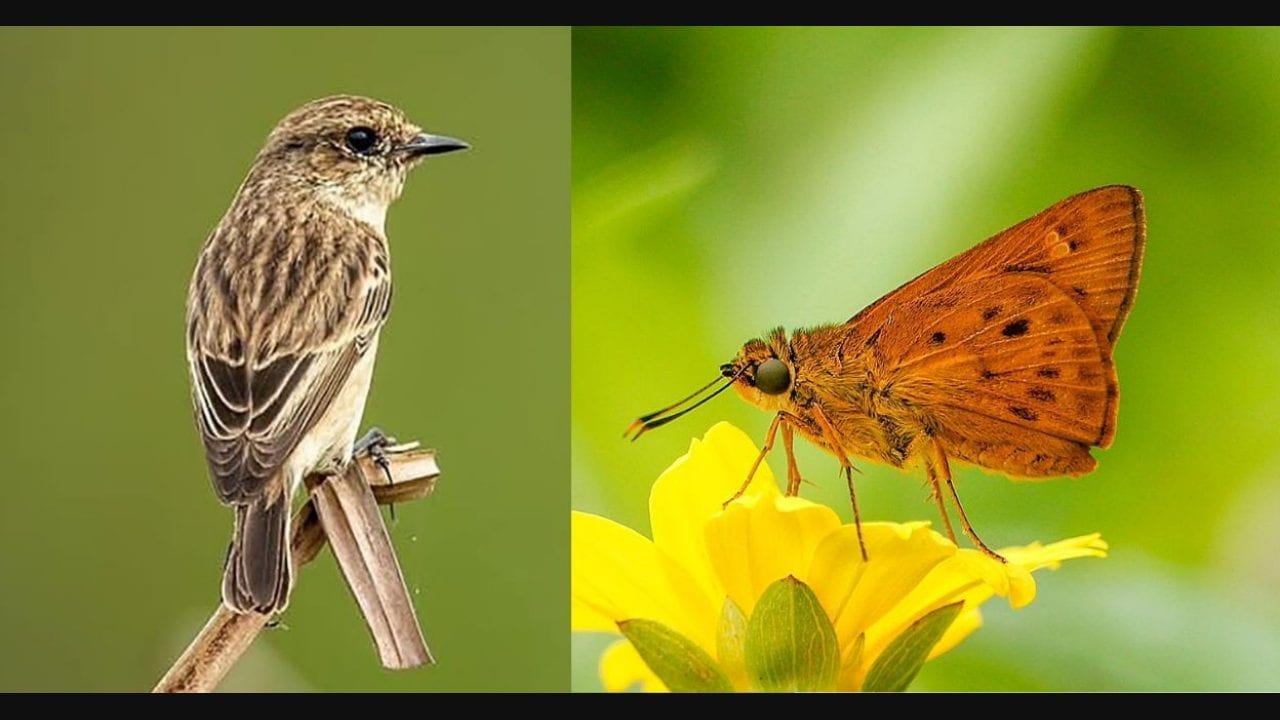
- Notable species included the Malabar Lark, Purple Heron, Siberian Stonechat and Eastern Yellow Wagtail.
- Western Ghats endemics recorded included the Malabar Grey Hornbill, Malabar Parakeet, Malabar Banded Peacock, Malabar Rose and Travancore Bambootail.
- These findings improve knowledge of regional biodiversity. The new records represent additions to existing checklists, not necessarily species newly discovered by science.
- Notable species included the Malabar Lark, Purple Heron, Siberian Stonechat and Eastern Yellow Wagtail.
-
Significance for Biodiversity Conservation:
-
-
- Western Ghats biodiversity: The Western Ghats are a global biodiversity hotspot characterised by high species richness and endemism.
- Ecosystem health: Butterflies contribute to pollination, while dragonflies and damselflies help regulate insect populations and can indicate freshwater habitat conditions.
- Scientific research: Verified species inventories improve understanding of distribution patterns and help identify habitats requiring conservation attention.
- Evidence-based management: Reliable biodiversity data support habitat restoration, protected-area management and long-term wildlife monitoring.
- Western Ghats biodiversity: The Western Ghats are a global biodiversity hotspot characterised by high species richness and endemism.
-
Challenges:
Major challenges include habitat fragmentation, climate change, human–wildlife conflict, inadequate baseline data and difficulties in identifying rare species. Single-season surveys may also miss migratory or seasonal species.
Legal and Constitutional Framework:
-
-
- Article 48A: Directs the State to protect and improve the environment and safeguard forests and wildlife.
- Article 51A(g): Establishes the fundamental duty of citizens to protect the natural environment and show compassion for living creatures.
- Wild Life (Protection) Act, 1972: Provides the legal framework for wildlife protection, hunting restrictions and protected areas. Its 2022 amendment strengthened provisions concerning invasive alien species and international wildlife trade.
- Biological Diversity Act, 2002: Promotes biodiversity conservation, sustainable use and equitable benefit-sharing. The 2023 amendment updated its regulatory framework.
- Environment (Protection) Act, 1986: Provides broad powers to the Central Government to protect and improve environmental quality.
- Article 48A: Directs the State to protect and improve the environment and safeguard forests and wildlife.
-
Conclusion:
The documentation of 36 additional wildlife records highlights the ecological importance of Kerala’s forest landscapes. Regular, scientifically verified and seasonal biodiversity surveys can strengthen conservation strategies and support the long-term protection of the Western Ghats.



