
Context:
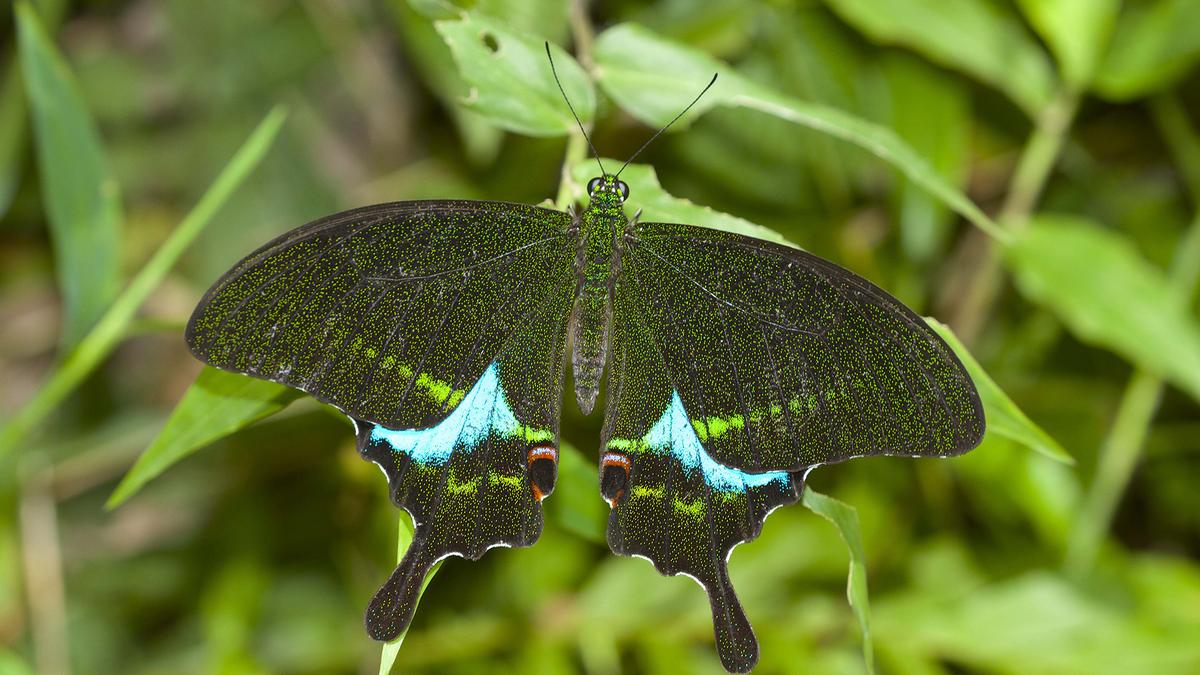
Recently, a landmark monograph published in the journal ENTOMON confirmed Kerala as the Indian state with the highest butterfly diversity in the Western Ghats. The study, titled “The Butterflies (Lepidoptera, Rhopalocera) of Kerala: Status and Distribution,” was authored by a research team led by Kalesh Sadasivan.
Key Findings:
1. Record Butterfly Species Richness
-
-
-
- Kerala harbours 328 butterfly species, the highest number recorded among all Indian states located along the Western Ghats.
- These species belong to all major butterfly families—Papilionidae, Pieridae, Nymphalidae, Lycaenidae, Hesperiidae, and Riodinidae—reflecting extensive taxonomic diversity.
- The Western Ghats as a whole, a global biodiversity hotspot, has 337 documented butterfly species, placing Kerala at the forefront of in situ butterfly diversity within this mountain chain.
- Kerala harbours 328 butterfly species, the highest number recorded among all Indian states located along the Western Ghats.
-
-
2. Endemism and Conservation Value
-
-
-
- Of the 328 species recorded in Kerala, 41 species are endemic to the Western Ghats, meaning they are found nowhere else in the world.
- Endemic butterflies often exhibit specialised habitat requirements and high sensitivity to environmental changes, making them valuable flagship species for habitat conservation.
- These endemic taxa significantly enhance the global biodiversity importance of the Western Ghats and underscore the need for in situ conservation within Kerala’s ecosystems.
- Of the 328 species recorded in Kerala, 41 species are endemic to the Western Ghats, meaning they are found nowhere else in the world.
-
-
Significance of Butterflies as Bioindicators:
-
-
- Butterflies are widely recognised as bioindicators due to their sensitivity to habitat alteration, reliance on specific host plants, and responsiveness to land-use change and climate variability.
- High butterfly diversity generally reflects rich plant diversity and healthy ecosystem functioning, as butterflies are closely linked to floral resources and forest structure.
- Their presence and abundance serve as reliable proxies for assessing overall biodiversity health.
- Butterflies are widely recognised as bioindicators due to their sensitivity to habitat alteration, reliance on specific host plants, and responsiveness to land-use change and climate variability.
-
Conservation Implications:
-
-
- Despite high species richness, only a limited number of butterfly species are currently listed under national wildlife protection schedules or the IUCN Red List, revealing gaps in existing conservation and legal frameworks.
- The strong endemic component highlights the need for strengthened habitat protection, especially across forest fragments, protected area networks, and biodiversity corridors in Kerala.
- Potential conservation strategies include butterfly habitat mapping, host plant conservation, citizen science–based monitoring programmes, and the integration of lepidopteran diversity into broader environmental and land-use planning policies.
- Despite high species richness, only a limited number of butterfly species are currently listed under national wildlife protection schedules or the IUCN Red List, revealing gaps in existing conservation and legal frameworks.
-
About Butterflies:
Butterflies are colourful, winged insects characterised by a four-stage life cycle—egg, larva (caterpillar), pupa (chrysalis), and adult—undergoing complete metamorphosis. They possess three body segments (head, thorax, and abdomen), six legs, and wings covered with microscopic scales. Butterflies taste with their feet and feed primarily on nectar using a long proboscis. As important pollinators, they support plant reproduction; however, they face increasing threats from habitat loss and climate change. Some species, such as the Monarch butterfly, are also known for their remarkable long-distance migrations.
Conclusion:
Kerala’s recognition as the Indian state with the highest documented butterfly diversity—328 species, including 41 Western Ghats endemics—highlights the exceptional ecological richness of the southern Western Ghats. This distinction not only reinforces Kerala’s pivotal role in conserving invertebrate biodiversity within one of the world’s most important biodiversity hotspots but also strengthens the case for evidence-based policy interventions to safeguard ecological integrity amid accelerating environmental change.



