
Context:
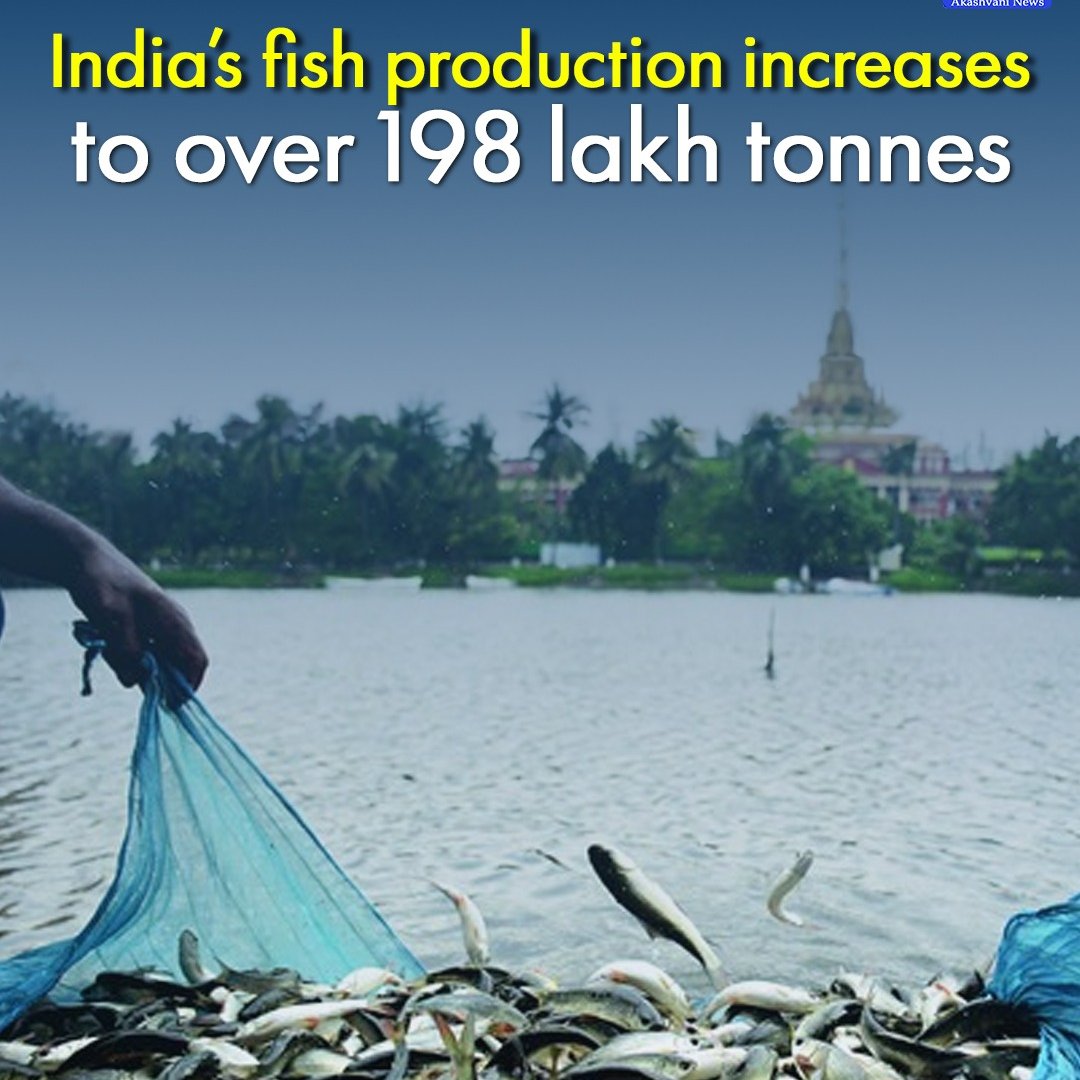
In recent years, India’s fisheries sector has undergone a remarkable transformation. According to the Government of India, total fish production increased to approximately 198 lakh tonnes in FY 2024–25, up from 95 lakh tonnes in 2013–14, registering a growth of over 106% during the past decade.
Drivers of Expansion:
-
-
- Policy Initiatives and Institutional Support: Transformative government initiatives such as the Blue Revolution, Pradhan Mantri Matsya Sampada Yojana (PMMSY), and the Pradhan Mantri Matsya Kisan Samridhi Sah Yojana have played a pivotal role in revitalising the fisheries sector. Since 2014–15, projects worth over ₹32,700 crore have been approved under these schemes, strengthening infrastructure, promoting technology adoption, and enhancing value chains across the sector.
- Focus on Inland Fisheries and Aquaculture: Inland fisheries and aquaculture have emerged as major growth drivers. The adoption of modern practices such as recirculatory aquaculture systems, improved feeding technologies, and scientific water-resource management has significantly boosted productivity in freshwater ecosystems. These advances have contributed substantially to the overall increase in national fish production.
- Infrastructure Development and Market Integration: Significant improvements in post-harvest infrastructure, including cold storage facilities, ice plants, fish transportation systems, and processing units, have reduced post-harvest losses and improved market access. Furthermore, over 26 lakh stakeholders, including fishers, fish farmers, and enterprises, are now registered on the National Fisheries Digital Platform, enabling streamlined access to services, inputs, and financial support.
- Policy Initiatives and Institutional Support: Transformative government initiatives such as the Blue Revolution, Pradhan Mantri Matsya Sampada Yojana (PMMSY), and the Pradhan Mantri Matsya Kisan Samridhi Sah Yojana have played a pivotal role in revitalising the fisheries sector. Since 2014–15, projects worth over ₹32,700 crore have been approved under these schemes, strengthening infrastructure, promoting technology adoption, and enhancing value chains across the sector.
-
Global Position and Economic Impact:
India has emerged as the second-largest fish producer globally, accounting for nearly 8% of total global fish output. This robust performance has strengthened domestic availability while also enhancing export competitiveness. In FY 2024–25, seafood exports reached an all-time high of over ₹62,400 crore, underscoring the sector’s growing contribution to foreign exchange earnings and export diversification.
Broader Implications:
-
-
- The surge in fish production has wide-ranging socio-economic benefits:
- It enhances nutritional security by increasing access to protein-rich food.
- It generates employment opportunities across the value chain, from production to processing and marketing.
- It stimulates rural and coastal economies, particularly benefiting traditional fishing communities.
- It supports India’s blue economy vision by integrating fisheries growth with sustainability and resource conservation.
- It enhances nutritional security by increasing access to protein-rich food.
- The surge in fish production has wide-ranging socio-economic benefits:
-
Challenges:
-
-
- Despite impressive gains, several challenges require sustained policy attention:
- Resource sustainability and responsible fishing practices are essential to prevent overexploitation of marine stocks.
- Environmental concerns, including water quality and ecosystem health, must be continuously addressed.
- Climate change impacts, such as rising sea temperatures, ocean acidification, and altered hydrological cycles, pose long-term risks to fisheries productivity.
- Resource sustainability and responsible fishing practices are essential to prevent overexploitation of marine stocks.
- Despite impressive gains, several challenges require sustained policy attention:
-
Conclusion:
The dramatic rise in India’s fish production to nearly 198 lakh tonnes in FY 2024–25 represents a notable success story driven by effective policy frameworks, technological innovation, and strong institutional support. Going forward, balancing productivity enhancement with ecological sustainability will be critical to achieving national objectives related to food security, rural livelihoods, and global competitiveness in the fisheries sector.



