
Context:
Recently, Union Home Minister Amit Shah laid the foundation stone for a high-containment Bio Safety Level-4 (BSL-4) laboratory at the Gujarat Biotechnology Research Centre (GBRC) in Gandhinagar, Gujarat. The facility has been described as a “health shield” for India, marking a new phase in national health security and biotechnology capacity.
About the BSL-4 Facility:
-
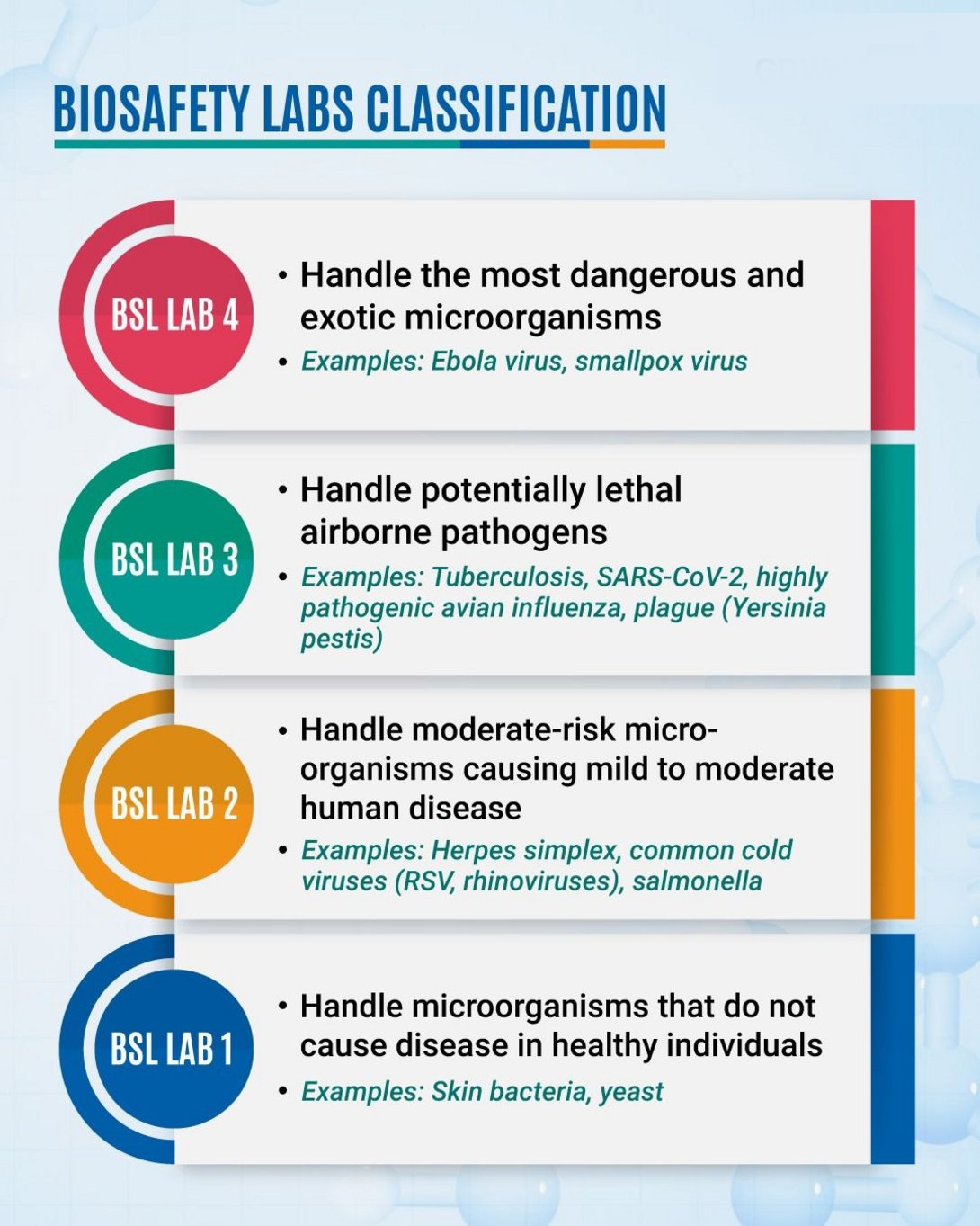
- BSL-4 represents the highest level of biosafety containment, designed for research on the world’s most dangerous and highly infectious pathogens, for which effective treatments or vaccines may not exist. Research activities include pathogen isolation, diagnostics, therapeutic and vaccine development, and rapid outbreak response, all conducted under stringent containment and safety protocols.
- The laboratory will be constructed over 11,000 sq. metres at a cost of ₹362 crore under the Gujarat State Biotechnology Mission (GSBTM). It will comprise multiple modules, including BSL-4, BSL-3, BSL-2, ABSL-4 (animal), and ABSL-3 facilities.
- It will be the second civilian BSL-4 laboratory in India, after the one at the National Institute of Virology (NIV), Pune, but the first to be fully funded and operated by a state government.
- BSL-4 represents the highest level of biosafety containment, designed for research on the world’s most dangerous and highly infectious pathogens, for which effective treatments or vaccines may not exist. Research activities include pathogen isolation, diagnostics, therapeutic and vaccine development, and rapid outbreak response, all conducted under stringent containment and safety protocols.
About Pathogens:
Pathogens are disease-causing microorganisms—including viruses, bacteria, fungi, protozoa, and helminths—that invade a host, multiply, and disrupt normal bodily functions, resulting in infectious diseases.
Institutional and Strategic Significance:
The laboratory will operate under GBRC, which already houses a BSL-2+ facility and was among the first institutions in India to sequence the SARS-CoV-2 genome during the COVID-19 pandemic. The new facility will function as a national centre for high-containment pathogen research, strengthening India’s capacity to manage outbreaks of deadly human and animal diseases, particularly zoonotic infections.
India’s Biosafety Laboratory Landscape:
Prior to this initiative, India had only one civilian BSL-4 laboratory at NIV, Pune. Under the Virus Research and Diagnostic Laboratories (VRDL) scheme, the Ministry of Health and Family Welfare has approved 165 biosafety laboratories, including 154 BSL-2 and 11 BSL-3 labs, to enhance epidemic preparedness nationwide.
Significance for India:
-
- Strengthens biosecurity, health preparedness, and outbreak containment
- Supports vaccine R&D and the One Health approach, integrating human and animal health
- Reduces dependence on foreign laboratories for high-risk pathogen research
- Enhances India’s standing in global biological research and biotechnology leadership
- Strengthens biosecurity, health preparedness, and outbreak containment
Conclusion:
The establishment of a state-funded BSL-4 laboratory in Gujarat marks a significant advancement in India’s biosecurity and biotechnology ecosystem. By enabling high-containment research on deadly pathogens, it will strengthen outbreak response, accelerate vaccine development, and support evidence-based public health policy—positioning India as a more resilient and capable actor in global health security.



