
India’s First Semiconductor Plant: ISM & Micron ATMP
Context:
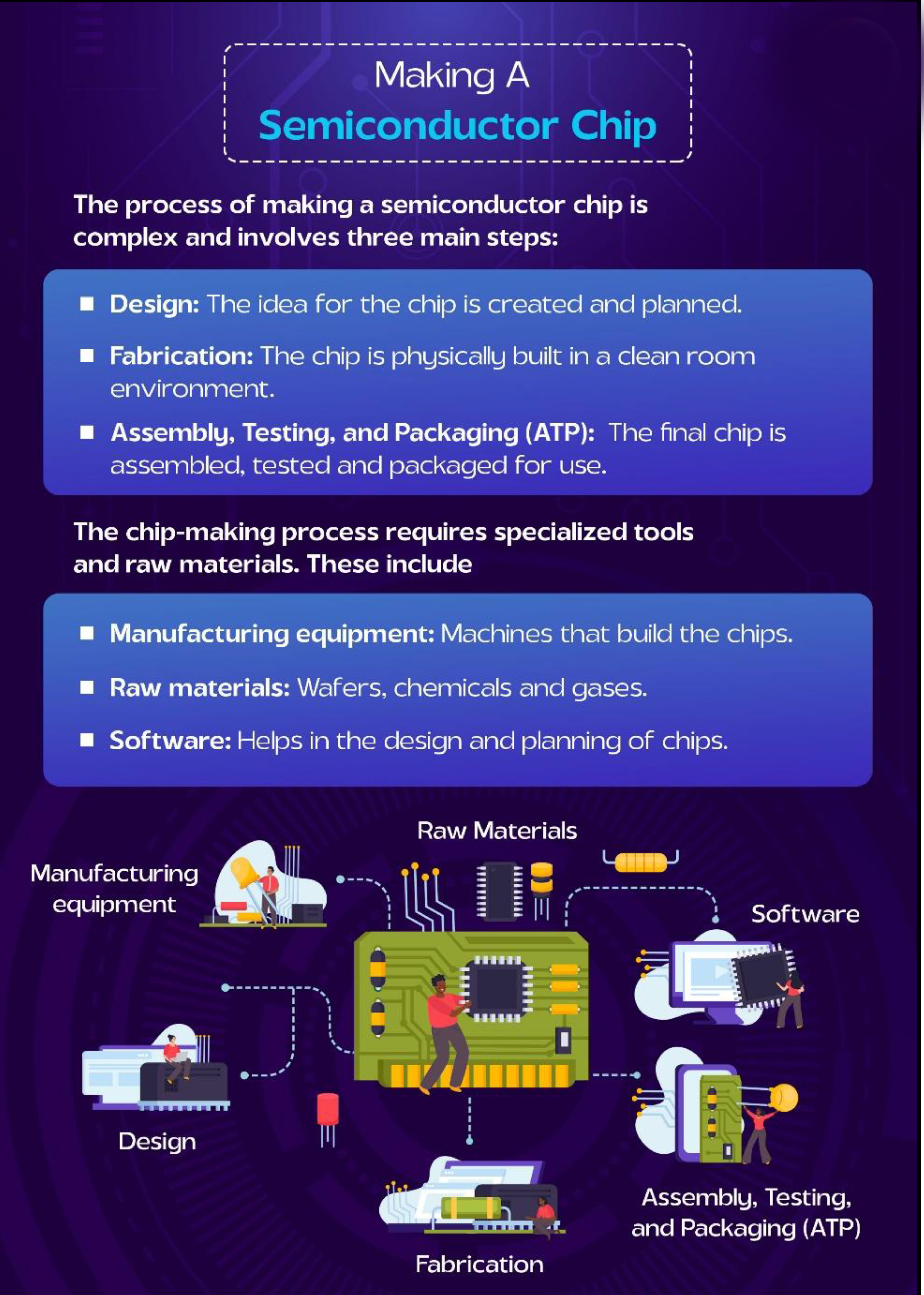
On 28 February 2026, PM Modi inaugurated India’s first large-scale semiconductor fabrication-related plant in Sanand, Gujarat under the India Semiconductor Mission. The project, an ATMP (Assembly, Testing, Marking and Packaging) semiconductor facility by Micron Semiconductor Technology India is backed by an investment of ₹22,516 crore and is expected to generate around 5,000 direct jobs once fully operational.
About Semiconductors and Their Uses:
-
-
- Semiconductors are materials, typically silicon whose electrical conductivity lies between that of conductors and insulators. These properties make them ideal for controlling electrical signals in electronic devices.
- They form the heart of modern electronics, including microprocessors, memory chips (DRAM, NAND), sensors, power electronics, and integrated circuits (ICs) used in smartphones, laptops, automobiles, defence systems, renewable energy systems, data centres and artificial intelligence (AI) platforms.
- Semiconductors are materials, typically silicon whose electrical conductivity lies between that of conductors and insulators. These properties make them ideal for controlling electrical signals in electronic devices.
-
About India Semiconductor Mission (ISM):
The India Semiconductor Mission is a government-led programme aimed at building a robust semiconductor and display ecosystem in India to reduce dependency on imports, foster innovation, and establish India as a global hub for electronics manufacturing and design.
Key features of the Mission include:
-
-
- Fiscal and policy support for chip fabrication plants, packaging units, and design centres, including up to 50 % of project costs on a pari-passu basis for fabs.
- Incentives to attract global and domestic investments across the semiconductor value chain, from wafer fabrication to advanced packaging and testing.
- Development of design capabilities, research and development centres, and skilled semiconductor talent within the country.
- Collaboration with international firms and partners to integrate India into global semiconductor supply chains.
- The mission, supported by an approximate outlay of ₹76,000 crore, reflects the Government’s ambition to position India as a trusted global semiconductor partner and to scale up domestic manufacturing in this critical sector.
- Fiscal and policy support for chip fabrication plants, packaging units, and design centres, including up to 50 % of project costs on a pari-passu basis for fabs.
-
Strategic Importance of the Sanand Facility:
-
-
- The Micron ATMP plant at Sanand will convert advanced DRAM and NAND wafers into finished products such as memory modules and solid-state drives (SSDs) — key components for computing, AI workloads, and data storage.
Although the Sanand unit focuses on packaging and assembly, it serves as a gateway to larger semiconductor ambitions, complementing other projects under the ISM ecosystem. - India’s semiconductor push also includes emerging fabrication and chip design facilities across states such as Uttar Pradesh, Gujarat and others, fostering job creation, technology development and supply chain resilience.
- The Micron ATMP plant at Sanand will convert advanced DRAM and NAND wafers into finished products such as memory modules and solid-state drives (SSDs) — key components for computing, AI workloads, and data storage.
-
Conclusion:
India’s push for domestic semiconductor manufacturing via ISM aims for technological self-reliance, driving growth in AI, 5G, and defense. By reducing import reliance and establishing a full, indigenous ecosystem, India is boosting startups and securing long-term capabilities in design, fabrication, and packaging.



