
Context:
Recently, the Union Government launched India’s first open sea marine fish farming project at North Bay in the Andaman Sea. The project marks a significant step towards realising India’s Blue Economy ambitions by harnessing the economic potential of the country’s vast ocean resources.
About the Initiative:
The initiative is a collaborative effort between the Ministry of Earth Sciences (MoES), its technical arm, the National Institute of Ocean Technology (NIOT), and the Union Territory Administration of the Andaman and Nicobar Islands.
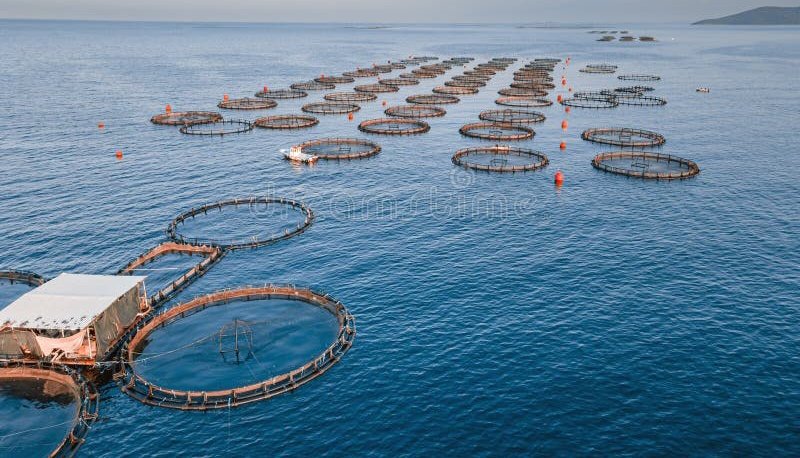
The project represents India’s first open sea cage-based marine fish farming initiative, executed under the natural oceanic conditions of the Andaman Sea.
It focuses on two key components:
-
-
- Marine flora (seaweed cultivation): Seaweed seeds were distributed to local fishers to promote deep-water seaweed farming.
- Marine fauna (finfish farming): Finfish seeds were provided for cage-based cultivation using open sea cages designed by NIOT to withstand offshore conditions.
- Marine flora (seaweed cultivation): Seaweed seeds were distributed to local fishers to promote deep-water seaweed farming.
-
Strategic Importance of the Initiative:
-
-
-
- Boost to the Blue Economy-
- The initiative is a major step towards India’s Blue Economy strategy, aiming to tap the economic potential of marine resources, much like the utilisation of India’s terrestrial assets.
- The initiative is a major step towards India’s Blue Economy strategy, aiming to tap the economic potential of marine resources, much like the utilisation of India’s terrestrial assets.
- Empowering Coastal and Island Communities-
- The pilot project integrates scientific innovation with livelihood generation, benefiting local fishing communities through the provision of technology, seeds, and training for marine aquaculture.
- These interventions aim to enhance employment opportunities and promote income diversification for coastal and island populations.
- The pilot project integrates scientific innovation with livelihood generation, benefiting local fishing communities through the provision of technology, seeds, and training for marine aquaculture.
- Boost to the Blue Economy-
-
-
Technology to Strengthen Marine Farming-
-
-
- The project utilises NIOT’s advanced open sea cages, engineered to operate under real oceanic conditions, representing a technological leap beyond traditional coastal aquaculture systems.
- The initiative promotes sustainable practices that work with natural ocean dynamics rather than confined coastal environments, potentially reducing ecological pressures on near-shore ecosystems.
- The project utilises NIOT’s advanced open sea cages, engineered to operate under real oceanic conditions, representing a technological leap beyond traditional coastal aquaculture systems.
-
Importance of the Blue Economy:
1. Extensive Maritime Domain
o India’s coastline stretches approximately 7,500–11,098 km, spanning 9 coastal states and 4 Union Territories, along with numerous islands.
o Its Exclusive Economic Zone (EEZ) covers over 2 million sq. km, offering vast potential for deep-sea fisheries, aquaculture, and mineral and energy exploration.
2. Economic Contribution
o The marine sector contributes about 4% of India’s GDP, though this figure is likely an underestimate due to incomplete ecosystem accounting.
o Nearly 95% of India’s merchandise trade by volume is handled through maritime routes, underscoring the strategic importance of oceans for commerce.
3. Livelihoods and Food Security
o The fisheries and aquaculture sectors support millions of livelihoods, including those engaged in fishing, processing, and allied activities.
o India ranks among the top fish-producing countries globally, reflecting both its existing strengths and significant growth potential.
Conclusion:
The launch of India’s first open sea marine fish farming project in the Andaman Sea marks a milestone in the country’s efforts to harness its maritime potential. By integrating technology, sustainability, and community participation, the initiative lays the foundation for scalable, ocean-based economic growth while reinforcing the Blue Economy as a national priority.



