
Context:
Prime Minister Narendra Modi undertook his first bilateral visit to Ethiopia on 16–17 December 2025, marking a historic milestone in India–Africa relations. The visit culminated in the formal elevation of India–Ethiopia relations to a Strategic Partnership, signalling a shift from traditional cooperation to a long-term, structured, and multidimensional engagement.
Key Outcomes of PM Modi’s 2025 Visit:
1. Strategic Partnership:
-
-
-
- Cooperation was expanded across diplomacy, defence, economy, technology, and development.
- Both sides emphasised regional peace, counter-terrorism, and shared Global South priorities.
- Cooperation was expanded across diplomacy, defence, economy, technology, and development.
-
-
2. Conferment of the Highest State Honour:
-
-
-
- Prime Minister Modi was conferred the ‘Great Honour Nishan of Ethiopia’, the country’s highest civilian award.
- The honour symbolises Ethiopia’s recognition of India as a trusted and long-standing development partner.
- Prime Minister Modi was conferred the ‘Great Honour Nishan of Ethiopia’, the country’s highest civilian award.
-
-

3. Eight MoUs and Agreements:
Key agreements signed during the visit include:
-
-
-
- Debt restructuring under the G20 Common Framework
- Establishment of a Data Centre at Ethiopia’s Ministry of Foreign Affairs
- Cooperation in United Nations peacekeeping training
- Customs cooperation to facilitate trade
- Expansion of ICCR scholarships and AI courses under ITEC
- Healthcare cooperation, including the upgradation of Mahatma Gandhi Hospital, Addis Ababa
- Debt restructuring under the G20 Common Framework
-
-
Economic and Commercial Relations:
Economic engagement remains a central pillar of bilateral ties:
-
-
- Bilateral trade (FY 2024–25): US$ 550.19 million
- Indian exports: US$ 476.81 million
- Indian imports: US$ 73.38 million
- Indian exports: US$ 476.81 million
- The trade relationship is strongly export-driven, highlighting Ethiopia’s importance as a market for Indian goods.
- Ethiopia benefits from India’s Duty-Free Tariff Preference (DFTP) Scheme for Least Developed Countries (LDCs).
- Bilateral trade (FY 2024–25): US$ 550.19 million
-
Indian Investments in Ethiopia:
-
- Over 675 Indian companies are registered in Ethiopia.
- Total Indian investments exceed US$ 6.5 billion, making India one of the largest investors in the country.
- Over 675 Indian companies are registered in Ethiopia.
Defence, Security, and Multilateral Cooperation:
-
-
- Signing of a Defence Cooperation MoU and the holding of the first-ever Joint Defence Cooperation Meeting (2025).
- Continued collaboration in UN Peacekeeping Operations, reflecting a shared commitment to global peace and stability.
- Ethiopia expressed strong support for India’s zero-tolerance approach to terrorism, including solidarity following the Pahalgam terror attack.
- Enhanced coordination at multilateral forums, including:
- United Nations
- BRICS
- African Union–India engagement mechanisms
- Global initiatives such as ISA, CDRI, IBCA, and GBA
- United Nations
- Signing of a Defence Cooperation MoU and the holding of the first-ever Joint Defence Cooperation Meeting (2025).
-
Strategic Significance of Ethiopia:
Ethiopia, as Africa’s second-most populous country and the host of the African Union (AU) headquarters, occupies a pivotal position in India’s Africa and Global South strategy.
Ethiopia’s importance for India stems from:
-
-
-
- Its role as the diplomatic capital of Africa
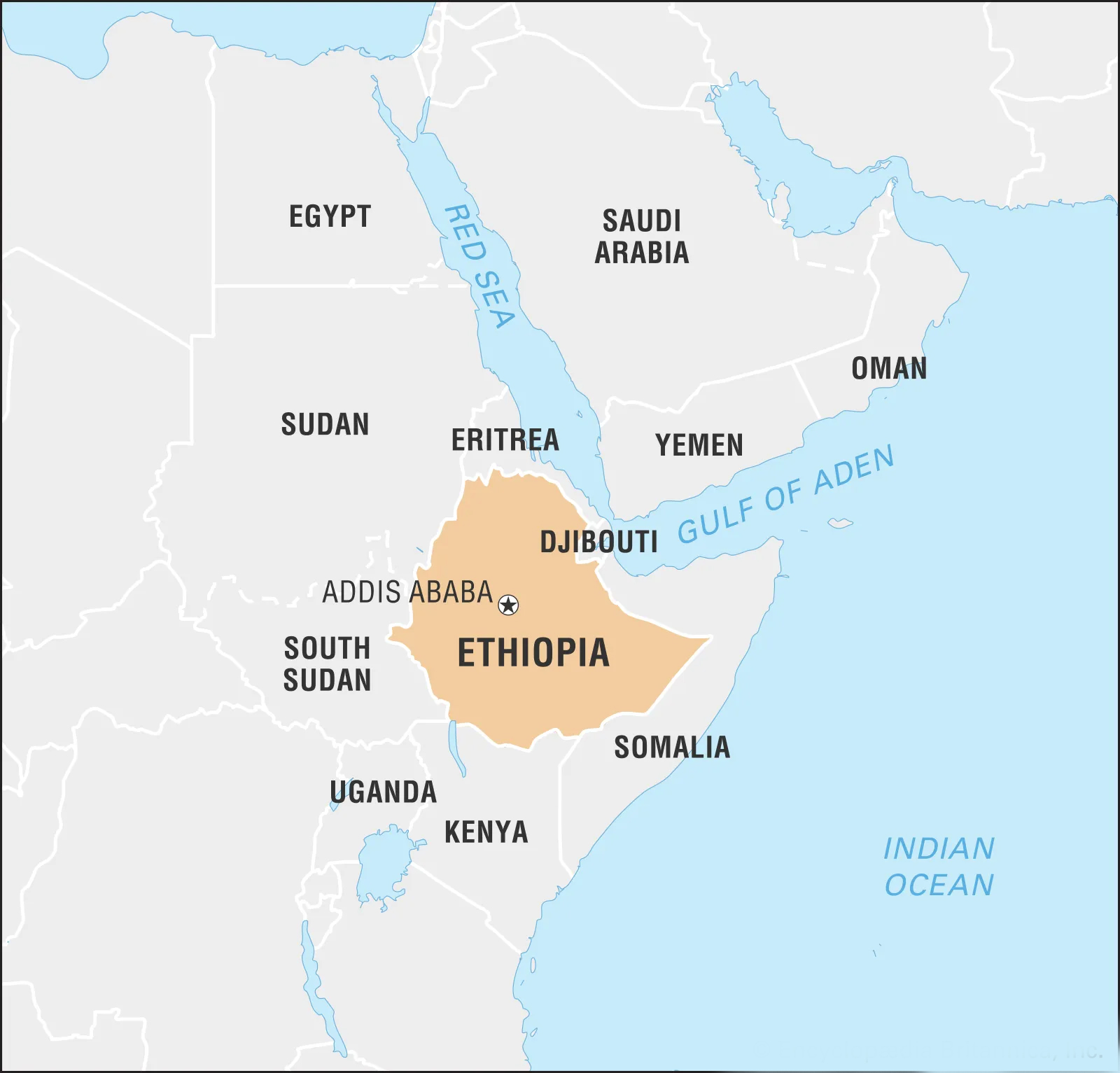
- Its strategic location in the Horn of Africa, a region vital for maritime security and regional stability
- Active participation in UN peacekeeping missions
- A large domestic market and growing economic potential
- Its role as the diplomatic capital of Africa
-
-
The Strategic Partnership reflects shared interests in peace, development, and multipolar global governance.
Conclusion:
Prime Minister Modi’s visit to Ethiopia and the elevation of bilateral relations to a Strategic Partnership mark a watershed moment in India–Africa relations. By deepening cooperation across security, development, digital infrastructure, healthcare, education, and economic resilience, the partnership reflects India’s vision of inclusive growth, strategic autonomy, and a multipolar world order. Ethiopia, as Africa’s diplomatic nerve centre, will remain a key pillar of India’s long-term engagement with the continent.



