
India–Trinidad and Tobago Relations
Context:
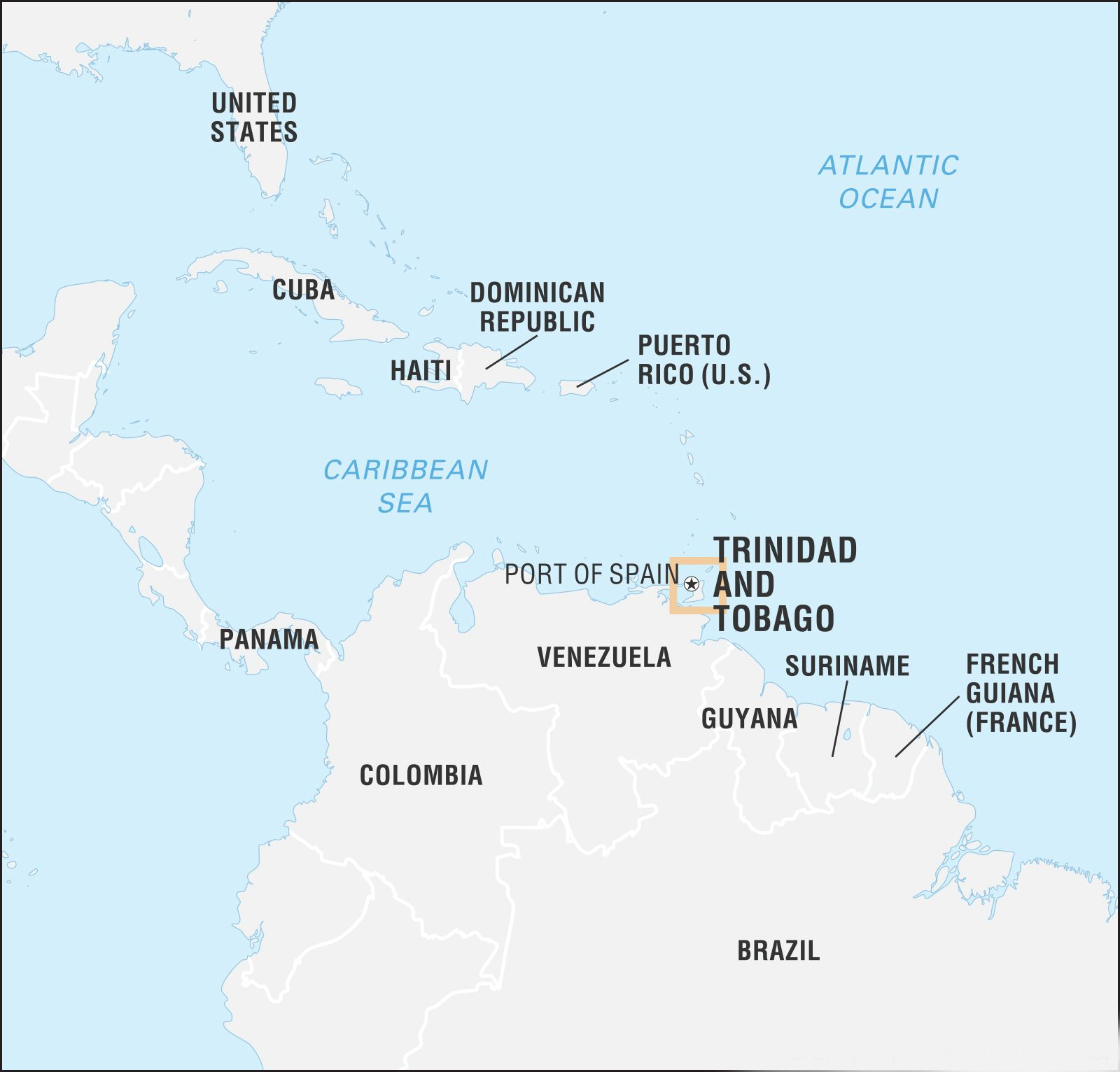
Recently, India’s External Affairs Minister S. Jaishankar was on a two-day official visit (8–9 May 2026) to Trinidad and Tobago. The visit forms an important part of India’s SAGAR (Security and Growth for All in the Region) initiative and its policy of active engagement with countries of the Global South. The primary objective of the visit was to elevate bilateral relations from a primarily cultural partnership to a broader framework encompassing technological and economic cooperation.
Key Highlights of the Visit:
-
-
- India handed over the first batch of 2,000 laptops to local school children as part of its technological assistance in the education sector.
- A “National Prosthetics Centre” was inaugurated in Penal. The centre will utilize India’s renowned “Jaipur Foot” technology to assist physically challenged individuals.
- A state-of-the-art agro-processing facility was inaugurated in Couva, for which India provided machinery and technical assistance.
- Dr. Jaishankar visited the site associated with the arrival of Indian indentured labourers, reaffirming the civilizational and historical ties between the two countries.
- The visit also reaffirmed India’s growing strategic engagement with the Caribbean Community (CARICOM).
- Bilateral trade has grown significantly, almost doubling in the last five years to now reach $350 million. Trade is continuously growing in sectors like health and pharmaceuticals, automobiles and machinery, iron and steel, textiles and apparel.
- Trinidad and Tobago is the first country in the Caribbean region to agree to adopt India's United Payments Interface platform for smooth payments.
- India handed over the first batch of 2,000 laptops to local school children as part of its technological assistance in the education sector.
-
Eight Major Memoranda of Understanding (MoUs) Signed:
During the visit, both countries signed eight important MoUs to expand the scope of bilateral cooperation:
-
-
- Renewable Energy (Solarization): An agreement was signed to equip the building of Trinidad and Tobago’s Ministry of Foreign and CARICOM Affairs with solar energy infrastructure. This reflects India’s commitment toward the Sustainable Development Goals (SDGs).
- Preservation of Cultural Heritage (Nelson Island): An agreement was signed for upgrading infrastructure on the historic Nelson Island, a site deeply connected with the history of Indian migrants.
- Global Outreach of Ayurveda: A decision was taken to establish an “Indian Chair” on Ayurveda at the University of the West Indies, enhancing India’s soft power in the field of traditional medicine.
- Public Health (Vector Control): A health cooperation agreement was signed for technical collaboration in controlling mosquito-borne and other infectious diseases.
- Tourism Cooperation: Both countries agreed to develop a framework for enhancing tourism infrastructure and increasing people-to-people exchanges.
- Digitalization of Education: An agreement was reached to improve the quality of education through digital platforms and technological cooperation.
- Health Infrastructure: Both sides agreed to cooperate in strengthening general healthcare services and ensuring accessibility to medicines.
- Capacity Building and Skill Development: Cooperation under India’s ITEC (Indian Technical and Economic Cooperation) programme will be expanded to train professionals from Trinidad and Tobago in various sectors.
- Renewable Energy (Solarization): An agreement was signed to equip the building of Trinidad and Tobago’s Ministry of Foreign and CARICOM Affairs with solar energy infrastructure. This reflects India’s commitment toward the Sustainable Development Goals (SDGs).
-
Conclusion:
The large population of Indian-origin people in Trinidad and Tobago (around 35%) serves as an important cultural asset for India, providing emotional and historical strength to bilateral relations. The visit of India’s External Affairs Minister marks a significant milestone in India–Caribbean relations. Trinidad and Tobago possesses vast natural gas reserves, which could become highly important for India’s future energy security. India is increasingly positioning itself as the voice of the developing world, and providing technological assistance to countries such as Trinidad and Tobago further strengthens this image.



