
Context:
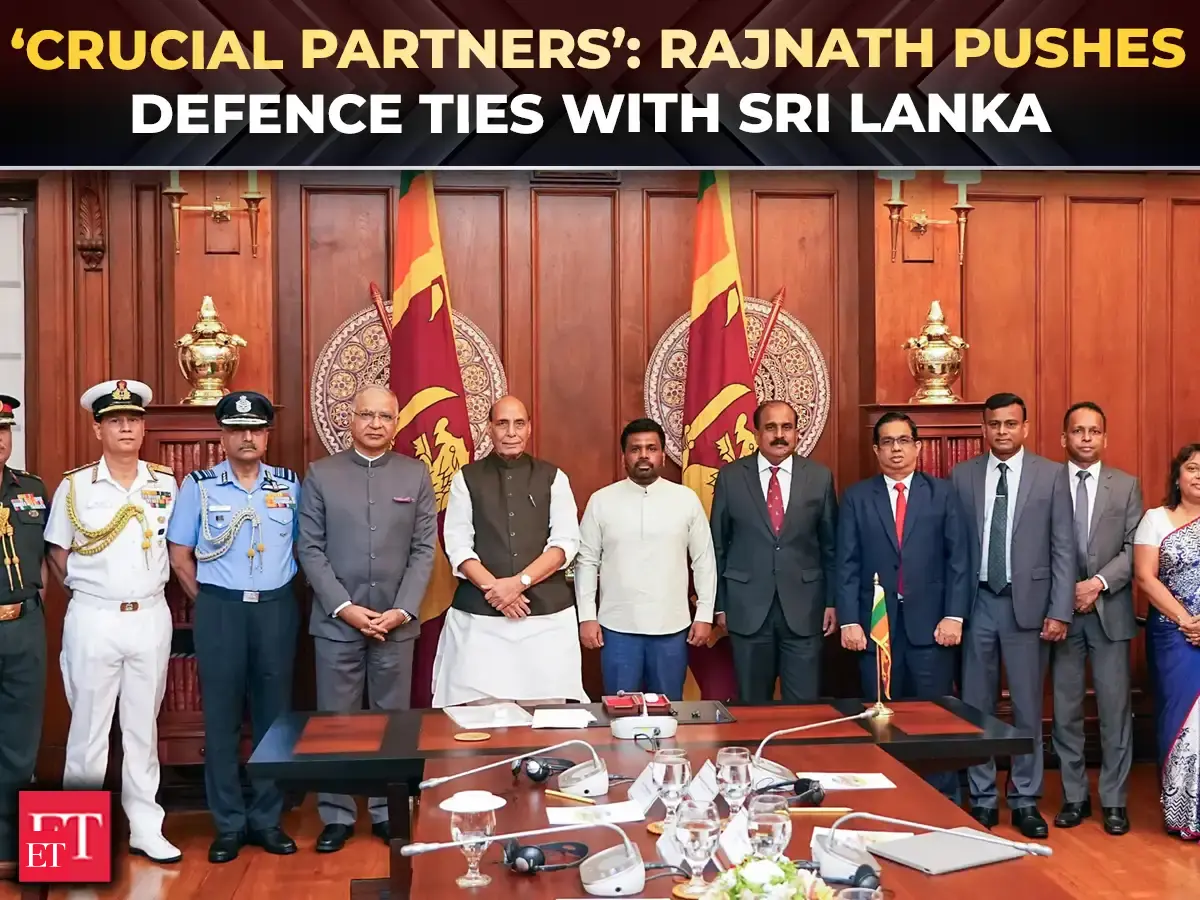
Recently, Indian Defence Minister Rajnath Singh visited Sri Lanka from 8–10 September 2026, during which India and Sri Lanka signed three defence-related Memoranda of Understanding (MoUs) to strengthen bilateral defence cooperation.
What are the Three MoUs?
-
-
- Upgradation of L70 Guns: India and Sri Lanka signed an MoU for the upgradation of six L70 anti-aircraft guns of the Sri Lankan Air Force.
- The project will be supported through a Government of India grant.
- The guns were originally supplied by India.
- Their modernisation will strengthen Sri Lanka’s air-defence capability, particularly for protecting critical assets.
- The project will be supported through a Government of India grant.
- National Defence Colleges: An MoU between the National Defence College (NDC) of India and NDC of Sri Lanka will promote:
- Academic cooperation
- Knowledge sharing
- Professional exchanges
- Greater institutional linkages
- This moves defence cooperation beyond military hardware towards capacity building and human-resource development.
- Academic cooperation
- National Cadet Corps Cooperation
- The MoU between the National Cadet Corps (NCC) of the two countries will formalise youth and cadet exchanges.
- It can promote people-to-people ties, leadership development and greater understanding among future generations of both countries.
- The MoU between the National Cadet Corps (NCC) of the two countries will formalise youth and cadet exchanges.
- Upgradation of L70 Guns: India and Sri Lanka signed an MoU for the upgradation of six L70 anti-aircraft guns of the Sri Lankan Air Force.
-
About India–Sri Lanka Relations:
-
-
- India and Sri Lanka share over 2,500 years of historical, cultural and civilizational ties. Their geographical proximity and Sri Lanka’s strategic location in the Indian Ocean make bilateral relations crucial for India’s Neighbourhood First Policy and maritime-security interests.
- India has also been a key partner during crises. During Sri Lanka’s 2022 economic crisis, India provided assistance worth nearly US$4 billion through credit lines, currency support and humanitarian assistance. In January 2023, India became the first bilateral creditor to formally support Sri Lanka’s debt restructuring before the IMF.
- India and Sri Lanka share over 2,500 years of historical, cultural and civilizational ties. Their geographical proximity and Sri Lanka’s strategic location in the Indian Ocean make bilateral relations crucial for India’s Neighbourhood First Policy and maritime-security interests.
-
Economic and Development Cooperation:
The India–Sri Lanka Free Trade Agreement (ISFTA), signed in 2000, forms an important basis for economic relations. Bilateral merchandise trade reached around US$7.18 billion in FY 2025–26. India’s development partnership exceeds US$3 billion, including major housing and infrastructure projects. The Indian Housing Project has provided more than 50,000 houses to war-affected and plantation communities.
Defence and Maritime Cooperation:
India and Sri Lanka conduct Mitra Shakti (Army) and SLINEX (Navy) exercises. Sri Lanka is also a member of the Colombo Security Conclave (CSC) with India, Maldives and Mauritius, focusing on maritime security, counter-terrorism and humanitarian assistance.
Significance for India:
-
-
- Maritime Security: Sri Lanka's location near major Indian Ocean shipping routes makes it strategically important for India's maritime security.
- Countering Strategic Competition: Greater defence engagement helps India maintain strategic trust with Sri Lanka amid increasing external involvement in the island nation.
- Capacity Building: The focus on equipment modernisation, training, academic cooperation and youth exchanges reflects India's approach of being a security and capacity-building partner rather than merely an arms supplier.
- Neighbourhood First and MAHASAGAR: The partnership supports India's Neighbourhood First Policy and MAHASAGAR, which emphasises security, growth and cooperation across the Indian Ocean region.
- Maritime Security: Sri Lanka's location near major Indian Ocean shipping routes makes it strategically important for India's maritime security.
-
Challenges:
Despite strong relations, some issues remain:
-
-
- Palk Strait fisheries dispute
- Katchatheevu-related concerns
- Chinese strategic and economic presence in Sri Lanka
- Drug trafficking and maritime security
- Balancing Sri Lanka's strategic autonomy with India's security concerns
- Palk Strait fisheries dispute
-
Conclusion:
The latest MoUs demonstrate India's shift towards capacity building, institutional defence cooperation and maritime security. They reinforce Neighbourhood First and MAHASAGAR, strengthening India's role as a responsible security partner in the Indian Ocean Region.



