
Context:
Recently, The Zoological Survey of India (ZSI) has published the "Catalogue of Lepidoptera (Butterflies & Moths) of India" in the peer-reviewed journal Zootaxa.
Key Findings:
India is home to 13,703 species of Lepidoptera, representing 8.25% of the world's known butterfly and moth diversity. Of these, 1,417 are butterflies and 12,286 are moths. The catalogue documents 3,705 genera, 240 subfamilies, 102 families, and 31 superfamilies, providing an authoritative baseline for biodiversity research and conservation. It also records 2,205 species of Geometroidea, accounting for 8.8% of the world's known species in this superfamily.
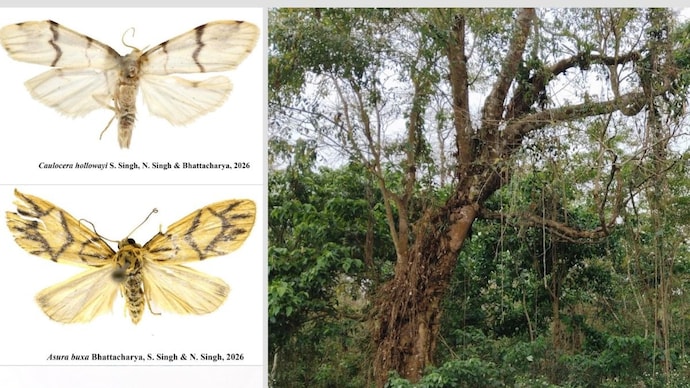
What is Lepidoptera?
Lepidoptera is the insect order comprising butterflies and moths. They share common features such as complete metamorphosis (egg–larva–pupa–adult), wings covered with microscopic scales, and a coiled feeding tube called a proboscis. Despite these similarities, they differ significantly in behaviour and anatomy:
-
-
- Activity: Butterflies are diurnal, whereas most moths are nocturnal.
- Antennae: Butterflies have club-shaped antennae, while moths possess feathery or comb-like antennae.
- Resting Wings: Butterflies hold their wings upright, whereas moths rest with their wings flat or tent-like.
- Pupal Stage: Butterflies form a chrysalis, while moths generally spin a silk cocoon.
- Body: Butterflies have slender, smooth bodies, whereas moths are generally thicker and hairier.
- Activity: Butterflies are diurnal, whereas most moths are nocturnal.
-
Ecological Importance:
Lepidoptera are indispensable to ecosystem functioning. Butterflies pollinate flowers during the day, while moths perform night-time pollination, ensuring continuous pollination services. They also act as herbivores, detritivores, and an important food source for birds, bats, reptiles, and other insectivores. Their sensitivity to habitat degradation, pollution, and climate change makes them excellent bioindicators of ecosystem health.
Threats to Lepidoptera:
Lepidoptera (butterflies and moths) are increasingly threatened by habitat destruction due to deforestation, urbanisation, and land-use changes, which reduce their breeding and feeding grounds. Climate change alters their distribution, life cycles, and interactions with host plants, while excessive pesticide use directly kills larvae and adults. Additionally, light pollution disrupts the behaviour and navigation of nocturnal moths, and invasive plant species replace native host plants, adversely affecting their survival.
Conservation Measures:
Conservation of Lepidoptera requires habitat restoration and protection of forests, grasslands, and other natural ecosystems that support their life cycles. Promoting pollinator-friendly agriculture, reducing pesticide use, and maintaining native vegetation are essential for sustaining their populations. Scientific monitoring through biodiversity inventories, along with public awareness and citizen science initiatives, can strengthen conservation efforts and improve understanding of these ecologically important insects.
About the Zoological Survey of India (ZSI):
|
Aspect |
Details |
|
Established |
1916 |
|
Headquarters |
Kolkata |
|
Ministry |
Ministry of Environment, Forest and Climate Change |
|
Role |
Premier institution for faunal exploration, taxonomy, and biodiversity assessment in India |
Conclusion:
ZSI studies indicate that rising temperatures in the Himalayas are forcing several butterfly and moth species to shift to higher altitudes, reflecting the impacts of climate change. High-altitude explorations continue to discover new endemic species such as Istrianis ladakhensis, highlighting India's rich yet underexplored Lepidoptera diversity.



