
Context:
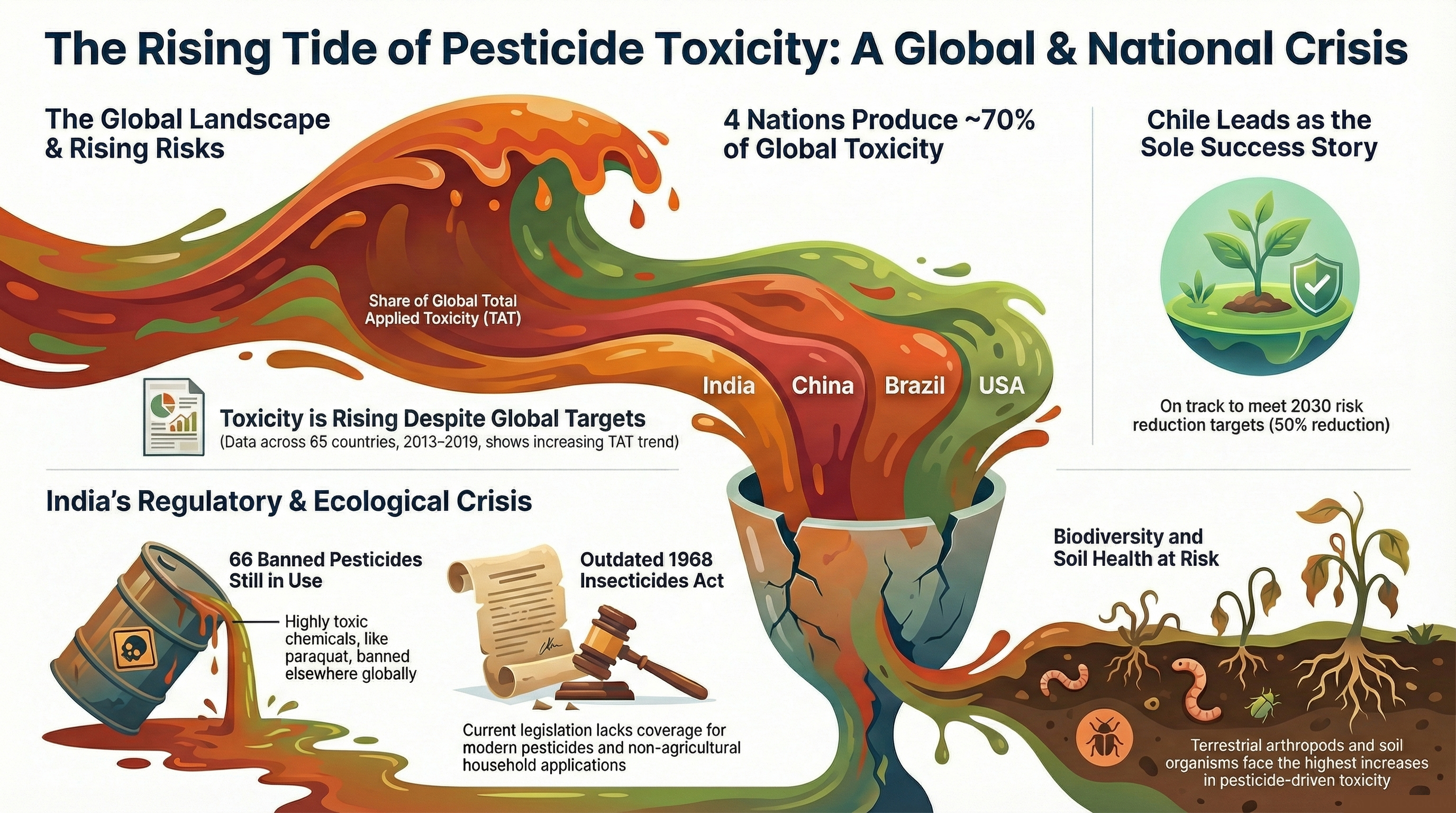
A recent study published in Science revealed that India is among four countries contributing nearly 70 % of global pesticide toxicity, measured as Total Applied Toxicity (TAT), accounting for both pesticide quantities and their impact on non-target species. The other major contributors are China, Brazil, and the United States.
Key Findings of the Study:
-
-
- Rising Toxicity: Data from 2013–2019 across 65 countries and over 600 pesticides show increasing TAT, particularly in India and other major agricultural economies.
- High Biodiversity Impact: Terrestrial arthropods, soil organisms, fish, pollinators, and aquatic plants are disproportionately affected, threatening ecological functions.
- Crop Patterns & Usage: Heavy pesticide application on fruits, vegetables, cereals, rice, maize, and soybeans, combined with more toxic formulations, amplifies environmental harm.
- Poor Monitoring: Lack of comprehensive national pesticide data hampers tracking of progress toward international targets.
- Only One Country on Track: Chile is currently the only nation on course to meet the 50 % pesticide risk reduction target by 2030.
- Rising Toxicity: Data from 2013–2019 across 65 countries and over 600 pesticides show increasing TAT, particularly in India and other major agricultural economies.
-
Impacts on Environment and Health:
-
-
- Biodiversity Loss: Insects and soil organisms face the greatest increase in toxicity, risking pollination, nutrient cycling, and food webs.
- Human Health Risks: Pesticides are linked to neurological, reproductive, and carcinogenic effects. Global initiatives, including the UN Environment Assembly, call for elimination of highly hazardous pesticides by 2035.
- Biodiversity Loss: Insects and soil organisms face the greatest increase in toxicity, risking pollination, nutrient cycling, and food webs.
-
Policy and Regulatory Gaps in India:
-
-
- Outdated Legislation: The Insecticides Act, 1968 focuses on agricultural use, with limited coverage for household or non-agricultural applications, making it obsolete for modern pesticides.
- Banned Pesticides Still in Use: India continues to use at least 66 pesticides banned elsewhere, including highly toxic chemicals like paraquat.
- Proposed Pesticides Management Bill, 2025: Aims to reduce environmental risks and promote biopesticides, but may fall short without expert consultation.
- Outdated Legislation: The Insecticides Act, 1968 focuses on agricultural use, with limited coverage for household or non-agricultural applications, making it obsolete for modern pesticides.
-
Underlying Drivers Behind High Toxicity:
-
-
- Green Revolution Legacy: Reliance on chemical-intensive agriculture created entrenched pesticide dependence.
- Agricultural Intensification: High cropping intensity and monocultures increased pest pressures.
- Limited Alternatives: Slow adoption of Integrated Pest Management (IPM) and biopesticides sustains reliance on conventional chemicals.
- Green Revolution Legacy: Reliance on chemical-intensive agriculture created entrenched pesticide dependence.
-
Policy Responses and International Commitments:
-
-
- Global Targets: India pledged to halve pesticide risks by 2030 under the Global Biodiversity Framework, but TAT trends indicate insufficient progress.
- Need for Better Data: Regular reporting of pesticide use by active ingredient is essential for monitoring and compliance with international commitments.
- Global Targets: India pledged to halve pesticide risks by 2030 under the Global Biodiversity Framework, but TAT trends indicate insufficient progress.
-
Conclusion:
India’s contribution to global pesticide toxicity underscores the need to balance agricultural productivity with biodiversity and human health protection. Rising TAT highlights an urgent requirement for policy reform, regulatory enforcement, sustainable pest management, and improved monitoring. Aligning domestic policy with international environmental goals is crucial to reduce risks and safeguard ecosystems and communities.



