
Context:
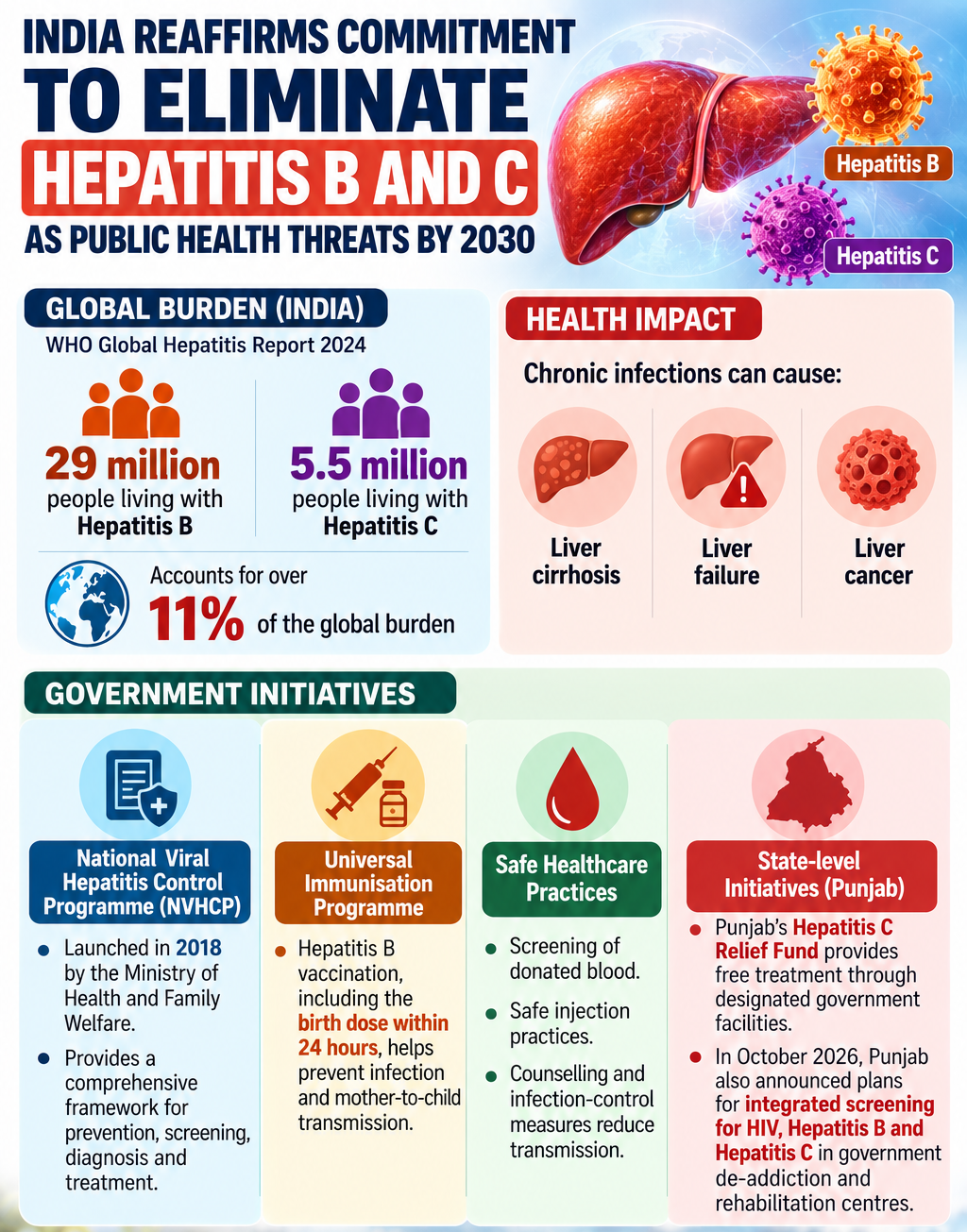
Recently, India has reaffirmed its commitment to eliminating Hepatitis B and C as public health threats by 2030. According to the WHO Global Hepatitis Report 2024, India has approximately 29 million people living with Hepatitis B and 5.5 million with Hepatitis C, accounting for over 11% of the global burden. Chronic infections can cause liver cirrhosis, liver failure and cancer.
Government Initiatives:
-
-
- National Viral Hepatitis Control Programme (NVHCP): Launched in 2018 by the Ministry of Health and Family Welfare, it provides a comprehensive framework for prevention, screening, diagnosis and treatment.
- Universal Immunisation Programme: Hepatitis B vaccination, including the birth dose within 24 hours, helps prevent infection and mother-to-child transmission.
- Safe Healthcare Practices: Screening of donated blood, safe injection practices, counselling and infection-control measures reduce transmission.
- State-level Initiatives: Punjab’s Hepatitis C Relief Fund provides free treatment through designated government facilities. In October 2026, Punjab also announced plans for integrated screening for HIV, Hepatitis B and Hepatitis C in government de-addiction and rehabilitation centres.
- National Viral Hepatitis Control Programme (NVHCP): Launched in 2018 by the Ministry of Health and Family Welfare, it provides a comprehensive framework for prevention, screening, diagnosis and treatment.
-
Recent Developments:
Indian clinical research suggests that an eight-week course of direct-acting antivirals may be effective for eligible Hepatitis C patients, compared with the standard 12-week regimen. Shorter treatment could reduce costs and improve adherence, subject to clinical eligibility and approved guidelines.
Role of Artificial Intelligence (AI):
AI can transform hepatitis care through:
-
-
- Early detection: Identifying high-risk populations and underserved geographical areas for targeted screening.
- Diagnosis: Assisting clinicians in analysing liver imaging and identifying abnormalities.
- Disease surveillance: Predicting disease hotspots and supporting the allocation of vaccines, medicines and diagnostic kits.
- Treatment adherence: Sending reminders, tracking missed appointments and supporting patient follow-up.
- Resource optimisation: Helping healthcare authorities plan diagnostic facilities and specialist services.
- However, AI requires reliable data, clinical validation, privacy safeguards and human oversight.
- Early detection: Identifying high-risk populations and underserved geographical areas for targeted screening.
-
Key Challenges:
Major obstacles include low awareness, inadequate screening facilities, delayed diagnosis, unequal healthcare access, social stigma, shortages of trained personnel and fragmented surveillance systems. The absence of a Hepatitis C vaccine also makes prevention and early treatment particularly important.
Way Forward:
India should expand affordable screening and treatment, improve Hepatitis B birth-dose coverage, strengthen primary healthcare and empower ASHA workers. Community awareness, confidential testing and non-discriminatory services are essential. AI should be integrated responsibly into public health systems, supported by robust digital infrastructure and data protection.
Conclusion:
Eliminating Hepatitis B and C as public health threats by 2030 requires a prevention-oriented, affordable and people-centred strategy. Combining vaccination, early diagnosis, effective treatment, community participation and responsible AI can accelerate progress towards SDG Target 3.3 and strengthen India's commitment to universal health coverage.



