
Context:
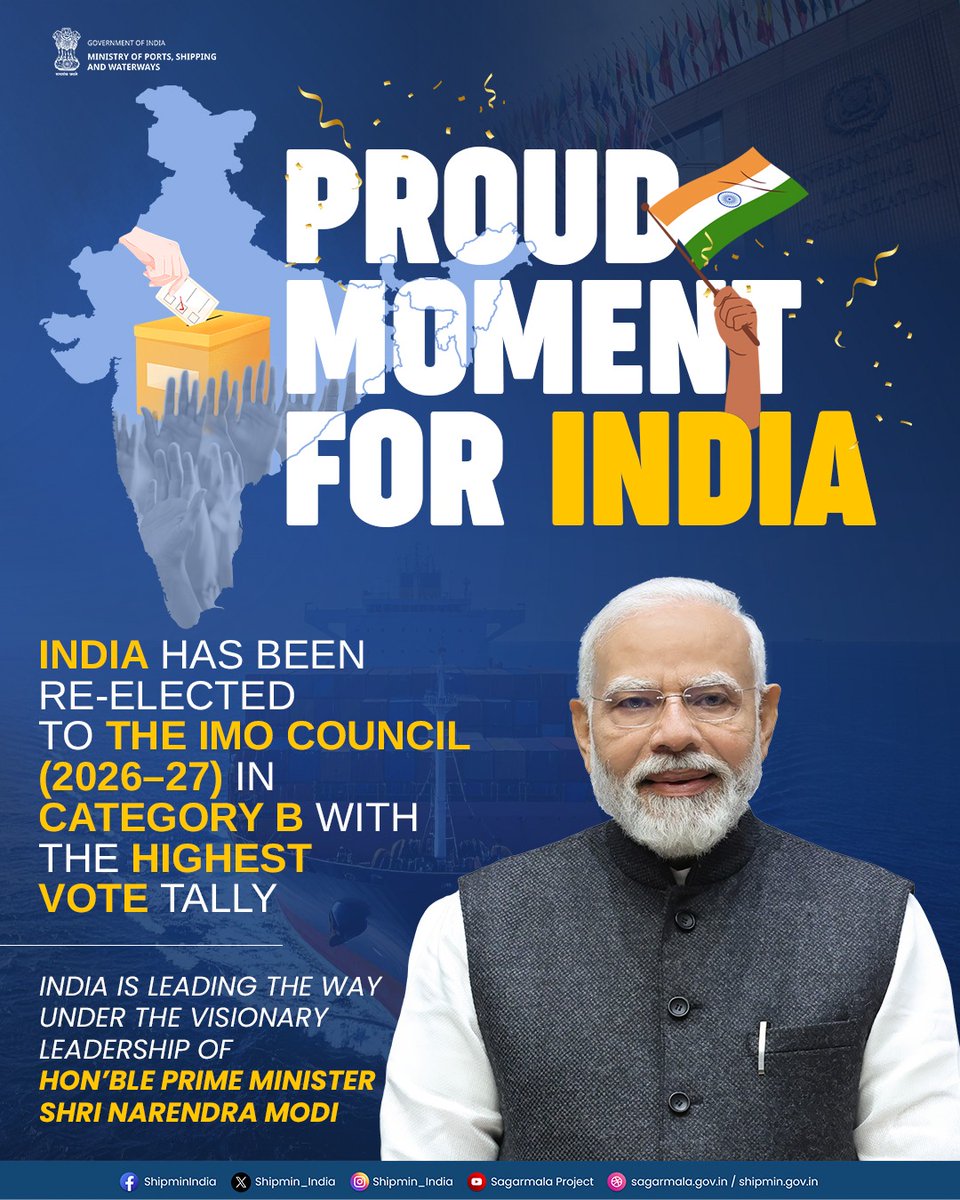
Recently, India has elected to the IMO Council for the biennium 2026–27, reaffirming its growing clout in global maritime governance. In the elections during the 34th Session of the IMO Assembly held at London, India obtained 154 out of 169 valid votes, the highest tally among all contenders in its category.
About International Maritime Organisation (IMO) Council:
-
-
- The IMO is the United Nations–specialised agency responsible for regulating shipping, maritime safety and security, prevention of marine pollution, and facilitating international seaborne trade.
- The IMO Council serves as the executive organ of the Assembly. It is elected every two years and works between Assembly sessions, overseeing the organisation’s work programme, budget and regulatory framework.
- The Council is composed of 40 elected members drawn from three categories. India’s seat belongs to Category B — reserved for states with the largest interest in international seaborne trade. This category comprises 10 countries.
- The 2026–27 Council term was decided through a secret-ballot election conducted on 28 November 2025 during the 34th IMO Assembly.
- The IMO is the United Nations–specialised agency responsible for regulating shipping, maritime safety and security, prevention of marine pollution, and facilitating international seaborne trade.
-
Significance of India’s Re-election:
-
-
- Global Recognition: Securing 154 of 169 votes—the highest in its category—reflects strong global confidence in India’s maritime policies and its constructive role in international shipping governance.
- Continuity in Maritime Engagement: Re-election ensures India’s continued influence in IMO decision-making on shipping regulations, maritime safety, environmental standards, and sustainable ocean use.
- Boost to Maritime Diplomacy & Blue Economy: The strong mandate supports India’s maritime growth vision and complements national initiatives in ports, shipbuilding, and waterways under long-term strategies like Vision 2047.
- Strategic Influence in Global Maritime Order: Council membership enables India to shape norms on safety, decarbonisation, ship recycling, pollution control, and fair trade—benefiting national and Global South interests.
- Global Recognition: Securing 154 of 169 votes—the highest in its category—reflects strong global confidence in India’s maritime policies and its constructive role in international shipping governance.
-
Implications for India:
-
-
- Regulatory Influence: Opportunity to advocate sustainable shipping, green ship recycling, marine environmental protection, and capacity building for developing nations.
- Domestic Synergy: IMO role supports alignment of India’s expanding maritime infrastructure with global standards, aiding smoother integration with world trade.
- Diplomatic Advantage: Strengthens India’s soft power, positioning it as a bridge between developed and developing maritime nations.
- Sustainability Leadership: Allows India to champion inclusive, climate-friendly maritime development at global forums.
- Regulatory Influence: Opportunity to advocate sustainable shipping, green ship recycling, marine environmental protection, and capacity building for developing nations.
-
Conclusion:
India’s re-election to the IMO Council for 2026–27 with the highest vote tally is a significant diplomatic achievement. It reinforces India’s emergence as a major maritime power and provides a platform to shape global shipping norms while advancing its national maritime and blue economy objectives.



