
India’s Frogs and Amphibians: Status, Threats and Conservation
Context:
On the occasion of World Frog Day (20 march), attention has been drawn to the declining status of amphibians globally and in India. Globally, amphibians are the most threatened vertebrate group, with about 40.7% species at risk of extinction. India, a biodiversity hotspot, has over 450 amphibian species, yet faces high levels of threat and data deficiency, even as conservation efforts gain momentum.
Ecological Importance of Frogs:
Frogs and other amphibians play a crucial ecological role, acting as a bridge between aquatic and terrestrial ecosystems. Their importance can be understood through multiple dimensions:
-
- Pest control: Frogs consume large quantities of insects, including agricultural pests, thereby supporting crop productivity.
- Food chain link: They serve as prey for birds, reptiles, and mammals, helping maintain ecological balance.
- Bioindicators: Due to their permeable skin and sensitivity to environmental changes, amphibians act as early warning indicators of ecosystem health.
- Pest control: Frogs consume large quantities of insects, including agricultural pests, thereby supporting crop productivity.
The loss of amphibians can trigger cascading effects:
-
- Increase in insect populations damaging crops
- Disruption of food chains affecting higher vertebrates
- Degradation of both freshwater and terrestrial ecosystems
- Increase in insect populations damaging crops
Thus, amphibian conservation is not merely about protecting a species group but about maintaining ecological stability and food security.
Status and Key Threats in India:
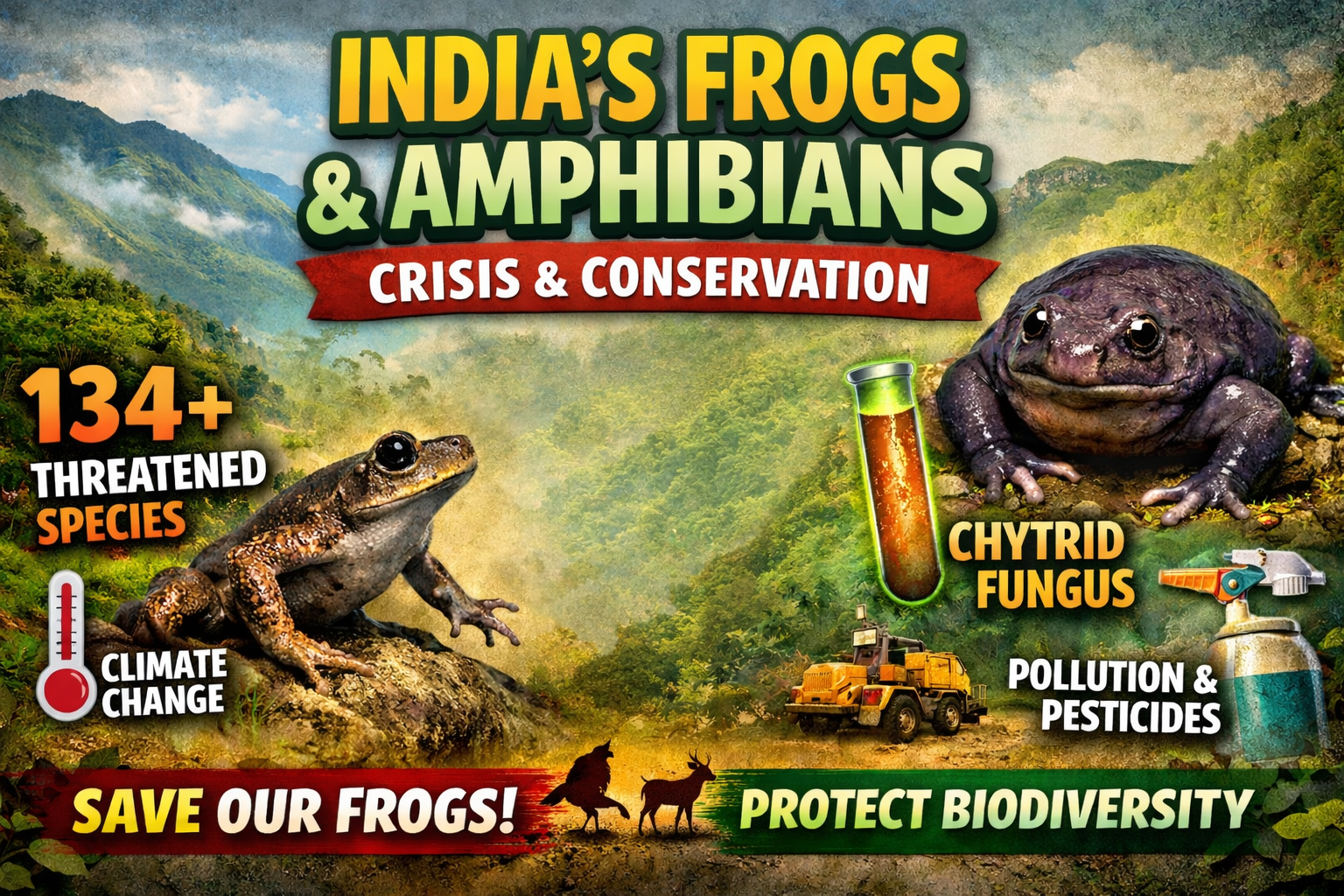
India ranks sixth globally in amphibian diversity, with over 85% species endemic. However:
· Around 136–139 species are threatened
· Nearly 60% are data deficient, limiting conservation planning
· The Western Ghats is the most critical region, hosting highly threatened species like the Dancing Frogs
Key challenges include:
· Climate change (now the primary driver of decline)
· Habitat loss and fragmentation
· Chytrid fungal disease (Batrachochytrium dendrobatidis)
· Pollution, pesticide use, and road mortality
· Limited legal protection under the Wildlife Protection Act
Conservation Efforts:
India is witnessing a shift towards science-driven and participatory conservation:
· Institutional initiatives: Sanctuaries, conservation breeding, and ethical reforms (ban on dissection)
· Projects: The Amphibian Recovery Project by the Wildlife Trust of India in Kerala targets endangered species
· State efforts: Tamil Nadu’s conservation fund prioritising species like the Purple Frog
· Scientific innovation: Non-invasive disease monitoring by CSIR-Centre for Cellular and Molecular Biology
· Citizen science: Platforms like iNaturalist enable public participation in data collection
Such efforts help bridge data gaps and enhance conservation outreach.
Way Forward:
· Strengthen research and long-term monitoring
· Expand legal protection under wildlife laws
· Integrate amphibian conservation into climate strategies
· Scale up citizen science participation
· Promote ecosystem-based conservation beyond charismatic species
Conclusion:
India’s amphibians represent both rich biodiversity and a conservation challenge. The integration of scientific research, policy support, and citizen participation offers a hopeful path. Protecting amphibians is essential not only for biodiversity but also for ecosystem stability and environmental sustainability.



