
India Co-Sponsors Resolution Passed by UNSC against Iran
Context:
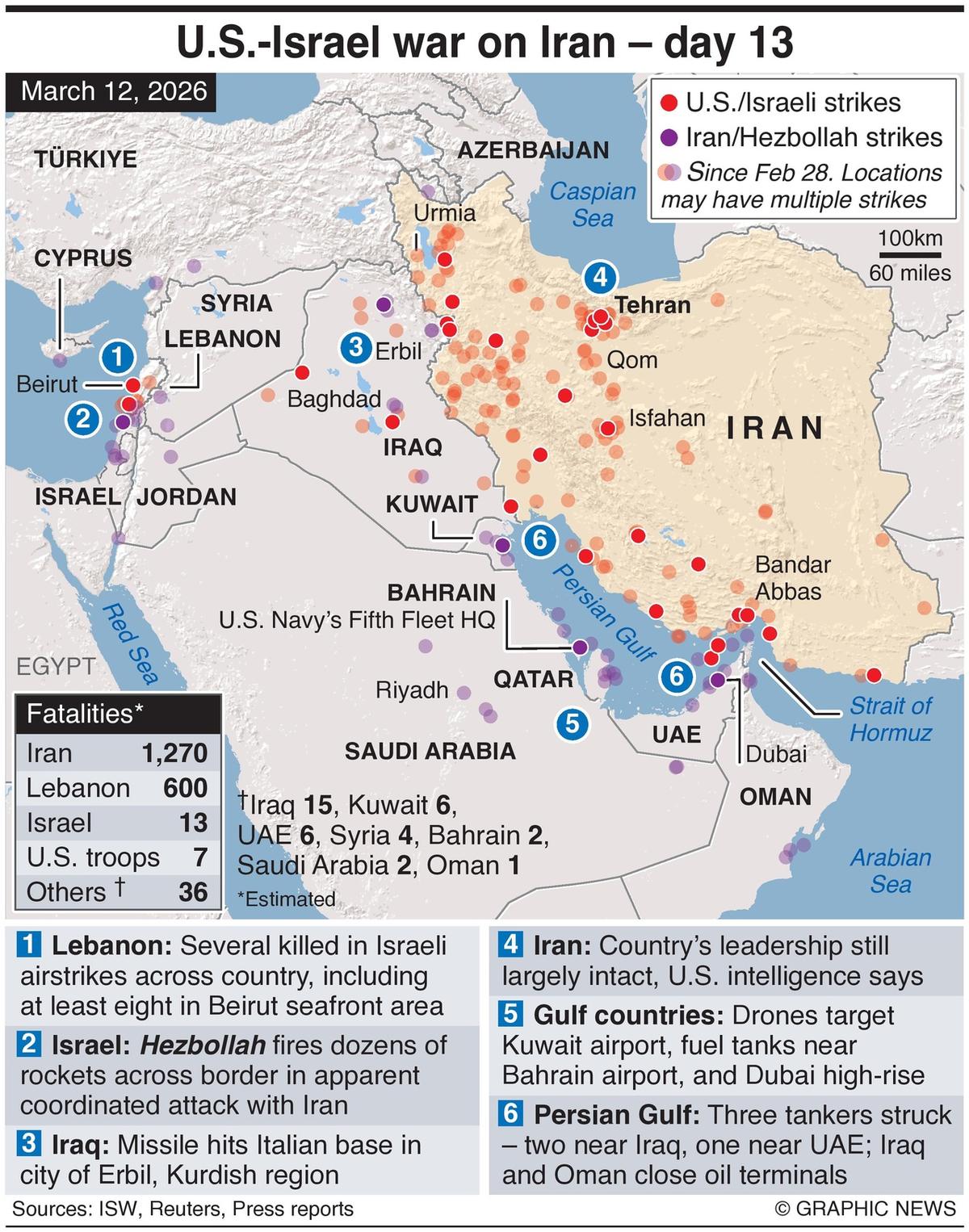
India recently co-sponsored a United Nations Security Council (UNSC) resolution condemning Iran’s attacks on Gulf countries and Jordan amid escalating tensions in West Asia. The resolution called for the immediate cessation of hostilities and warned against threats to close the strategically important Strait of Hormuz.
About the UNSC Resolution:
The UNSC adopted Resolution 2817 (2026) condemning what it described as “egregious attacks” by Iran on neighbouring states such as Bahrain, Kuwait, Oman, Qatar, Saudi Arabia, the UAE and Jordan.
Key features:
-
-
- Demands immediate halt to attacks by Iran.
- Condemns violations of sovereignty and territorial integrity of Gulf states.
- Warns against threats to close the Strait of Hormuz, a key global energy route.
- Calls on Iran to stop provocations and destabilising activities.
- The resolution was adopted with 13 votes in favour, while China and Russia abstained.
- Demands immediate halt to attacks by Iran.
-
Significance of the resolution:
-
-
- Energy Security:
- Key facts:
- India imports about 88% of its crude oil requirements.
- Around 40–50% of India’s crude oil imports pass through the Strait of Hormuz.
- Nearly 85% of India’s LNG imports also move through this route.
- About 2.5–2.7 million barrels per day (bpd) of India’s crude imports transit the Strait.
- Any conflict in the region could therefore disrupt supply chains and raise fuel prices in India.
- India imports about 88% of its crude oil requirements.
- Importance of the Strait of Hormuz:
- Important facts:
- Nearly 20% of global petroleum consumption passes through this narrow waterway daily.
- Over 20 million barrels of oil per day transit through the Strait.
- Asian countries receive about 89% of oil shipments passing through Hormuz.
- Thus, instability in the region has global economic consequences.
- Nearly 20% of global petroleum consumption passes through this narrow waterway daily.
- Indian Diaspora in the Gulf:
- Key facts:
- Around 9 million Indians live and work in the Persian Gulf region.
- Remittances from overseas Indians contribute over $125 billion annually to India’s economy.
- Regional instability could affect employment, remittances, and evacuation needs.
- Around 9 million Indians live and work in the Persian Gulf region.
- Energy Security:
-
India’s Diplomatic Position:
-
-
- India’s support for the resolution reflects:
- Commitment to international law and sovereignty of states.
- Interest in stability in West Asia, a key economic partner.
- Protection of energy supply routes and maritime security.
- Commitment to international law and sovereignty of states.
- At the same time, India traditionally maintains balanced relations with both Iran and Gulf countries, making diplomatic engagement crucial.
- India’s support for the resolution reflects:
-
Conclusion:
India’s co-sponsorship of the UNSC resolution condemning Iran reflects its commitment to regional stability and international law while safeguarding energy security and maritime trade routes. The move highlights the challenge of balancing strategic relations with competing powers in West Asia.



