
Context:
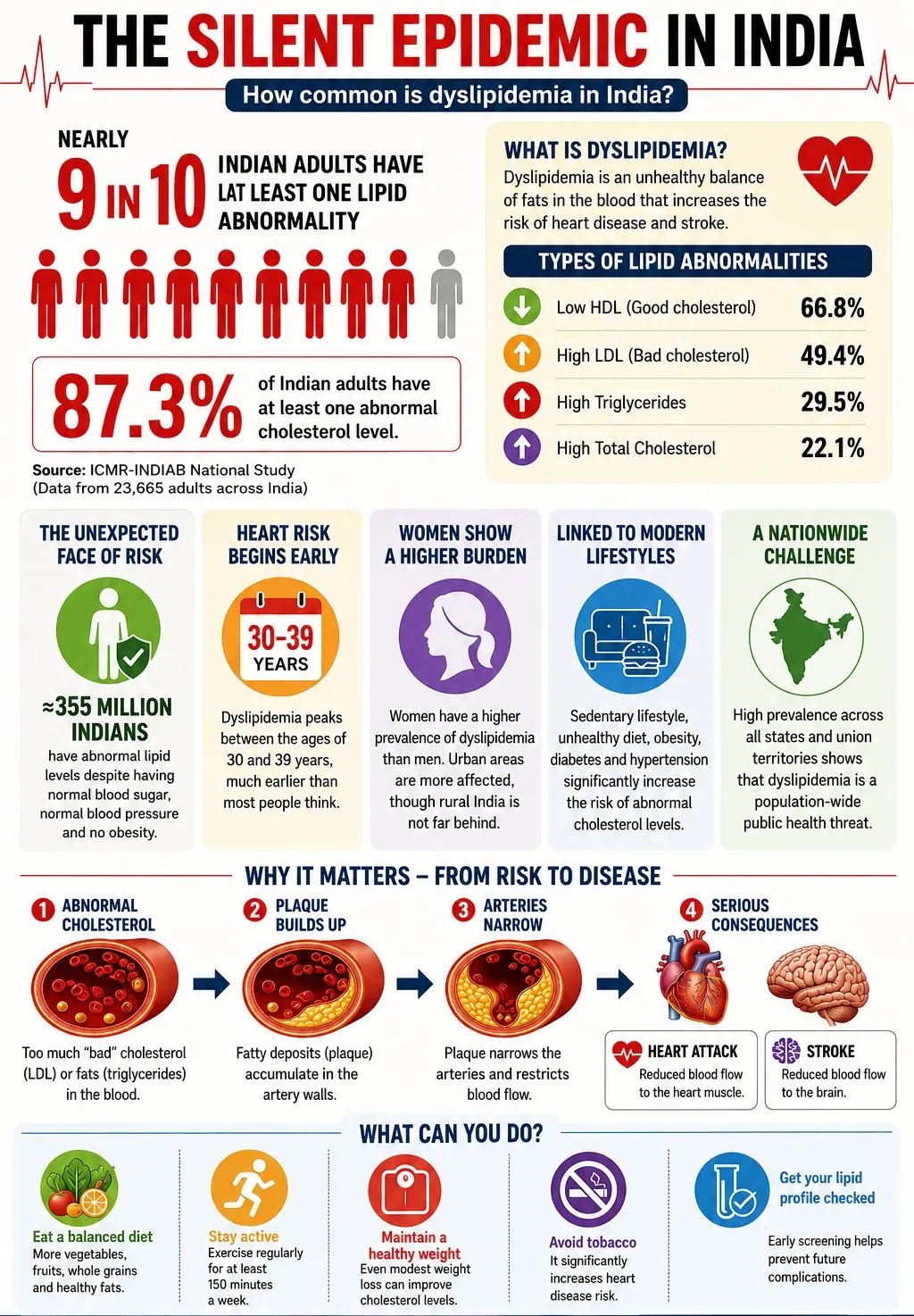
A recent nationwide study conducted under the Indian Council of Medical Research (ICMR)-INDIAB Survey has revealed that 87.3% of Indian adults have at least one abnormal lipid (fat) parameter, highlighting a growing public health crisis.
Key Findings of the Study:
-
-
- The study found that low High-Density Lipoprotein (HDL), commonly known as "good cholesterol," is the most prevalent lipid abnormality, affecting nearly two-thirds of adults.
- The study also reported high levels of Low-Density Lipoprotein (LDL) or "bad cholesterol," elevated triglycerides, and increased total cholesterol levels.
- Alarmingly, around 355 million Indians, who have normal body weight, blood pressure, and blood sugar levels, are still affected by abnormal lipid levels. This challenges the belief that only individuals suffering from obesity or diabetes are at risk.
- The highest prevalence of lipid abnormalities was observed among adults in the 30-39 years age group, while women showed a slightly higher burden compared to men.
- The study found that low High-Density Lipoprotein (HDL), commonly known as "good cholesterol," is the most prevalent lipid abnormality, affecting nearly two-thirds of adults.
-
What is Dyslipidemia?
-
-
- Dyslipidemia refers to an abnormal concentration of fats (lipids) in the blood. It includes:
- High LDL cholesterol.
- Low HDL cholesterol.
- High triglycerides.
- Elevated total cholesterol.
- High LDL cholesterol.
- Since it usually does not show any visible symptoms, it is often referred to as a "silent epidemic".
- Over time, these abnormalities lead to the formation of plaque in arteries (atherosclerosis), significantly increasing the risk of heart attacks, strokes, and other cardiovascular diseases.
- Dyslipidemia refers to an abnormal concentration of fats (lipids) in the blood. It includes:
-
Reasons Behind the Rising Burden:
-
-
- According to the study, the high prevalence of dyslipidemia in India is due to the combined impact of genetic predisposition and lifestyle-related factors.
- South Asians naturally tend to have:
- Lower HDL levels.
- Higher triglyceride levels.
- This risk is further increased due to:
- Carbohydrate-rich diets.
- Consumption of ultra-processed foods.
- Physical inactivity.
- Obesity.
- Tobacco use.
- Increasing urbanisation.
- Lower HDL levels.
- The narrowing gap between urban and rural areas indicates that unhealthy lifestyles are now rapidly spreading across rural India as well.
- According to the study, the high prevalence of dyslipidemia in India is due to the combined impact of genetic predisposition and lifestyle-related factors.
-
Way Forward:
-
-
- These findings highlight the need for timely and universal lipid screening among all individuals, including young adults, rather than restricting testing only to people with diabetes or obesity.
- Public health initiatives should promote:
- Balanced diets.
- Regular physical activity.
- Tobacco cessation.
- Reduced consumption of refined carbohydrates and trans fats.
- Balanced diets.
- Strengthening programmes such as the National Programme for Prevention and Control of Non-Communicable Diseases (NP-NCD), Ayushman Arogya Mandirs and Eat Right India can improve awareness and early detection.
- These findings highlight the need for timely and universal lipid screening among all individuals, including young adults, rather than restricting testing only to people with diabetes or obesity.
-
Conclusion:
The ICMR study highlights that dyslipidemia is no longer limited to older or visibly unhealthy individuals but has become a widespread public health challenge affecting young and apparently healthy adults.
Adopting preventive healthcare through early screening, lifestyle modifications, and greater public awareness will be essential to reducing the burden of cardiovascular diseases and achieving the goal of a healthier India.



