
Context:
A decade-long study by Oxford University and Oxford Brookes University has found that Antarctic penguins are advancing their breeding seasons in response to rapid warming. Gentoo, Adélie, and Chinstrap penguins now begin nesting up to 24 days earlier than they did a decade ago. While this behavioural adaptation helps them cope with rising temperatures, it may disrupt food availability and threaten population stability. Penguins act as sentinel species, indicating broader ecosystem changes in Antarctica.
About Antarctic Penguins:
Penguins are flightless seabirds adapted to polar marine environments. Adélie, Chinstrap, and Gentoo penguins dominate the Antarctic Peninsula and nearby islands. They rely on marine prey such as krill, fish, and squid, and their breeding cycles are closely linked to periods of peak food availability. Changes in sea ice extent and snowmelt patterns strongly influence nesting success and chick survival.
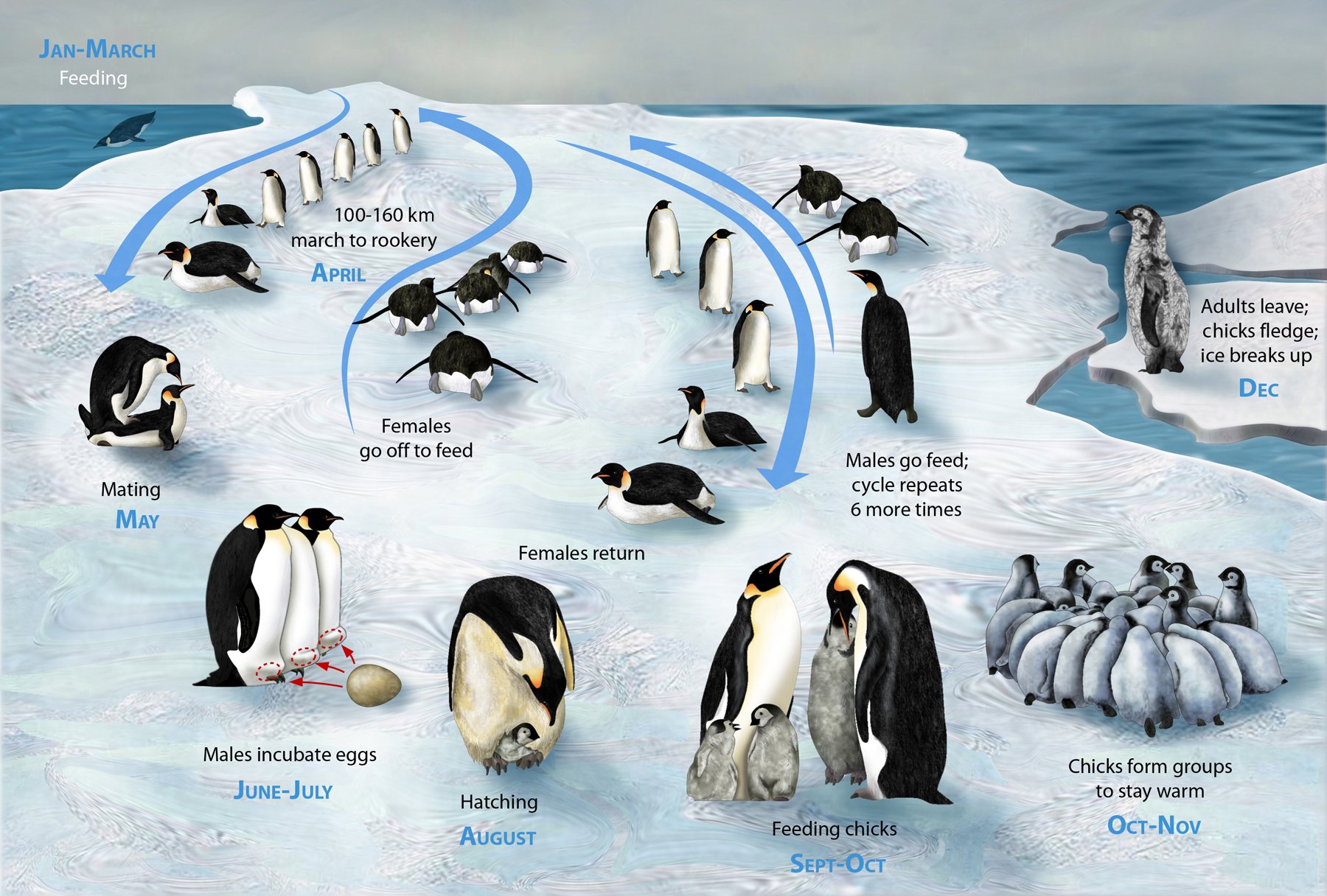
What Has the Study Found?
-
-
-
- Gentoo penguins are breeding an average of 13 days earlier, with some colonies advancing breeding by up to 24 days.
- Adélie and Chinstrap penguins are breeding around 10 days earlier.
- These shifts represent the fastest recorded phenological change in any bird species.
- Gentoo penguins are breeding an average of 13 days earlier, with some colonies advancing breeding by up to 24 days.
- Local temperatures at breeding sites are increasing by about 0.3°C per year—nearly four times the Antarctic average—triggering earlier snowmelt and altering environmental cues.
-
-
Why Are Penguins Breeding Earlier?
Rapid warming accelerates snowmelt and sea-ice retreat, exposing nesting areas earlier in the season. Environmental cues such as temperature and ice conditions guide penguin reproductive timing. While earlier breeding helps penguins adapt to warmer conditions, potential mismatches with prey availability remain a major concern.
Ecological Implications:
-
-
- Phenological mismatch: Chicks may hatch before peak krill availability, reducing survival rates.
- Winners and losers: Gentoo penguins may benefit from warming conditions, while Adélie and Chinstrap penguins, which are more dependent on sea ice, face population declines.
- Increased competition: Overlapping breeding seasons may intensify competition for food and nesting space.
- Phenological mismatch: Chicks may hatch before peak krill availability, reducing survival rates.
-
Policy and Conservation Significance:
-
-
- Penguins are key indicators of Antarctic ecosystem health. Shifts in their breeding calendars highlight the urgent need for:
- Long-term monitoring of penguin populations and prey species.
- Integration of phenological data into conservation planning.
- Global climate mitigation efforts to limit further warming impacts.
- Long-term monitoring of penguin populations and prey species.
- Penguins are key indicators of Antarctic ecosystem health. Shifts in their breeding calendars highlight the urgent need for:
-
Conclusion:
Earlier breeding among Antarctic penguins represents a remarkable adaptive response to climate change but also poses serious ecological risks. Phenological mismatches, increased competition, and declining populations signal that even resilient species are vulnerable, underscoring the need for urgent conservation action and global climate intervention.



