
Why in News:
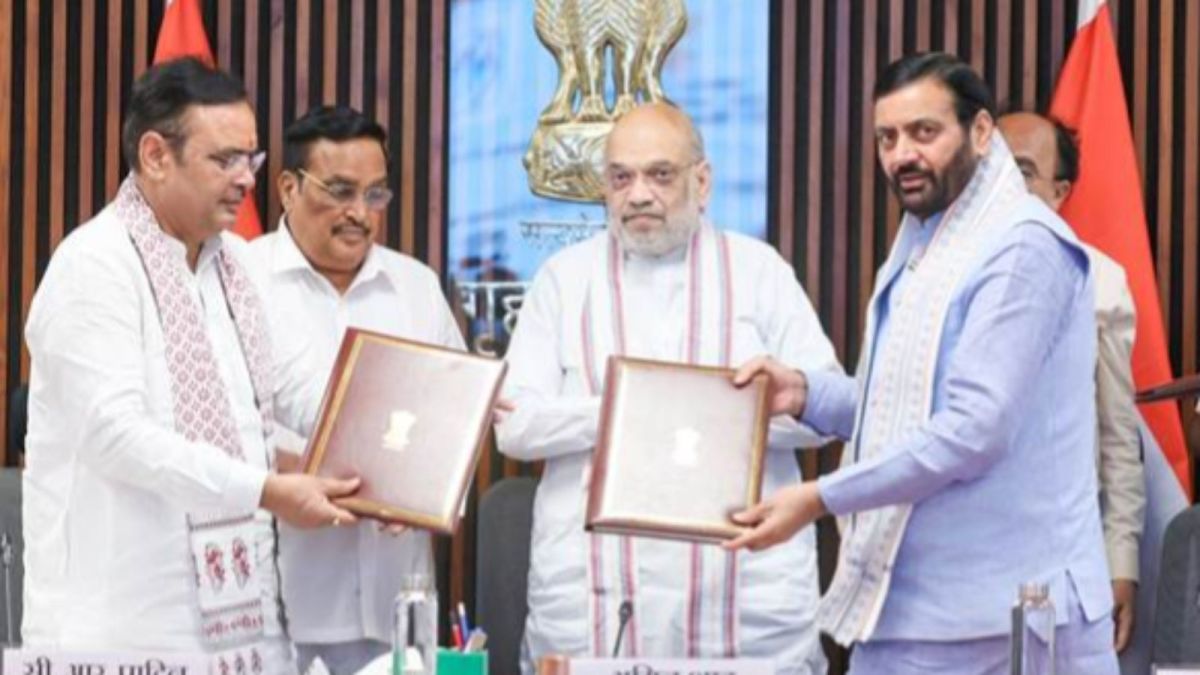
Recently, Haryana and Rajasthan have signed a Memorandum of Understanding (MoU) to implement the long-pending 1994 Upper Yamuna River Board (UYRB) Agreement. The project aims to improve drinking water availability, irrigation, groundwater recharge, and strengthen inter-state cooperation in water management.
Historical Background:
-
-
- The foundation of the agreement lies in the 1994 Memorandum of Understanding on the Sharing of Utilisable Surface Waters of the Upper Yamuna Basin, signed on 12 May 1994 by Haryana, Uttar Pradesh, Rajasthan, Delhi, and Himachal Pradesh. After the creation of Uttarakhand in 2000, it also became a stakeholder in the Upper Yamuna Basin.
- The agreement sought to distribute the utilisable waters of the Yamuna River among the basin states to meet growing demands for drinking water, irrigation, and other developmental purposes. To oversee its implementation, the Upper Yamuna River Board (UYRB) was established under the Ministry of Jal Shakti to regulate water allocation, monitor river flows, and coordinate among the participating states.
- The foundation of the agreement lies in the 1994 Memorandum of Understanding on the Sharing of Utilisable Surface Waters of the Upper Yamuna Basin, signed on 12 May 1994 by Haryana, Uttar Pradesh, Rajasthan, Delhi, and Himachal Pradesh. After the creation of Uttarakhand in 2000, it also became a stakeholder in the Upper Yamuna Basin.
-
Need for the New Agreement:
-
-
- Although the 1994 agreement allocated 10.4% of Yamuna waters to Rajasthan, the state could not fully utilise its share due to the absence of a dedicated water conveyance system. Consequently, a substantial portion of its allocated water remained unutilised for several years.
- To resolve this issue, Haryana and Rajasthan recently signed a fresh MoU to operationalise the 1994 agreement. Under this arrangement, Haryana will supply 580 million cubic metres (MCM) of Yamuna water to Rajasthan every year from July to October through approximately 300 km of underground pipelines originating near Hathinikund. The project, estimated to cost around ₹3,900 crore, will be jointly implemented by both states.
- Although the 1994 agreement allocated 10.4% of Yamuna waters to Rajasthan, the state could not fully utilise its share due to the absence of a dedicated water conveyance system. Consequently, a substantial portion of its allocated water remained unutilised for several years.
-
Significance of the Agreement:
The agreement will provide reliable drinking water to the districts of Sikar, Churu, and Jhunjhunu in Rajasthan, while also benefiting parts of Haryana. It is expected to improve irrigation, recharge groundwater, and reduce wastage of surplus monsoon water. The MoU is also likely to accelerate the construction of the Renuka, Kishau, and Lakhwar multipurpose dam projects, which are essential for increasing storage capacity and ensuring long-term water security in the Yamuna basin.
Constitutional Provisions for Inter-State Water Disputes:
-
-
- Article 262 empowers Parliament to enact laws for adjudicating inter-state river water disputes.
- Parliament enacted the Inter-State River Water Disputes Act, 1956, enabling the establishment of water dispute tribunals.
- Entry 17 of the State List gives states jurisdiction over water, subject to Entry 56 of the Union List, which empowers the Union to regulate inter-state rivers in the public interest.
- Article 262 empowers Parliament to enact laws for adjudicating inter-state river water disputes.
-
Conclusion:
The Haryana–Rajasthan MoU represents a significant step in cooperative federalism by operationalising the 1994 Upper Yamuna Agreement. Besides ensuring drinking water security for water-scarce regions, it highlights the importance of basin-level planning, infrastructure development, and constitutional mechanisms for the equitable and sustainable management of India's inter-state river waters.



