
Context:
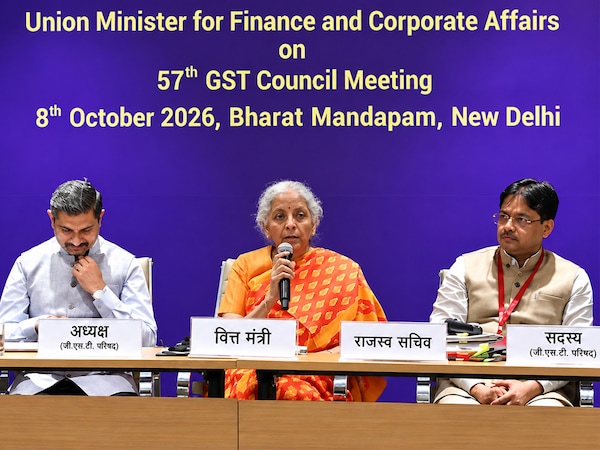
The 57th meeting of the Goods and Services Tax (GST) Council, held on 8 October 2026, recommended major procedural reforms to simplify tax compliance, speed up refunds and reduce criminal penalties. The proposals aim to promote ease of doing business and establish a trust-based tax administration.
Background:
-
-
- The Goods and Services Tax was introduced on 1 July 2017 through the 101st Constitutional Amendment Act, 2016. It is a destination-based, value-added indirect tax that subsumed several central and state indirect taxes.
- CGST: Central Goods and Services Tax.
- SGST: State Goods and Services Tax.
- IGST: Integrated Goods and Services Tax, generally applicable to inter-state supplies and imports.
- CGST: Central Goods and Services Tax.
- The GST Council, established under Article 279A of the Constitution, recommends GST rates, exemptions, model laws and other important policy measures.
- The Goods and Services Tax was introduced on 1 July 2017 through the 101st Constitutional Amendment Act, 2016. It is a destination-based, value-added indirect tax that subsumed several central and state indirect taxes.
-
Key Features of the Reforms:
-
-
- Faster GST refunds
- Refund acknowledgement or deficiency memo period to be reduced from 15 days to 10 days.
- Eligible claims for excess electronic cash ledger balances to be processed automatically.
- 90% of eligible refunds for zero-rated supplies and inverted duty structure to be provisionally sanctioned automatically, based on system risk assessment.
- Greater automation and reduced paperwork for eligible refund claims.
- Refund acknowledgement or deficiency memo period to be reduced from 15 days to 10 days.
- Removal of arrest provisions
- The Council recommended removing arrest provisions under the GST law.
- The monetary threshold for prosecution is proposed to rise from ₹1 crore to ₹5 crore.
- The maximum general penalty under Section 125 is proposed to fall from ₹25,000 to ₹10,000.
- Punishment provisions are to be rationalised, with greater judicial discretion.
- The Council recommended removing arrest provisions under the GST law.
- Wider input tax credit (ITC)
- The Council recommended expanding ITC and refund eligibility for specified input services and capital goods, including under the inverted duty structure, subject to prescribed conditions and implementation dates.
- The Council recommended expanding ITC and refund eligibility for specified input services and capital goods, including under the inverted duty structure, subject to prescribed conditions and implementation dates.
- Easier movement of goods
- Interception of goods in transit is proposed to be based on specific intelligence and authorisation by an officer of at least Joint Commissioner rank, with safeguards against unnecessary checks in transit states.
- Interception of goods in transit is proposed to be based on specific intelligence and authorisation by an officer of at least Joint Commissioner rank, with safeguards against unnecessary checks in transit states.
- Faster GST refunds
-
Significance:
-
-
- The reforms can benefit micro, small and medium enterprises (MSMEs) by reducing administrative burdens and improving access to working capital. Faster refunds can support exporters, while simplified procedures may encourage voluntary tax compliance.
- Removing arrest provisions and rationalising prosecution could also strengthen taxpayer confidence, reduce the fear of disproportionate enforcement and improve India's business environment.
- The reforms can benefit micro, small and medium enterprises (MSMEs) by reducing administrative burdens and improving access to working capital. Faster refunds can support exporters, while simplified procedures may encourage voluntary tax compliance.
-
Challenges:
Relaxed enforcement must not weaken action against deliberate tax evasion, fake invoices or fraudulent ITC claims. Automated refund systems require robust data security, accurate risk assessment and effective grievance redressal. Clear legal amendments and implementation guidelines are also essential.
Constitutional aspects:
-
-
- Article 265: No tax shall be levied or collected except by authority of law.
- Article 279A: Provides for the GST Council and its role in recommending GST-related measures.
- Section 69, CGST Act: Deals with the power to arrest in specified circumstances under the existing framework. The Council has recommended removing the relevant arrest provisions.
- Section 132, CGST Act: Deals with specified GST offences and their punishment. The proposed reforms seek to rationalise criminal liability and prosecution thresholds.
- Article 265: No tax shall be levied or collected except by authority of law.
-
Conclusion:
The proposed GST reforms represent a shift towards simpler, faster and more trust-based tax administration. Their success will depend on balancing taxpayer rights and ease of doing business with the need to protect public revenue and prevent tax evasion.



