
Government Raised Import Duty on Gold and Silver
Context:
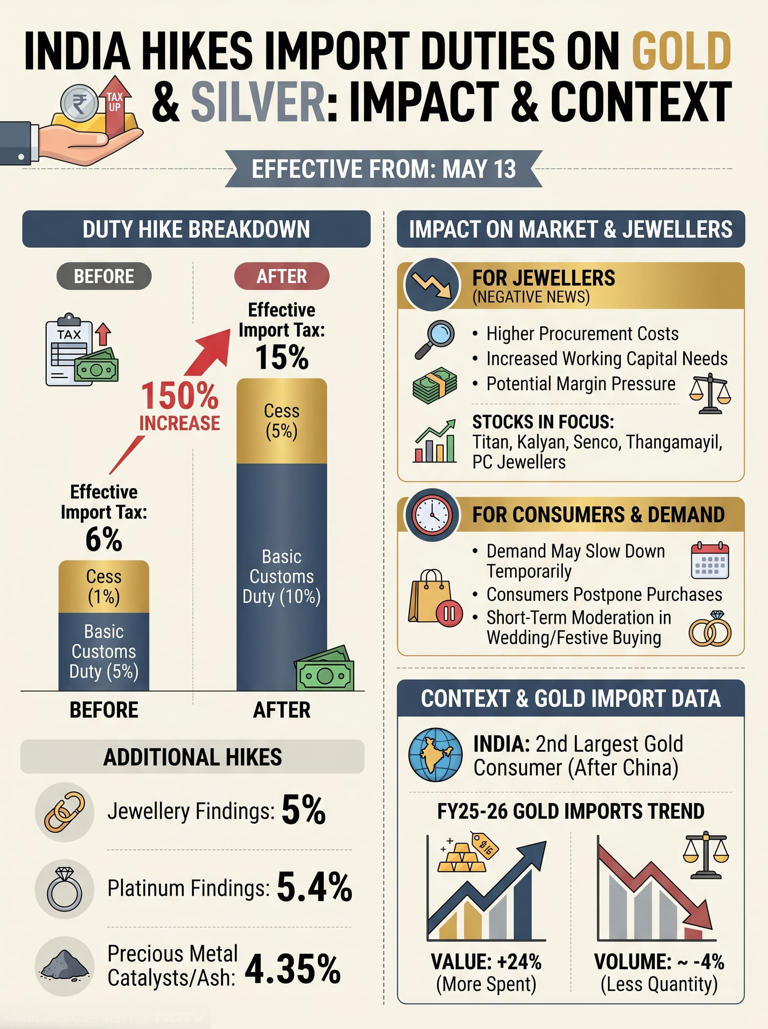
Recently, the Government of India increased import duties on gold and silver to 15% from 6%. The move comes amid pressure on foreign exchange reserves and heightened global uncertainty linked to the West Asia crisis. The Finance Ministry notified the change through revisions in the social welfare surcharge (SWS) and the agriculture infrastructure and development cess (AIDC).
Why Import Duties on Gold Were Increased:
-
-
- The decision reflects multiple external pressures. India is facing foreign exchange stress due to a rising import bill, particularly from energy and commodities. Geopolitical tensions in West Asia have disrupted global oil supply chains, while crude oil prices have surged due to risks around the Strait of Hormuz.
- At the same time, the Indian rupee has weakened to record lows against the US dollar. In this context, the government aims to curb non-essential imports such as gold and conserve foreign exchange for critical needs like crude oil, fertilisers, defence equipment, and industrial inputs.
- The decision reflects multiple external pressures. India is facing foreign exchange stress due to a rising import bill, particularly from energy and commodities. Geopolitical tensions in West Asia have disrupted global oil supply chains, while crude oil prices have surged due to risks around the Strait of Hormuz.
-
About Import Duty:
Import duty is a tax imposed by the government on goods brought into a country from abroad. It serves multiple objectives such as:
-
-
- Protecting domestic industries
- Regulating imports and trade balance
- Generating government revenue
- Conserving foreign exchange reserves
- Protecting domestic industries
-
Legal Framework in India:
-
-
- Import duties in India are governed primarily by the Customs Act, 1962 and the Customs Tariff Act, 1975. The law provides the framework for levy, assessment, collection, and exemption of customs duties on imported and exported goods.
- The Central Board of Indirect Taxes and Customs (CBIC), under the Ministry of Finance, is responsible for administering customs laws, preventing smuggling, and ensuring proper collection of duties.
- Import duties in India are governed primarily by the Customs Act, 1962 and the Customs Tariff Act, 1975. The law provides the framework for levy, assessment, collection, and exemption of customs duties on imported and exported goods.
-
Types of Import Duties in India:
India imposes different categories of customs duties depending on the nature of goods and policy objectives:
-
-
- Basic Customs Duty (BCD): Levied on imported goods under the Customs Act.
- Social Welfare Surcharge (SWS): Additional surcharge on customs duties.
- Agriculture Infrastructure and Development Cess (AIDC): Imposed on selected imports to support agricultural infrastructure.
- Anti-Dumping Duty: Applied to protect domestic industries from unfairly cheap imports.
- Safeguard Duty: Imposed to protect domestic industries from sudden import surges.
- Basic Customs Duty (BCD): Levied on imported goods under the Customs Act.
-
Impact on Prices and Consumers:
Higher import duty is expected to raise domestic gold and silver prices due to increased landed costs. This will likely be passed on to consumers in jewellery and bullion markets. Following the announcement, domestic prices surged, reflecting immediate market sensitivity. The move reverses the earlier 2024–25 Budget decision that had reduced duties from 15% to 6%.
Conclusion:
The hike in gold import duty reflects a broader strategy of external sector management amid global uncertainty. While it will make gold more expensive for consumers in the short term, the policy aims to strengthen India’s foreign exchange position, stabilise the rupee, and ensure adequate resources for essential imports during a period of geopolitical and energy market volatility.



