
Context:
Recently, the Government of India notified amendments to the Information Technology (Intermediary Guidelines and Digital Media Ethics Code) Rules, 2021. The rules introduce mandatory AI content labelling and require social media platforms to remove unlawful content within three hours, reduced from the previous 36-hour timeline.
Key Features:
-
-
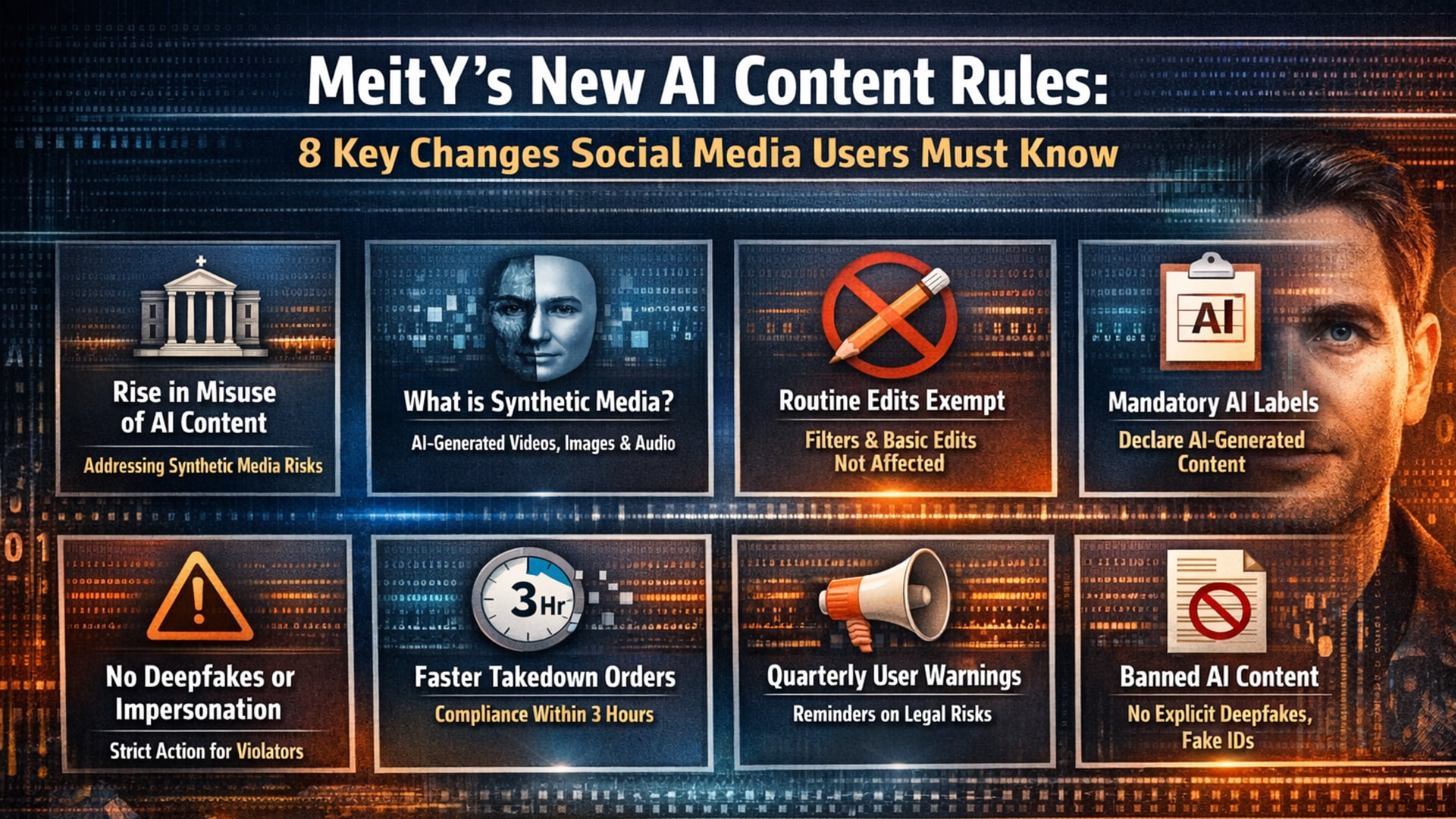
- Prominent AI Content Labelling: Platforms must clearly label all AI-generated or synthetic content, including deepfakes. Labels must be visible and cannot be removed or obscured.
- Three-Hour Takedown: Platforms such as Facebook, Instagram, YouTube, and X must remove flagged unlawful content within three hours. A two-hour timeline applies to non-consensual intimate imagery or harmful deepfakes.
- User Declarations & Metadata: Platforms may require users to declare AI-generated content and verify it using automated tools. Non-compliance risks the loss of safe harbour protections under Section 79 of the IT Act.
- Prominent AI Content Labelling: Platforms must clearly label all AI-generated or synthetic content, including deepfakes. Labels must be visible and cannot be removed or obscured.
-
Definition of AI/Synthetic Content:
Synthetic Generated Information (SGI) includes any audio, visual, or audiovisual content created or manipulated using AI that appears realistic. Routine edits and educational illustrations are exempt.
Compliance & Accountability:
-
-
- Platforms must:
- Embed metadata and visible labels on AI-generated content.
- Adhere strictly to the prescribed takedown timelines.
- Warn users about penalties for the misuse of AI tools at least once every three months.
- Non-compliance may result in legal liability, as intermediaries could lose safe harbour protection.
- Embed metadata and visible labels on AI-generated content.
- Platforms must:
-
Rationale:
-
-
- The government’s stated objective is to curb the spread and virality of harmful, deceptive, or unlawful synthetic content—particularly deepfakes and AI-driven misinformation that can manipulate public perception, cause reputational harm, or facilitate fraud.
- By reducing takedown timelines and mandating labels, the authorities aim to enhance digital accountability, transparency, and user awareness in an era where sophisticated AI tools can create highly realistic but misleading content.
- The government’s stated objective is to curb the spread and virality of harmful, deceptive, or unlawful synthetic content—particularly deepfakes and AI-driven misinformation that can manipulate public perception, cause reputational harm, or facilitate fraud.
-
Concerns & Criticisms:
-
-
- Industry Burden: Three-hour deadlines may lead to over-censorship and operational challenges.
- Freedom of Expression: Rapid takedown requirements could result in prior restraint, automated removals, and adverse impacts on user rights.
- Industry Burden: Three-hour deadlines may lead to over-censorship and operational challenges.
-
Significance for Digital Governance:
-
-
- The amendments signal India’s intent to be among the first major democracies to bring AI-generated and synthetic content under a formal digital governance framework with clear compliance obligations for social media intermediaries.
- By mandating visible AI labels and strict takedown timelines, the government seeks to balance innovation in AI with user protection and accountability in the age of synthetic media.
- The amendments signal India’s intent to be among the first major democracies to bring AI-generated and synthetic content under a formal digital governance framework with clear compliance obligations for social media intermediaries.
-
Conclusion:
The new rules, combining prominent AI labelling and stringent takedown timelines, mark a significant shift in digital regulation. Effective implementation and safeguards for freedom of speech will determine their success in curbing misinformation while fostering responsible digital innovation.



