
Context:
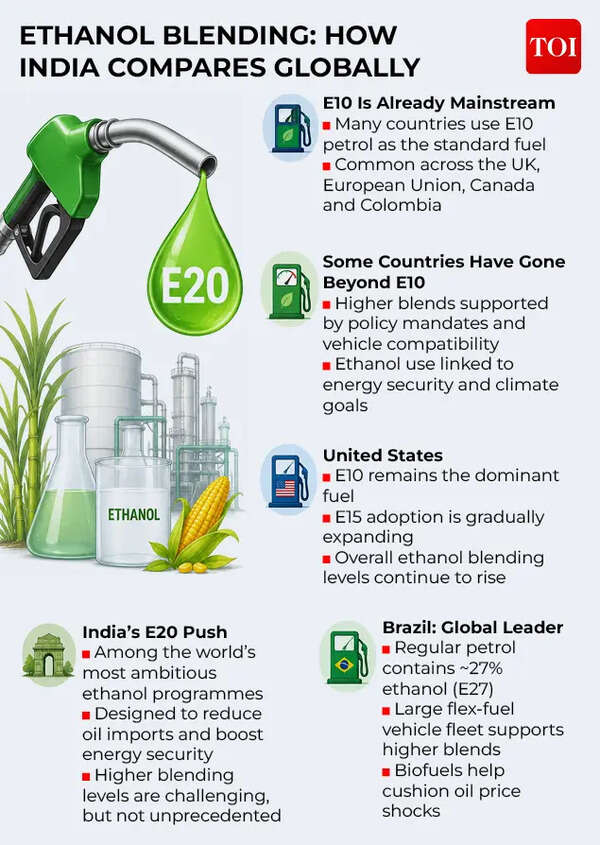
Recently, Hero MotoCorp, an Indian motor manufacturer, launched India's first flex-fuel motorcycles in New Delhi. Compatible with ethanol blends ranging from E20 to E85, these motorcycles mark India's entry into mass-market flex-fuel mobility.
About Flex Fuel Vehicles (FFVs):
Flex Fuel Vehicles are automobiles equipped with modified internal combustion engines that can run on petrol, ethanol, or a mixture of both. They can seamlessly operate on blends such as E20 and E85 without manual intervention. Ethanol is a renewable biofuel produced from agricultural feedstocks such as sugarcane, maize, surplus grains, and agricultural residues.
Key Features of Flex Fuel Technology:
-
-
- Automatic Fuel Adaptation: Advanced sensors and an Engine Control Module (ECM) detect the fuel blend and adjust engine parameters automatically.
- Compatibility with Multiple Blends: FFVs can operate on petrol, ethanol, or varying blends like E20, E30, and E85.
- Lower Carbon Emissions: Ethanol burns cleaner than petrol, reducing greenhouse gas emissions and air pollution.
- Indigenous Solution: Since ethanol is domestically produced, flex-fuel technology reduces dependence on imported fossil fuels.
- Automatic Fuel Adaptation: Advanced sensors and an Engine Control Module (ECM) detect the fuel blend and adjust engine parameters automatically.
-
Significance of Flex Fuel Vehicles for India:
-
-
- Reducing Crude Oil Imports: India imports nearly 88% of its crude oil requirements. Greater adoption of FFVs can improve energy security and reduce foreign exchange expenditure.
- Strengthening Farmer Incomes: Ethanol production creates additional demand for agricultural produce, providing farmers with new income opportunities. The ethanol blending programme has generated over ₹1.58 lakh crore in earnings for farmers since 2014.
- Environmental Benefits: Increased ethanol usage reduces carbon emissions, lowers vehicular pollution, and supports India's climate commitments.
- Affordable Low-Carbon Mobility: Unlike electric vehicles, FFVs can use existing fuel infrastructure, making adoption faster and more cost-effective.
- Reducing Crude Oil Imports: India imports nearly 88% of its crude oil requirements. Greater adoption of FFVs can improve energy security and reduce foreign exchange expenditure.
-
About Ethanol Blending Programme (EBP):
Launched in 2003, the Ethanol Blending Programme aims to reduce crude oil imports, enhance energy security, lower emissions, and create remunerative markets for farmers.
Major Achievements:
-
- Ethanol blending increased from around 1.5% in 2014 to 20% nationwide by March 2025.
- Significant savings in foreign exchange and reduction in crude oil consumption have been achieved.
- Ethanol blending increased from around 1.5% in 2014 to 20% nationwide by March 2025.
Impact:
-
- Saved approximately ₹1.84 lakh crore in foreign exchange.
- Replaced over 302 lakh metric tonnes of crude oil.
- Reduced about 909 lakh metric tonnes of CO₂ emissions.
- Saved approximately ₹1.84 lakh crore in foreign exchange.
Policy Support for Ethanol-Based Mobility:
The government has introduced several measures, including the National Policy on Biofuels, PM-JI-VAN Yojana, Interest Subvention Scheme, and GST reduction on ethanol from 18% to 5%. Additionally, the Global Biofuels Alliance, launched during India's G20 Presidency, promotes international cooperation in biofuel development.
Challenges and Policy Gaps:
Key challenges include limited availability of flex-fuel vehicles, inadequate infrastructure for higher ethanol blends, taxation-related distortions, feedstock sustainability concerns, and low consumer awareness.
Conclusion:
The launch of India's first mass-market flex-fuel motorcycles marks a major step towards sustainable mobility and energy security. Supported by the Ethanol Blending Programme and strong policy initiatives, flex-fuel vehicles can reduce oil imports, increase farmer incomes, and lower emissions. With continued investment in infrastructure, awareness, and innovation, India can emerge as a global leader in ethanol-based transportation and biofuel development.



