
Extracellular RNA (exRNA) in Drinking Water
Context:
A recent study published in the prestigious journal Clean Water has presented a new perspective on water safety. Scientists have found that even after the process of disinfection, bacterial extracellular RNA (exRNA) remains present in drinking water. This discovery not only helps in identifying bacteria but also reveals the survival strategies they were using just before death.
What is Extracellular RNA (exRNA):
RNA is usually found inside living cells and is responsible for protein synthesis. When a bacterium is damaged or dies, it releases its genetic material (RNA) into the surrounding environment, which is called ‘extracellular RNA’. Earlier, it was believed that this RNA gets destroyed immediately during disinfection, but new research has proven that it can persist in water.
Key Findings of the Study:
-
-
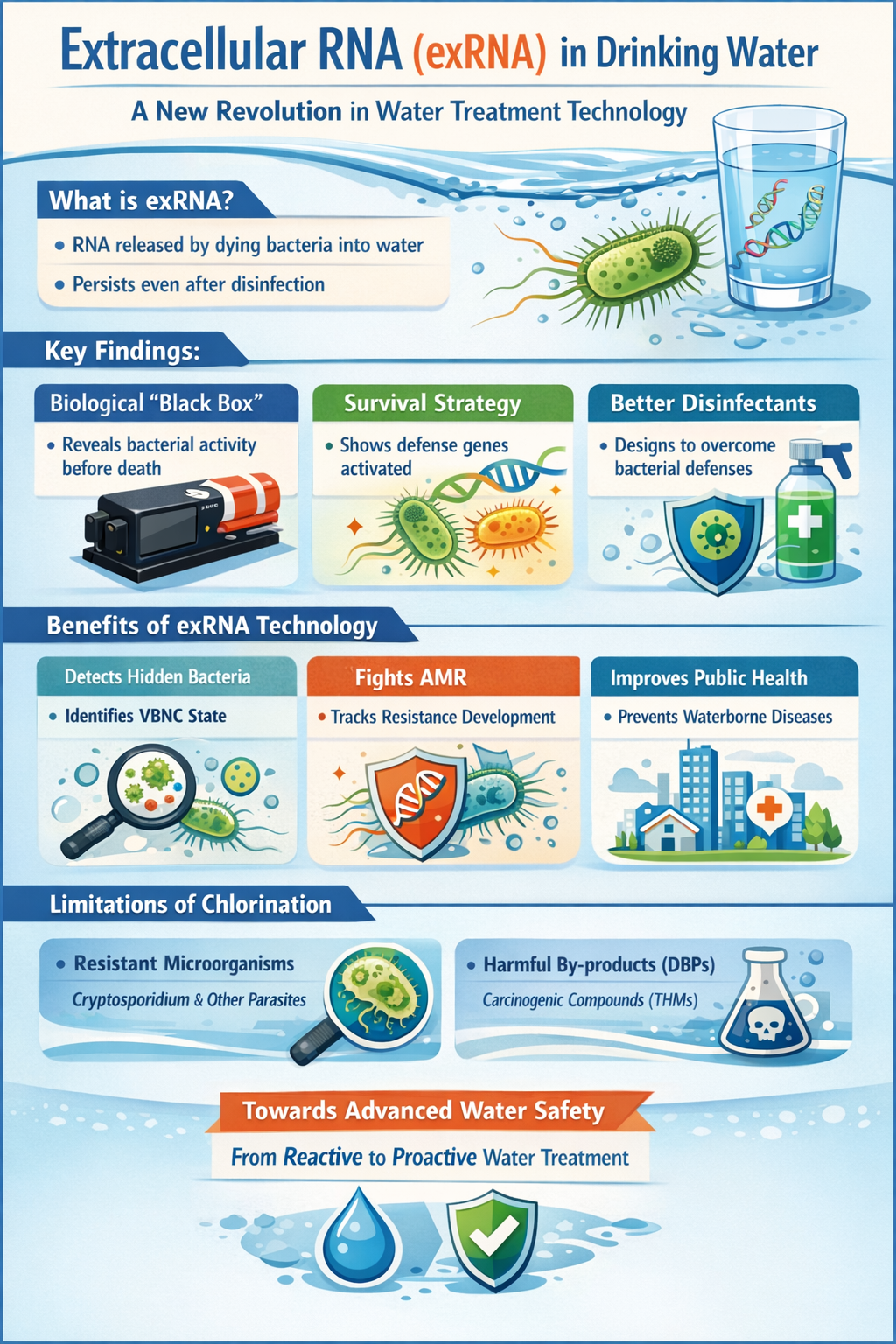
- Biological ‘Black Box’: Researchers have compared exRNA to an aircraft’s ‘black box’. Just as a black box records activities before an accident, exRNA reveals what activities bacteria were performing before death.
- Survival Strategy: Analysis of RNA showed which genes bacteria activated to protect themselves against disinfectants (such as chlorine or UV light).
- Development of Better Disinfectants: By understanding these strategies, scientists can now design targeted disinfectants that can directly break these bacterial defense mechanisms.
- Biological ‘Black Box’: Researchers have compared exRNA to an aircraft’s ‘black box’. Just as a black box records activities before an accident, exRNA reveals what activities bacteria were performing before death.
-
Importance and Need:
Currently, water purity is assessed using the ‘cultural method’, where it is observed whether bacteria grow in a petri dish or not. However, many bacteria enter a ‘Viable But Non-Culturable (VBNC)’ state, meaning they are alive but not detectable through conventional methods.
Benefits of exRNA Technology:
-
-
- Accuracy: This technique can determine which bacteria are truly dead and which are merely in a dormant state.
- Antimicrobial Resistance (AMR): It helps in understanding how bacteria develop resistance to chemicals, which is crucial for preventing future pandemics.
- Public Health: By identifying hidden microorganisms in urban water supply systems, water-borne diseases (Cholera, Typhoid, etc.) can be prevented more effectively.
- Accuracy: This technique can determine which bacteria are truly dead and which are merely in a dormant state.
-
Limitations of Chlorination:
Chlorine is the most common method of water treatment, but it has certain limitations:
-
-
- Resistant Microorganisms: Some parasites, such as Cryptosporidium, are highly resistant to chlorine and do not die at normal concentrations.
- Harmful By-products (DBPs): When chlorine reacts with organic matter in water (such as leaves or soil), it can produce carcinogenic compounds like trihalomethanes (THMs).
- Resistant Microorganisms: Some parasites, such as Cryptosporidium, are highly resistant to chlorine and do not die at normal concentrations.
-
Conclusion:
This research indicates a shift in water treatment from a ‘reactive’ approach to a ‘proactive’ approach. By understanding the final defense mechanisms of microorganisms, water purification systems can be made more advanced, safe, and efficient.



