
Supreme Court Push for Pulses and Crop Diversification in India
Context:
The Supreme Court of India recently urged the Union government to promote crop diversification and encourage farmers to cultivate more pulses instead of water-intensive crops such as wheat and paddy. The observation came during the hearing of a petition filed by a farmers’ organisation seeking policy changes to boost domestic pulse production.
Background:
-
-
- India’s agricultural policy has historically emphasised the production of wheat and rice due to assured procurement under the Minimum Support Price (MSP) system and the Public Distribution System (PDS). However, this has led to monocropping in several regions, particularly in northern India, causing problems such as groundwater depletion, soil degradation, and ecological imbalance.
- The Court noted that despite the government’s attempts to encourage alternative crops, farmers continue to prefer wheat and paddy because they have stable procurement mechanisms and assured prices. In contrast, pulses farmers often face uncertain markets and difficulty in selling their produce at remunerative prices.
- India’s agricultural policy has historically emphasised the production of wheat and rice due to assured procurement under the Minimum Support Price (MSP) system and the Public Distribution System (PDS). However, this has led to monocropping in several regions, particularly in northern India, causing problems such as groundwater depletion, soil degradation, and ecological imbalance.
-
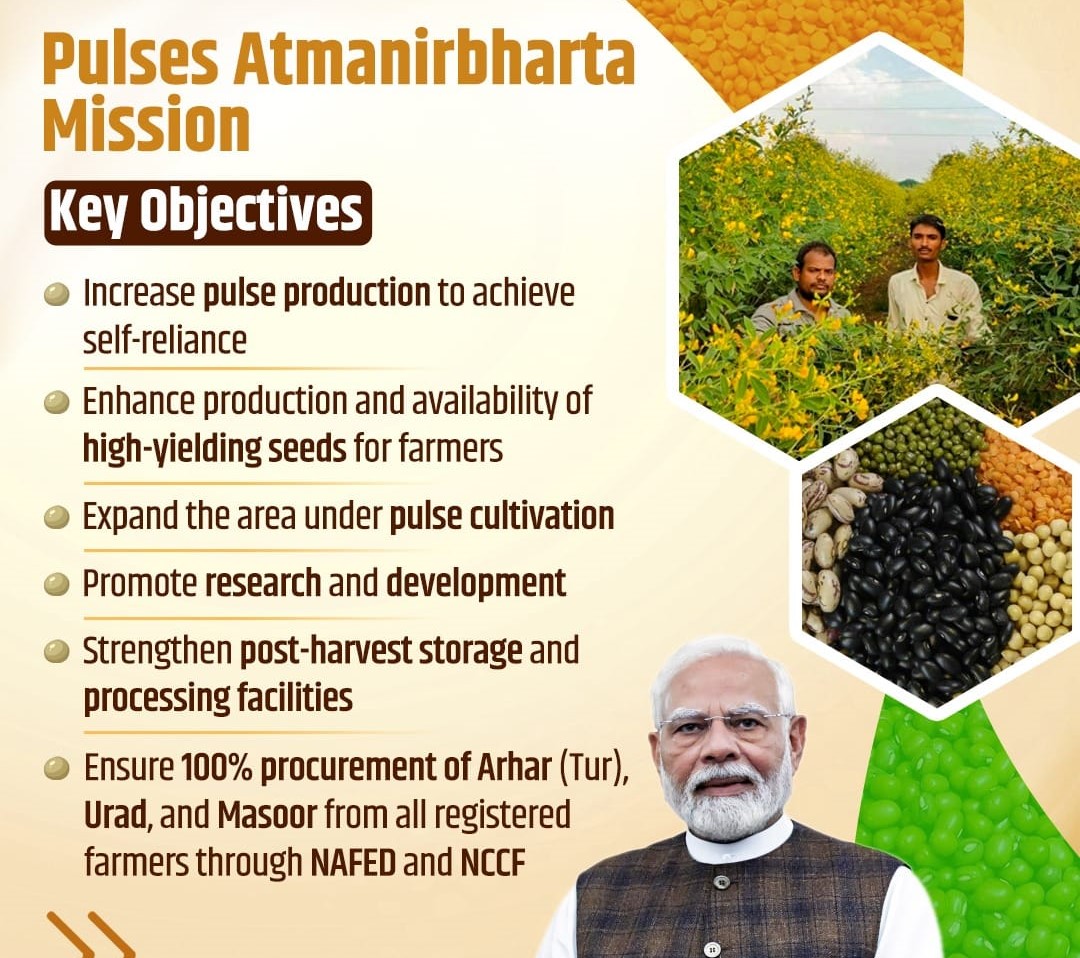
Importance of Pulses Cultivation:
Promoting pulses has several benefits:
-
-
- Environmental sustainability: Pulses require less water compared to paddy and help conserve groundwater.
- Soil health: Being nitrogen-fixing crops, pulses improve soil fertility.
- Nutritional security: Pulses are a major source of protein in India’s largely vegetarian diet.
- Reduced import dependence: Increased domestic production can lower reliance on imports.
- Environmental sustainability: Pulses require less water compared to paddy and help conserve groundwater.
-
About Crop Diversification:
-
-
- Crop diversification refers to the practice of growing a variety of crops on the same farm or shifting from a single dominant crop to multiple crops. It involves replacing or adding crops such as pulses, oilseeds, fruits, vegetables, and millets instead of focusing only on one or two staple crops.
- This strategy reduces dependency on a single crop and helps farmers adapt to changing climatic, economic, and environmental conditions.
- Crop diversification refers to the practice of growing a variety of crops on the same farm or shifting from a single dominant crop to multiple crops. It involves replacing or adding crops such as pulses, oilseeds, fruits, vegetables, and millets instead of focusing only on one or two staple crops.
-
Benefits of Crop Diversification:
-
-
- Environmental Sustainability: Different crops use soil nutrients differently, which helps maintain soil fertility and reduce land degradation. Many crops such as pulses also fix nitrogen in the soil, improving its quality.
- Water Conservation: Water-intensive crops like paddy require large amounts of irrigation. Diversifying towards pulses, millets, and oilseeds helps reduce groundwater depletion.
- Reduced Risk for Farmers: Growing multiple crops protects farmers from complete crop failure due to pests, diseases, or climate shocks, as losses in one crop can be compensated by another.
- Higher and Stable Income: Crop diversification allows farmers to sell a wider range of products, which can increase farm income and reduce dependence on a single market.
- Nutritional Security: Diversifying into pulses, fruits, vegetables, and millets improves the availability of protein and micronutrients in the food system.
- Environmental Sustainability: Different crops use soil nutrients differently, which helps maintain soil fertility and reduce land degradation. Many crops such as pulses also fix nitrogen in the soil, improving its quality.
-
Conclusion:
The Supreme Court’s observations highlight the urgent need for sustainable agricultural practices and policy reforms in India. Encouraging pulses cultivation through better MSP support, procurement systems, and rational import policies could help ensure farmer income stability, environmental sustainability, and national food security.



