
Context:
Recently, the Government of India has officially defined “deep tech start-ups” and laid down specific eligibility criteria for recognition under the Startup India framework. This move, notified by the Department for Promotion of Industry and Internal Trade (DPIIT), marks the first time that deep tech ventures have been distinctly recognised within the startup ecosystem, offering them a tailored policy runway to grow and innovate.
What Is a Deep Tech Start up?
-
-
-
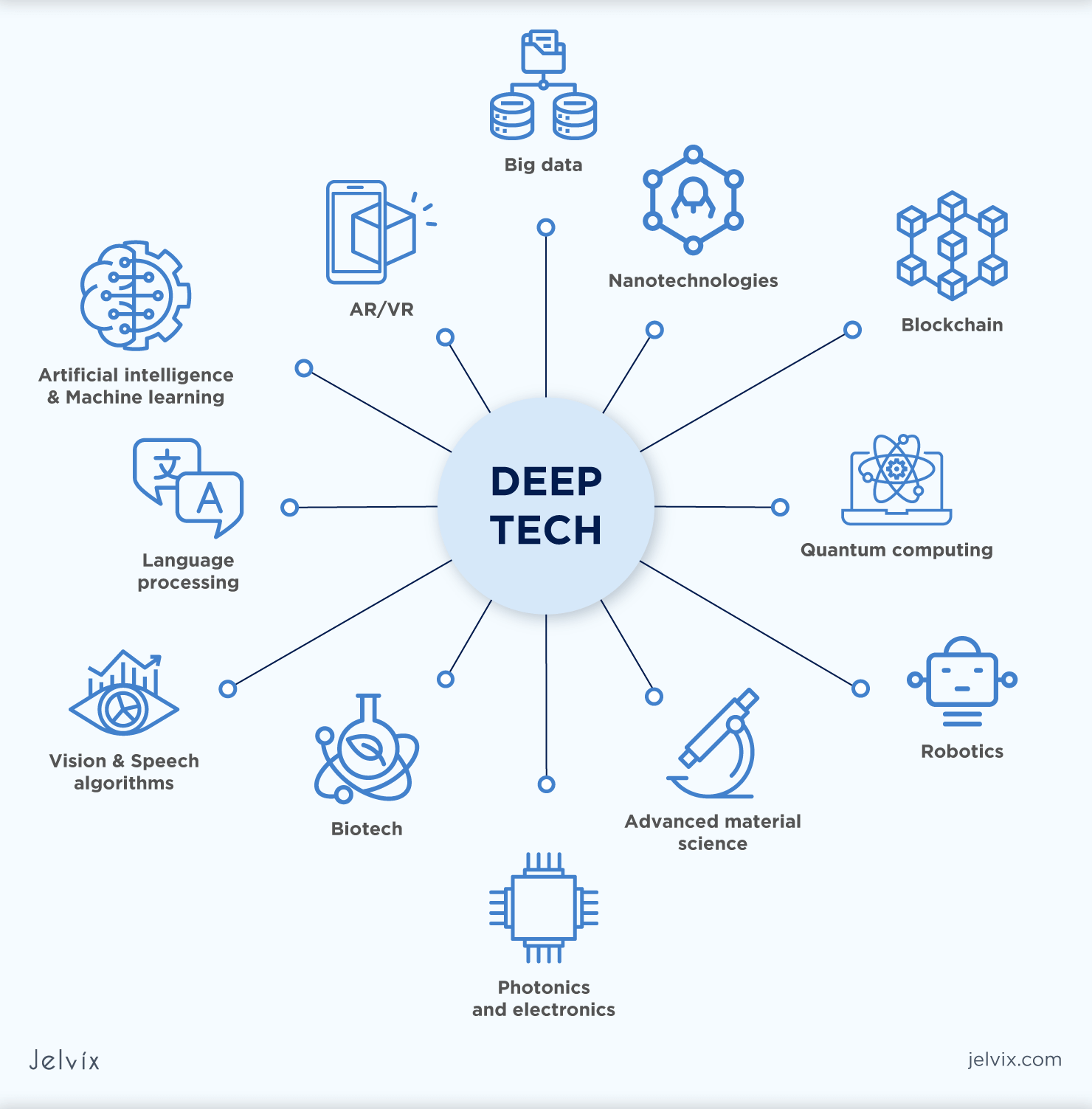
- A deep tech start up is defined as an entity primarily engaged in producing solutions based on new knowledge or advancements in scientific or engineering disciplines. Such companies:
- Invest heavily in research and development (R&D) rather than merely commercial activities.
- Own, or are in the process of creating, significant novel intellectual property (IP) and take steps to commercialise it.
- Face extended development timelines, high capital and infrastructure requirements, and significant technical or scientific uncertainty.
- Invest heavily in research and development (R&D) rather than merely commercial activities.
- A deep tech start up is defined as an entity primarily engaged in producing solutions based on new knowledge or advancements in scientific or engineering disciplines. Such companies:
-
-
Revised Start-up Recognition Criteria:
-
-
-
- The revised notification by DPIIT establishes separate criteria for deep tech start-ups as compared to regular start-ups under the Startup India programme:
- Age Limit: Deep tech start ups can be recognised for up to 20 years from the date of incorporation or registration, compared to 10 years for other start ups.
- Turnover Threshold: The maximum annual turnover for deep tech start ups has been raised to ₹300 crore, while for regular start ups it remains ₹200 crore.
- Application Requirement: To be recognised as a deep tech start up, an entity must apply to DPIIT for certification. Recognition is based on an assessment of R&D focus and innovation potential.
- Age Limit: Deep tech start ups can be recognised for up to 20 years from the date of incorporation or registration, compared to 10 years for other start ups.
- The revised notification by DPIIT establishes separate criteria for deep tech start-ups as compared to regular start-ups under the Startup India programme:
-
-
Process of Recognition:
DPIIT is the final authority to determine whether a company qualifies as a start up or a deep tech start up. It evaluates applications based on guidance from an Inter-Ministerial Board of Certification, which includes representatives from DPIIT, the Department of Science and Technology (DST), and the Department of Biotechnology (DBT).
Significance and Implications:
-
-
-
- Supporting Long Development Cycles: Deep tech companies often take longer to commercialise innovative technologies. Extended recognition timelines align policy support with the realities of R&D-intensive innovation.
- Boosting the Innovation Ecosystem: By carving out a distinct category, the government acknowledges the capital- and time-intensive nature of deep technologies and encourages long-term investments.
- Enhanced Access to Benefits: Recognised deep tech start ups can access policy benefits, including faster patent processing, tax exemptions under Section 80-IAC (subject to conditions), and eligibility for funding from schemes such as the Anusandhan National Research Foundation’s RDI Fund.
- Supporting Long Development Cycles: Deep tech companies often take longer to commercialise innovative technologies. Extended recognition timelines align policy support with the realities of R&D-intensive innovation.
-
-
Conclusion:
The formal definition and eligibility criteria for deep tech start ups reflect a strategic policy shift to foster deep science and engineering innovation in India. By providing extended recognition, higher turnover thresholds, and structured evaluation mechanisms, the government aims to strengthen the innovation ecosystem, attract long-term capital, and position India as a global hub for deep technology ventures.



