
Context:
The 16th Finance Commission of India has recommended adding heatwaves and lightning strikes to the list of nationally notified disasters, citing their increasing frequency, intensity, and human toll. This recommendation comes as part of broader disaster management funding reforms highlighted in the Union Budget 2026–27, where Finance Minister Nirmala Sitharaman announced ₹1.4 lakh crore in Finance Commission grants for states, covering disaster management, rural bodies, and urban local bodies.
-
-
- Under Article 281 of the Constitution, the Finance Commission’s report, submitted on 17 November 2025, is tabled in Parliament along with an explanatory memorandum. The government has also accepted the recommendation to retain the Centre’s share in tax devolution at 41%.
- Under Article 281 of the Constitution, the Finance Commission’s report, submitted on 17 November 2025, is tabled in Parliament along with an explanatory memorandum. The government has also accepted the recommendation to retain the Centre’s share in tax devolution at 41%.
-
Rationale for Inclusion:
-
-
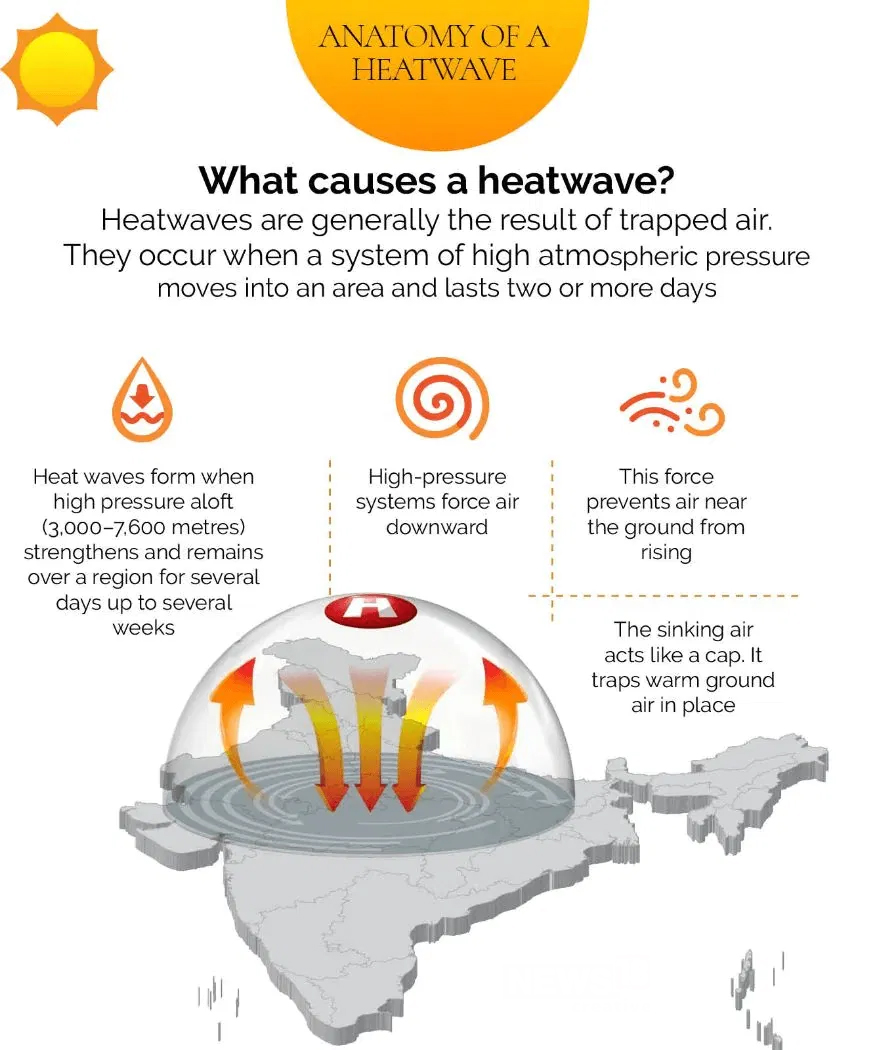
- Extreme heat disproportionately affects vulnerable populations such as the elderly, outdoor workers, and economically weaker sections, while lightning has emerged as a leading cause of death among natural disasters. Between 2018 and 2022, 3,798 deaths were attributed to heatwaves. In 2022 alone, 2,887 deaths occurred due to lightning, accounting for 36% of total natural disaster fatalities that year.
- Several states, at least 11, already classify heatwaves as state-specific disasters, strengthening the demand for national-level recognition. National data also indicate a rising trend in extremely hot days and nights, significantly increasing health risks such as heatstroke and heat-related mortality.
- Extreme heat disproportionately affects vulnerable populations such as the elderly, outdoor workers, and economically weaker sections, while lightning has emerged as a leading cause of death among natural disasters. Between 2018 and 2022, 3,798 deaths were attributed to heatwaves. In 2022 alone, 2,887 deaths occurred due to lightning, accounting for 36% of total natural disaster fatalities that year.
-
Current Disaster Framework:
-
-
- At present, the State Disaster Response Fund (SDRF) covers disasters such as cyclones, droughts, earthquakes, floods, landslides, cold waves, and other notified hazards. States are permitted to allocate up to 10% of SDRF funds for locally severe disasters that are not included in the national list.
- The Finance Commission has recommended retaining this flexibility while elevating heatwaves and lightning to the national disaster list, thereby enabling states to access the full range of disaster response and mitigation funds for these hazards.
- At present, the State Disaster Response Fund (SDRF) covers disasters such as cyclones, droughts, earthquakes, floods, landslides, cold waves, and other notified hazards. States are permitted to allocate up to 10% of SDRF funds for locally severe disasters that are not included in the national list.
-
Funding and Allocation:
-
-
- For the period 2026–27 to 2030–31, the Finance Commission has recommended a total allocation of ₹2,04,401 crore for disaster management through the SDRF and the State Disaster Mitigation Fund (SDMF):
- Centre’s share: ₹1,55,915.85 crore
- States’ share: ₹48,485.15 crore
- Cost-sharing ratio: 75:25 for non-north-eastern and non-hill states; 90:10 for north-eastern and hill states
- Allocation split: 80% to SDRF and 20% to SDMF
- Centre’s share: ₹1,55,915.85 crore
- The ₹1.4 lakh crore grants announced in the Union Budget 2026–27 include dedicated allocations for disaster management, ensuring that states are better equipped for both immediate disaster response and long-term risk mitigation.
- For the period 2026–27 to 2030–31, the Finance Commission has recommended a total allocation of ₹2,04,401 crore for disaster management through the SDRF and the State Disaster Mitigation Fund (SDMF):
-
Significance:
Recognising heatwaves and lightning as national disasters will ensure timely financial assistance, standardise relief and compensation norms, and strengthen state-level preparedness. It also reflects India’s growing acknowledgment of climate change-induced risks, making the country’s disaster management framework more resilient, inclusive, and future-ready.
About the 16th Finance Commission:
-
-
- The Finance Commission of India is a constitutional body established under Article 280 of the Constitution to recommend the distribution of financial resources between the Centre and the states, and among states themselves.
- The 16th Finance Commission, chaired by N. K. Singh, was constituted in 2020 for the period 2021–26, with a mandate to review tax devolution, fiscal consolidation, and disaster funding mechanisms. Its recommendations guide central transfers, including Finance Commission grants, disaster relief allocations, and incentives for fiscal management.
- The Finance Commission of India is a constitutional body established under Article 280 of the Constitution to recommend the distribution of financial resources between the Centre and the states, and among states themselves.
-



