
Context:
A 17-year study conducted by researchers from Queen Mary University of London and the NGO Associação Projeto Biodiversidade in Cabo Verde has identified significant climate change–induced challenges affecting loggerhead turtles (Caretta caretta).
Climate Change Challenges for Loggerhead Turtles:
1. Smaller Size and Reduced Reproduction:
Turtles are becoming smaller, producing fewer eggs per nest, and laying smaller clutches overall.
2. Longer Breeding Intervals:
Declining ocean productivity has doubled the interval between breeding seasons—from two years to four years—as turtles require more time to rebuild their energy reserves.
3. Female-Biased Sex Ratios:
Warmer nest temperatures result in a higher proportion of female hatchlings. Currently, 84% of hatchlings in Cabo Verde are female, and this proportion could reach 99.86% by 2100 under high-emission scenarios.
4. Habitat Loss and Disruption:
Rising sea levels are eroding nesting beaches, while changes in ocean currents are disrupting migration routes and hatchling dispersal patterns.
About the Loggerhead Turtle:
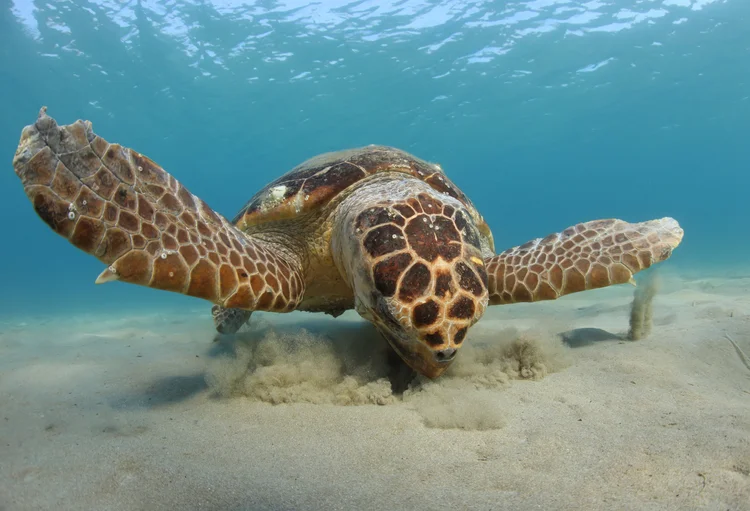
- The Loggerhead Turtle (Caretta caretta) is a marine reptile belonging to the family Cheloniidae, named for its large head and powerful jaw muscles.
- It is the world’s largest hard-shelled turtle and second only to the leatherback sea turtle in overall size.
- Loggerheads are long-lived, with lifespans exceeding 80 years. They inhabit the Atlantic, Indian, and Pacific Oceans, as well as the Mediterranean Sea.
- They are omnivorous and primarily feed on bottom-dwelling invertebrates such as gastropods, bivalves, and decapods.
- Conservation Status: Vulnerable (IUCN), facing threats from climate change, habitat loss, pollution, and bycatch.
Broader Ecological Implications:
- Loggerhead turtles are considered indicator species, reflecting the health of marine ecosystems.
- Declines in body size, reproductive output, and migration success signal broader environmental stress caused by climate change.
- Conservation efforts must extend beyond shoreline protection to include feeding grounds, ocean health, and climate mitigation strategies.
Conservation Recommendations:
- Protect and restore critical feeding habitats in addition to nesting beaches.
- Reduce fishing bycatch and marine pollution to improve survival rates.
- Monitor climate impacts on nesting sites and manage sex ratios where significant imbalance occurs.
- Integrate climate resilience into marine turtle conservation strategies, acknowledging the multi-dimensional threats posed by global warming.
Conclusion:
Loggerhead turtles demonstrate remarkable adaptability; however, climate change is imposing multi-faceted stress on their reproduction, growth, and migration patterns. Protecting this species requires a holistic conservation approach that combines habitat protection, sustainable fisheries management, and robust climate action to ensure their long-term survival.



