
Context:
Recently, a controversy has emerged over the alleged personal relationships of NVIDIA CEO Jensen Huang and a technology network linked to China. According to reports, he is reportedly connected to a Chinese executive at a Singapore-based company. The United States suspects that this company could be used to smuggle restricted AI microchips into China. This development has brought renewed attention to how China is accessing advanced NVIDIA chips despite US export restrictions and its implications for global AI competition.
Significance of NVIDIA Chips:
-
-
- NVIDIA is an American multinational technology company primarily engaged in developing Graphics Processing Units (GPUs). GPUs were originally developed to generate 3D graphics for video games.
- Their parallel processing capabilities make them useful for large-scale data analysis and AI model development. They are used in both AI model training and inference.
- Investment in AI technology increased rapidly in 2022, leading to a significant rise in global demand for NVIDIA GPUs.
- NVIDIA is an American multinational technology company primarily engaged in developing Graphics Processing Units (GPUs). GPUs were originally developed to generate 3D graphics for video games.
-
US Restrictions on NVIDIA Chips:
-
-
- The United States has imposed restrictions on the export of advanced semiconductor chips to China, considering national security concerns and the potential use of AI for military purposes. The US has restricted the export of NVIDIA's advanced Blackwell and Rubin GPU series to China.
- These restrictions aim to limit China's advanced AI and military computing capabilities. However, restrictions imposed by the US and China's domestic chip manufacturing policies continue to create barriers to the procurement and supply of these chips.
- The United States has imposed restrictions on the export of advanced semiconductor chips to China, considering national security concerns and the potential use of AI for military purposes. The US has restricted the export of NVIDIA's advanced Blackwell and Rubin GPU series to China.
-
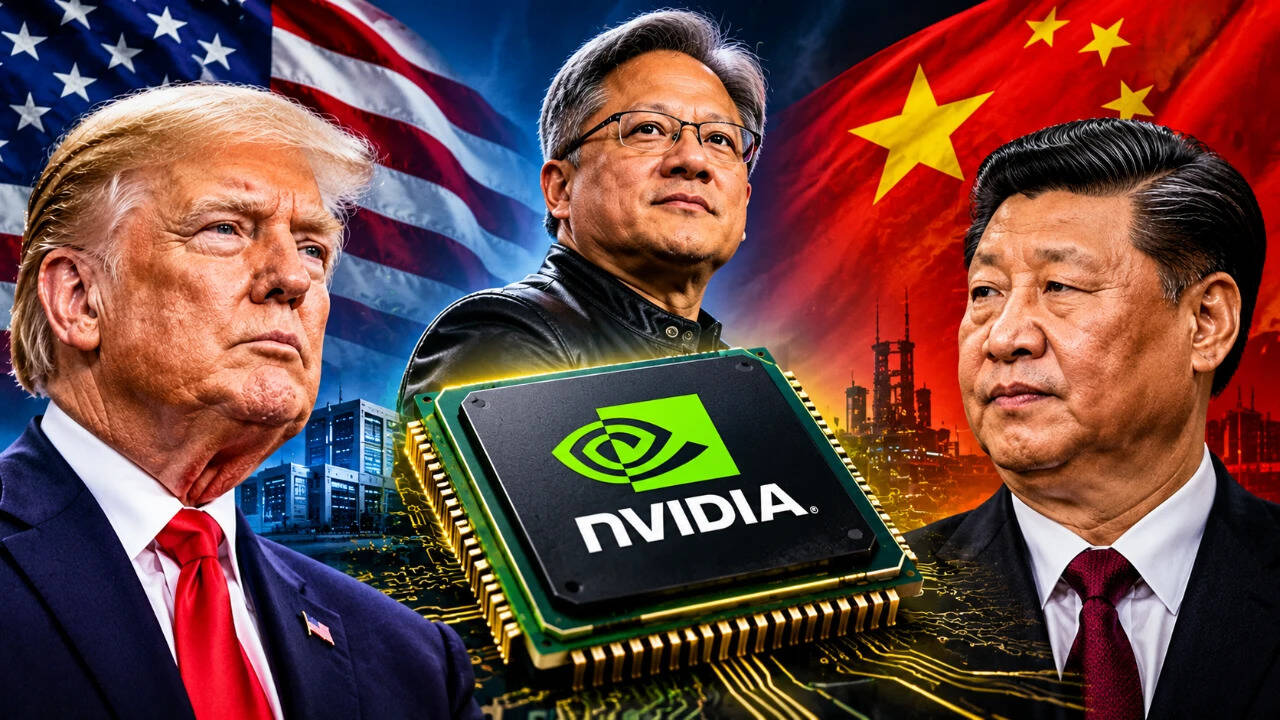
Channels Through Which NVIDIA Chips Reach China:
Despite US restrictions, Chinese companies are accessing advanced GPU computing capabilities through the following channels:
-
-
- Use of Data Centres in Third Countries: Chinese companies are renting GPU computing capacity from data centres located in Southeast Asian countries. For example, NVIDIA GPUs installed in Malaysia's Johor region can be accessed remotely by companies based in Shenzhen, China. Similarly, US officials have accused China's Moonshot AI of accessing advanced NVIDIA chips through Thailand. Under this arrangement, the physical export of chips to the restricted country does not take place. Instead, computing services are provided through data centres located abroad.
- Smuggling of Chips: According to some reports, China's DeepSeek company obtained thousands of chips from abroad by dismantling them into separate components and transporting them into China, where they were subsequently used for AI model training. However, NVIDIA has stated that there is insufficient evidence to support such allegations of smuggling.
- Use of Data Centres in Third Countries: Chinese companies are renting GPU computing capacity from data centres located in Southeast Asian countries. For example, NVIDIA GPUs installed in Malaysia's Johor region can be accessed remotely by companies based in Shenzhen, China. Similarly, US officials have accused China's Moonshot AI of accessing advanced NVIDIA chips through Thailand. Under this arrangement, the physical export of chips to the restricted country does not take place. Instead, computing services are provided through data centres located abroad.
-
China's Indigenous AI Chip Capabilities:
-
-
- US restrictions have encouraged China to develop its domestic semiconductor industry.
- Huawei: It is a major Chinese technology company developing advanced AI chips as alternatives to NVIDIA.
- DeepSeek: According to reports, the company is planning to use Huawei chips to train its upcoming large AI models.
- Moonshot AI and Z.ai: These Chinese AI companies are working towards developing advanced AI models.
- Huawei: It is a major Chinese technology company developing advanced AI chips as alternatives to NVIDIA.
- In September 2026, Huawei announced that its next-generation AI chip would be ready in the first quarter of 2027.
- However, Chinese chips still lag behind NVIDIA's advanced GPUs in terms of performance and efficiency. China is attempting to bridge this gap by using a larger number of chips. Chinese companies also benefit from access to cheaper electricity and government subsidies.
- US restrictions have encouraged China to develop its domestic semiconductor industry.
-
Significance for India:
-
-
- Semiconductor Self-Reliance: India should develop domestic chip manufacturing and design capabilities.
- AI Sovereignty: It is essential to expand domestic computing capacity for AI model training and inference.
- Global Supply Chains: India should strengthen its participation in the global semiconductor supply chain.
- National Security: Excessive dependence on foreign technology should be reduced in sectors such as defence, cybersecurity and communications.
- Technological Diplomacy: India should enhance technological cooperation with countries such as the US, Japan, Taiwan and South Korea.
- Semiconductor Self-Reliance: India should develop domestic chip manufacturing and design capabilities.
-
Conclusion:
China's access to NVIDIA chips highlights that semiconductors are no longer merely industrial products; they have become important instruments of economic power, national security and geopolitical influence. India needs to give greater priority to semiconductor self-reliance, indigenous AI capabilities and global technological cooperation to strengthen its position in the evolving technological landscape.



