
Chhattisgarh Freedom of Religion Bill, 2026
Context:
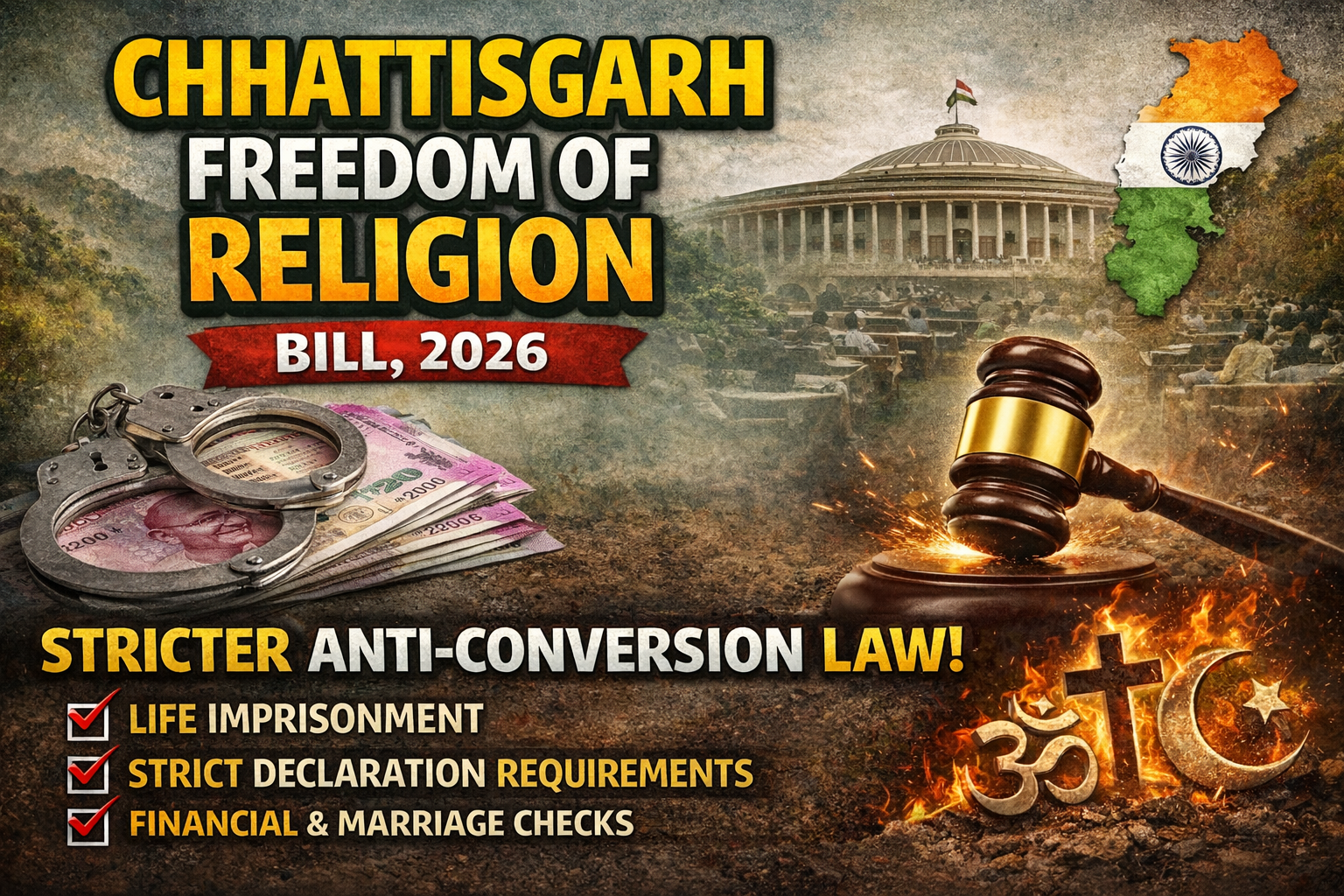
Recently, The Chhattisgarh Legislative Assembly has passed the Chhattisgarh Dharm Swatantraya Vidheyak, 2026, replacing the 1968 law, with stricter provisions to curb illegal religious conversions. The Bill introduces stringent penalties, including life imprisonment for mass conversions, and mandates prior declaration and verification of conversions.
About the Bill:
Objective
The Bill aims to prevent religious conversions carried out through force, inducement, fraud, or misrepresentation, while regulating the process of voluntary conversions.
Key Features of the Bill:
Regulation of Conversion
• Individuals intending to convert must submit a declaration to the District Magistrate
• Authorities will publicly display details (name, current religion, proposed religion)
• Objections can be filed, followed by an official inquiry
Marriage-related Provisions
• Conversion solely for marriage is considered invalid
• Declaration required before interfaith marriage
• Authorities empowered to investigate such cases
Financial and Institutional Controls
• Restriction on funds used for illegal conversions
• Government can withdraw grants or assistance in case of violations
Punishments and Legal Provisions:
• All offences are cognisable and non-bailable
• “Mass conversion” (2 or more persons):
-
- Minimum 10 years imprisonment
- May extend to life imprisonment
- Fine of at least ₹25 lakh
- Minimum 10 years imprisonment
• Conversion of vulnerable groups (minor, woman, SC/ST):
-
- 10–20 years imprisonment
- Fine of at least ₹10 lakh
- 10–20 years imprisonment
• Compensation up to ₹10 lakh for victims
• Cases to be tried in special courts within a fixed timeframe
Rationale behind the Law:
• Existing 1968 law considered inadequate in present context
• Rising concerns over forced and fraudulent conversions
• Need to balance Article 25 (freedom of religion) with safeguards against coercion
• Maintain social harmony and prevent misuse of religion
Concerns and Implications:
-
-
- The proposed anti-conversion laws have sparked concerns about their implications on individual rights and freedoms. Mandatory public disclosure requirements may violate the right to privacy, potentially discouraging individuals from exercising their freedom of conscience. This raises questions about the balance between regulating conversions and protecting fundamental rights, particularly Article 25, which guarantees freedom of conscience.
- The broad definitions in these laws also create scope for misuse, potentially leading to harassment or targeting of certain groups. Notably, similar laws exist in states like Uttar Pradesh and Madhya Pradesh, indicating a wider policy shift towards regulating conversions. This trend warrants careful consideration of the potential consequences for individual freedoms and the federal structure of India.
- The proposed anti-conversion laws have sparked concerns about their implications on individual rights and freedoms. Mandatory public disclosure requirements may violate the right to privacy, potentially discouraging individuals from exercising their freedom of conscience. This raises questions about the balance between regulating conversions and protecting fundamental rights, particularly Article 25, which guarantees freedom of conscience.
-
Conclusion:
The Chhattisgarh Freedom of Religion Bill, 2026 represents a significant tightening of anti-conversion laws in India. While it aims to prevent coercive conversions and ensure transparency, it also raises important constitutional questions regarding privacy, individual liberty, and religious freedom. Balancing these concerns will be crucial for its effective and fair implementation.



