
Context:
The recent deaths of two children in Rajasthan and multiple laboratory-confirmed Chandipura Virus (CHPV) cases in Gujarat have prompted state health authorities to strengthen disease surveillance. The outbreak has renewed attention on this rare but highly fatal virus, which primarily affects children and can rapidly lead to Acute Encephalitis Syndrome (AES).
What is Chandipura Virus?
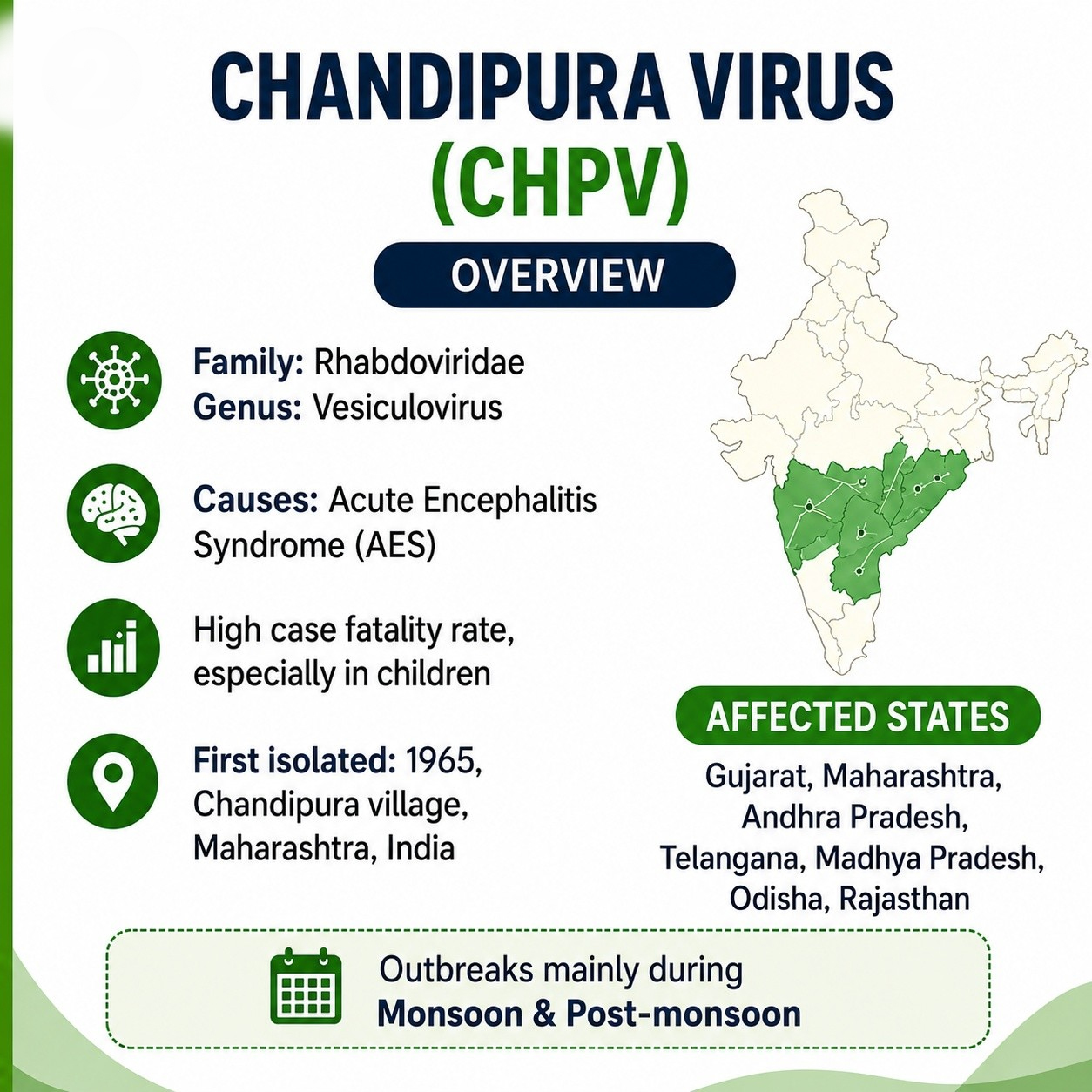
Chandipura Virus (CHPV) is a neurotropic, single-stranded RNA virus belonging to the Rhabdoviridae family, the same family as the rabies virus. It was first isolated in 1965 from Chandipura village in Maharashtra, after which it was named. The virus mainly infects children below 15 years and attacks the central nervous system, causing inflammation of the brain (encephalitis).
Transmission and Symptoms:
-
-
- CHPV is a vector-borne disease transmitted primarily by Phlebotomine sandflies, although some mosquito species, including Aedes aegypti, may also act as vectors. The virus enters the bloodstream through insect bites and may spread to the brain.
- Initial symptoms include high fever, headache, body ache, and vomiting. Severe cases progress rapidly to seizures, altered consciousness, respiratory distress, and encephalitis. Mortality may occur within 24–48 hours of hospitalization due to the rapid progression of the disease.
- CHPV is a vector-borne disease transmitted primarily by Phlebotomine sandflies, although some mosquito species, including Aedes aegypti, may also act as vectors. The virus enters the bloodstream through insect bites and may spread to the brain.
-
Why are Certain Regions More Vulnerable?
The disease is largely endemic to central India, particularly Maharashtra, Gujarat, and Andhra Pradesh, where sandfly populations are abundant. Rural and tribal areas with kutcha houses, poor sanitation, and increased sandfly breeding are more vulnerable. Monsoon conditions further accelerate vector multiplication, increasing the risk of outbreaks.
Treatment and Prevention:
There is currently no specific antiviral treatment or vaccine for Chandipura Virus. Management is supportive and includes controlling seizures, reducing brain swelling, maintaining hydration, and providing intensive care. Prevention relies on vector control through insecticide spraying, mosquito nets, repellents, sanitation, and eliminating breeding sites. Early detection and surveillance remain crucial.
One Health approach:
The outbreak highlights the importance of the One Health approach, which recognizes the interdependence of human, animal, and environmental health. India's National One Health Mission, implemented by ICMR, aims to strengthen integrated disease surveillance, improve pandemic preparedness, and enhance coordination among health, veterinary, and environmental sectors.
Conclusion:
The re-emergence of the Chandipura virus highlights the need for robust disease surveillance, effective vector control, public awareness, and a One Health approach. Strengthening public health preparedness and advancing research will be essential to prevent and effectively respond to such outbreaks in the future.



