
Context:
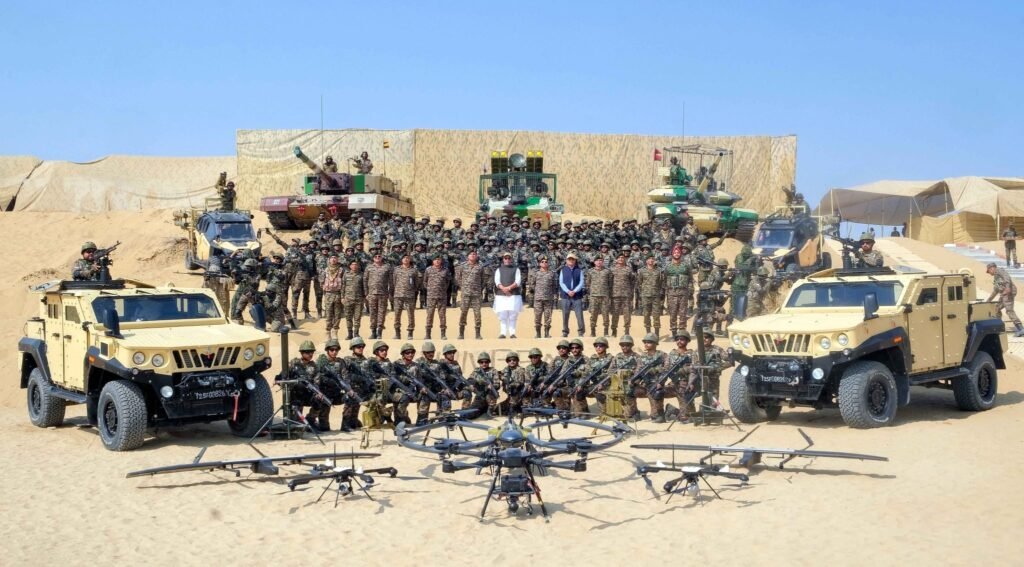
At the 78th Army Day Parade held in Jaipur, the newly raised Bhairav Battalions of the Indian Army made their public debut, highlighting India’s evolving defence posture focused on rapid response, hybrid warfare, and technology-enabled combat operations.
About the Bhairav Battalions:
-
-
- The Bhairav Battalions are high-speed offensive formations designed to bridge the operational gap between strategic Para Special Forces (SF) and regular infantry units.
- While Ghatak platoons conduct battalion-level tactical assaults and Para SF undertake deep-strike strategic missions, Bhairav units provide rapid-response capabilities for immediate border contingencies or short-notice offensives—effectively functioning as an intermediate, highly agile force.
- The Bhairav Battalions are high-speed offensive formations designed to bridge the operational gap between strategic Para Special Forces (SF) and regular infantry units.
-
Modernisation Initiative:
These battalions are part of the Indian Army’s 2025 modernisation and force restructuring programme, aimed at preparing land forces for hybrid and technology-driven warfare.
Composition and Structure:
-
-
- Integrated Force Mix
- Each Bhairav Battalion is a compact formation of approximately 200–250 personnel, drawn from multiple arms including infantry, artillery, air defence, and signals, enabling autonomous and effective offensive operations.
- Each Bhairav Battalion is a compact formation of approximately 200–250 personnel, drawn from multiple arms including infantry, artillery, air defence, and signals, enabling autonomous and effective offensive operations.
- Recruitment Approach
- The Army follows a “Sons of the Soil” recruitment concept, prioritising local personnel from deployment sectors. This ensures terrain and climatic familiarity, enhancing unit effectiveness in specific operational environments.
- The Army follows a “Sons of the Soil” recruitment concept, prioritising local personnel from deployment sectors. This ensures terrain and climatic familiarity, enhancing unit effectiveness in specific operational environments.
- Integrated Force Mix
-
Deployment and Expansion:
-
-
- Current Status
- As of early 2026, around 15 Bhairav Battalions have been raised, with plans to expand the force to approximately 23–25 battalions to strengthen rapid-response capabilities across sensitive theatres.
- As of early 2026, around 15 Bhairav Battalions have been raised, with plans to expand the force to approximately 23–25 battalions to strengthen rapid-response capabilities across sensitive theatres.
- Placement
- These units are being deployed under corps- and division-level formations, particularly along sensitive borders such as Rajasthan, Jammu & Kashmir, Ladakh, and the Northeast, where rapid mobility and an aggressive posture are operationally critical.
- These units are being deployed under corps- and division-level formations, particularly along sensitive borders such as Rajasthan, Jammu & Kashmir, Ladakh, and the Northeast, where rapid mobility and an aggressive posture are operationally critical.
- Current Status
-
Focus on Unmanned and Hybrid Warfare:
-
-
- Technology Integration
- Bhairav Battalions are central to the Army’s push towards unmanned and hybrid warfare. They are trained to deploy drones and other unmanned systems for reconnaissance, surveillance, and precision targeting of enemy positions deep within hostile territory.
- Bhairav Battalions are central to the Army’s push towards unmanned and hybrid warfare. They are trained to deploy drones and other unmanned systems for reconnaissance, surveillance, and precision targeting of enemy positions deep within hostile territory.
- Drone Operatives Pool
- To support these capabilities, the Army is developing a large pool of over one lakh drone operatives, reflecting the growing emphasis on networked, technology-dominant operations in future conflict scenarios.
- To support these capabilities, the Army is developing a large pool of over one lakh drone operatives, reflecting the growing emphasis on networked, technology-dominant operations in future conflict scenarios.
- Technology Integration
-
Conclusion:
The emergence of the Bhairav Battalions marks a significant milestone in the Indian Army’s modernisation journey, creating agile, technology-enabled forces capable of swift offensive action while bridging the gap between conventional infantry and specialised forces. Their debut at the Jaipur Army Day Parade not only demonstrates their operational readiness but also underscores India’s broader shift towards future-oriented, hybrid warfare capabilities in an increasingly complex security environment.



